
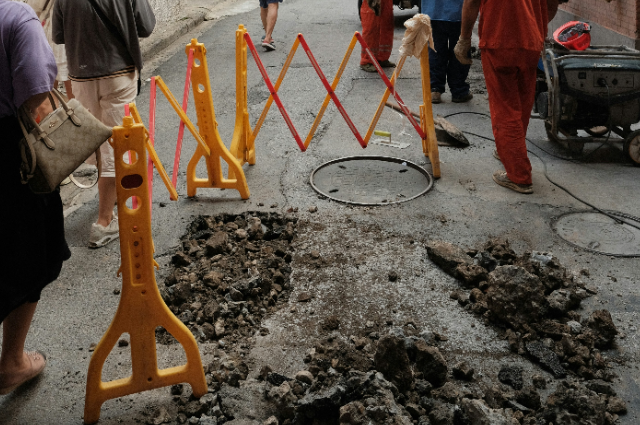
On the night of February 5, Kamal Dhyani made what should have been a routine call home. The 25-year-old bank employee told his twin brother Karan that he was close by and would be home in just ten minutes. It was a promise he would never keep. The next morning, Kamal's body was found at the bottom of a construction pit in Delhi's Janakpuri area, a massive hole measuring 20 feet long, 14 feet wide, and 13 feet deep. His motorcycle lay beside him. He was still wearing his helmet, riding jacket, and gloves. Everything about the scene suggested a man who had taken every safety precaution he could, except for the one thing beyond his control, the road itself.
This tragedy forces us to ask an uncomfortable question: when did our city roads become death traps?
The Eight-Hour Mystery
What happened in those eight hours between Kamal's last phone call and the discovery of his body reveals a disturbing picture of both infrastructure failure and systemic breakdown. After leaving his office in Rohini around 11 pm, Kamal was simply trying to get home, a journey he had likely made countless times before. He split from his manager at Peeragarhi and continued alone. Then, silence.
When his family couldn't reach him, they did what any worried loved ones would do, they searched. But here's where the story becomes even more troubling. According to family members, they visited multiple police stations throughout the night. They searched through areas with flashlights, checking pits and parks across Janakpuri, Mangolpuri, Paschim Vihar, and Sagarpur. The police provided only a 200-meter radius for the search, leaving the desperate family and friends to do most of the work themselves.
The family claims they even looked in the very pit where Kamal was later found, but didn't see him. This raises haunting questions about whether the pit so poorly collided with that his body wasn't visible? Were the barricades so inadequate that they seemed like normal road obstacles in the dark?
A Pattern, Not an Isolated Incident
What makes Kamal's death particularly enraging is that it wasn't a surprise accident—it was entirely preventable, and it's part of a pattern. Just weeks earlier, a 27-year-old software engineer named Yuvraj Mehta died in Noida after his car fell into a waterlogged pit near a construction site. In March 2025, another man lost his life on MB Road when his motorcycle allegedly lost balance due to a filler pit. In February 2025, a car plunged into a caved-in section of road in Dwarka. Go back further, and the list becomes uglier, where two children drowned in a water-filled pit in Rohini in August 2024, three labourers drowned in a construction pit in Vasant Vihar in June 2024, and a man with his autorickshaw fell into a 12-foot pit in Yamuna Vihar in June 2023.
These aren't accidents. They're signs of a deeper disease and the normalisation of unsafe construction practices in our urban spaces.
The Barricade Question
The Delhi Jal Board issued a statement claiming the construction site had been "secured" with barricades and green mesh. But if that's true, how did Kamal end up at the bottom of the pit? Either the barricades were insufficient, or they were positioned in a way that created a false sense of safety while leaving dangerous gaps.
Residents of the area told reporters that the road named after a local resident's father has been dug repeatedly over the past year. One longtime resident noted that the specific pit where Kamal fell had been dug just two days before the incident. This raises another crucial point of construction work that disrupts public roads, which needs far more rigorous oversight than it currently receives.
A construction pit the size of a small swimming pool should not exist on a public road without multiple layers of protection, bright warning signs, adequate lighting, strong physical barriers, and round-the-clock monitoring. The fact that a young man could ride into it on a February night suggests none of these basic safety measures were properly in place.
The System Failed Him Twice
Kamal failed twice that night. First, by the infrastructure that should have kept him safe, and second, by the systems meant to help when things go wrong. His family's account of their interaction with police paints a picture of bureaucratic indifference at a moment of crisis. Being told to come back in the morning when someone is missing in the middle of the night is unacceptable. Being unable to access CCTV footage because cameras allegedly only provide "live feed" with no recording capability seems mysterious in 2026.
The police registered a case under Section 105 of the Bharatiya Nyaya Sanhita, culpable homicide, against the contractor and Delhi Jal Board officials. This is an appropriate action being taken up by authorities, what about all the other open pits across Delhi right now? What about the next Kamal who might be riding home tonight?
What Needs to Change
This tragedy demands immediate and concrete action. First, every open construction pit in Delhi needs to be audited within the next week. Those that don't meet basic safety standards should be either properly secured or filled immediately. Second, contractors who leave unsafe sites should face criminal liability, not just administrative penalties. Third, we need emergency protocols that treat missing persons reports with the urgency they deserve, especially when they involve someone who simply disappeared during a normal commute.
But beyond these immediate steps, we need a cultural shift in how we think about public infrastructure. Construction is inevitable in a growing city, but it cannot come at the cost of citizen safety. Every pit dug, every road mined, every utility line replaced must be treated as a potential hazard that requires serious protective measures.
Kamal Dhyani was just 200 meters from home when he fell into that pit. He had a twin brother waiting for him. He had a job at HDFC Bank. He wore proper safety gear. He did everything right. The city failed him. We cannot let his death be just another statistic in an endless cycle of preventable tragedies.
. . .
References: