
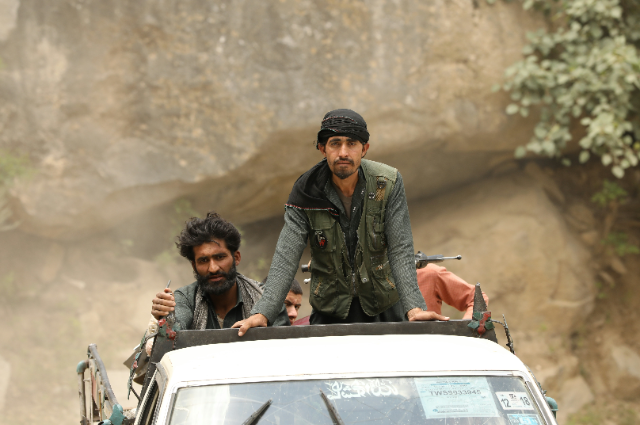
Photo by Sohaib Ghyasi on Unsplash
In early January 2026, the Taliban quietly signed a new criminal law in Afghanistan. No public announcement was made. No debate took place. The law was simply handed down by the Taliban's supreme leader and sent to courts across the country. It was only after an Afghan human rights group called Rawadari got hold of the document and made it public that the outside world found out what was inside and what is inside is deeply alarming.
This law, officially called the Criminal Procedural Regulations for Courts, contains 119 articles. On paper, it is meant to guide how the courts handle criminal cases. In reality, it does something far more disturbing. It builds a system where justice is not based on what someone did wrong, but on who they are in society. It puts some people above the law while leaving others with almost no protection at all.
A Country Split Into Classes
The most shocking part of this law is how it divides Afghan society into four groups, where religious scholars at the top, followed by the elite such as tribal leaders and wealthy merchants, then the middle class, and finally those labelled as the "lower class" at the bottom.
The punishment a person receives for committing the exact same crime depends entirely on which group they belong to. If a religious scholar breaks the law, the response is simply a verbal warning. If someone from the elite does the same thing, they are called to court and warned. A middle-class person, however, faces prison and someone from the lower class can be sent to prison and also physically beaten.
This is not justice. This is a system designed to protect the powerful and punish the poor. Human rights groups have called it a legally written hierarchy of privilege, and that is exactly what it is. The law does not ask whether someone is guilty or innocent in a fair way. It asks where they sit in the social ladder, and that determines everything.
Slavery Written Into Law
Perhaps even more disturbing is the way this law treats slavery. Several articles in the code use language that separates people into those who are "free" and those who are "enslaved." Rights organisations have pointed out that by using this kind of language in an official legal document, the Taliban are essentially treating slavery as a normal and accepted status. This is happening at a time when slavery has been banned under international law everywhere in the world, without exception.
The use of the word "master" in the law is not accidental. It is deliberate. It signals that the Taliban view certain people as property, not as human beings with rights. This alone has drawn serious criticism from human rights experts and international bodies.
Women Are Left With Almost No Protection
The law is particularly cruel toward women. Under one article, if a husband beats his wife so badly that she is visibly injured, and she can prove it in court, the husband faces only fifteen days in prison. Compare that to another article in the same law, which sentences someone to five months in prison for making animals fight each other. The message is painfully clear under this system, harming a woman is considered less serious than cruelty to an animal.
The law also makes it a crime for a woman to leave her home without her husband's permission. If she goes to her family's house without his approval, both she and her relatives can be imprisoned for up to three months. Women are not treated as people with their own rights under this law. They are treated as property that must stay where they are told to stay.
There is also a deeply troubling provision that punishes women specifically for leaving Islam. A woman accused of abandoning her faith can be sentenced to life in prison and thrashed repeatedly. This rule applies only to women, not men, making it a punishment designed entirely to control women's beliefs and choices.
No Right to Defend Yourself
The law also strips away basic rights that most people take for granted in any fair legal system. There is no right to a defense lawyer. There is no right to remain silent. There is no guarantee of fair compensation if someone is wrongly punished. Instead, the system relies heavily on confessions and witness statements to decide guilt. Independent investigation is not required.
Rights groups have warned that this setup makes it very easy for authorities to force people into confessing to things they did not do, often through torture or threats. Without proper safeguards, the law becomes a tool for abuse rather than a tool for fairness.
What Does the World Do Now?
This law has not gone unnoticed. Human rights organizations, including Rawadari, have called for the immediate suspension of the code. They have urged the United Nations and other international bodies to take action, whether through diplomacy, legal pressure, or both. Some experts have argued that when a government writes laws like these and enforces them as official policy, it may cross the line into crimes against humanity under international law.
The United Nations sent a senior official to Kabul around the same time this law became public. That official raised concerns about the Taliban's ban on girls' education and restrictions on women working. But there was no public statement specifically addressing this new criminal code, a silence that many human rights advocates found troubling and unacceptable.
. . .
References: