
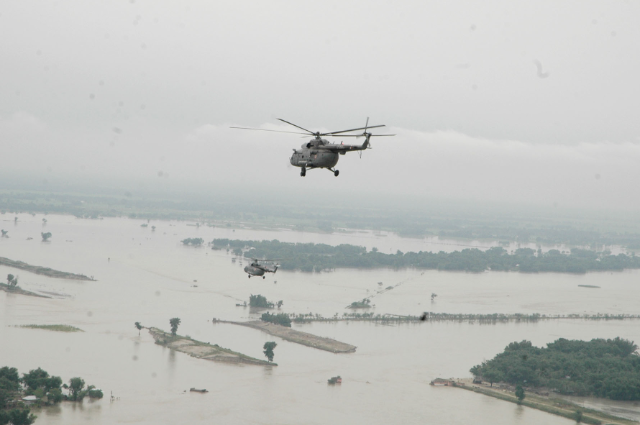
The Bihar floods have reached a critical point as the Ganga crossed its previous highest flood level at Gandhi Ghat in Patna on September 5, 2026. Around 10.26 lakh people across 11 districts are affected, with homes, roads, farmland, markets and public buildings underwater.
The crisis is disrupting travel, farming, access to food and safe water. Families in Begusarai and Vaishali have used boats to move people, household goods and livestock. The next few days will depend on river readings, rain, evacuation work and the speed of relief deliveries.
Bihar Floods and the Ganga Flood Level in Patna: What the record reading means for Patna?
The Ganga reached 50.53 metres at Gandhi Ghat in Patna at 10 am on September 5. That was one centimetre above the previous highest flood level of 50.52 metres, recorded on August 21, 2016.
At Pandarak in Patna district, the river stood at 43.78 metres. This also passed the earlier record of 43.73 metres, set on August 16, 2021. The Water Resources Department warned that the Ganga could rise to 50.62 metres at Gandhi Ghat by Sunday morning.
The Central Water Commission uses gauge readings, danger marks and highest flood levels for river monitoring. A gauge reading shows the water height at a fixed station. The danger mark signals a serious flood risk at that station, while the highest flood level is the highest recorded reading in its past data. These levels differ between locations, and the India Today report did not state the exact danger mark for Gandhi Ghat.
Why are the Ganga and other rivers rising?
Bihar received 60.8 millimetres of rain in September by September 5, which was 69 per cent above normal, according to the report. Heavy rain in Bihar and neighbouring Nepal has added water to the Ganga and its tributaries.
Several rivers were above their danger marks, including the Gandak at Dumriaghat and Hajipur, the Kosi at Baltara and the Burhi Gandak at Khagaria. The Ganga was also above the danger mark at Digha, Hathidah, Bhagalpur, Kahalgaon, Buxar and Munger. The Punpun at Sripalpur and the Ghaghara at Darauli had crossed their danger marks as well.
Low-lying settlements near riverbanks face the greatest risk. Areas where roads, fields and drainage channels are already submerged may see further flooding if rain continues or upstream water moves downstream.
Around 10 Lakh People Face Flood Impact Across 11 Districts
The Bihar Disaster Management Department said about 10.26 lakh people in 50 blocks and 201 gram panchayats had been affected. The districts named were Patna, Bhojpur, Saran, Vaishali, Bhagalpur, Begusarai, Buxar, Samastipur, Munger, Katihar and Araria.
The report did not provide a separate number of affected people for each district. It also did not give a final count of damaged homes, crop losses or displaced households by district. Those figures usually change as district teams inspect villages and update their reports.
Homes, farms and services under pressure
In Begusarai’s Matihani block, water entered homes in Balhapur and Khormpur panchayats. Rural roads were submerged, with two to three feet of water reported in some places. Several homes had five to six feet of water inside, forcing families to move to higher ground.
Fields and connecting roads were also underwater, cutting off access to markets and nearby settlements. Residents were moving children, older people, household items and livestock by boat. A shortage of fodder added to the pressure on families keeping cattle and other animals.
In Vaishali’s Raghopur area, the Ganga and Gandak flooded Jurawanpur. Water entered the local market, a temple and the police station premises, while more than five feet of water covered the main road linking Raghopur and Jurawanpur. These conditions can delay food supplies, medical care, school access and police response.
Safe water, health care and protection for vulnerable people
Floodwater may contain sewage, waste and harmful germs. Use bottled, boiled or officially supplied drinking water, avoid contact with contaminated water where possible and cover cuts with clean, waterproof material.
People should seek medical help for fever, diarrhoea, vomiting, snakebites, serious wounds or breathing trouble. Relief camps need safe toilets, handwashing points and separate support for children, older adults and people with disabilities.
Livestock should be moved only through routes advised by local authorities. Keep medicines, phones, identity documents and emergency contacts sealed in plastic or waterproof containers.
Conclusion
The Ganga reached a record 50.53 metres at Gandhi Ghat in Patna, passing its previous highest flood level. Around 10.26 lakh people across 11 districts were affected, with homes, farms, roads and markets submerged.
The immediate priorities are safe evacuation, clean water, food, medical help, livestock care and reliable local alerts. The scale of the Bihar floods should be judged by the river gauge and by the damage to households, livelihoods and essential services.
Residents should rely on updates from Bihar authorities, district administrations, the Central Water Commission and the India Meteorological Department as the situation develops.
References