
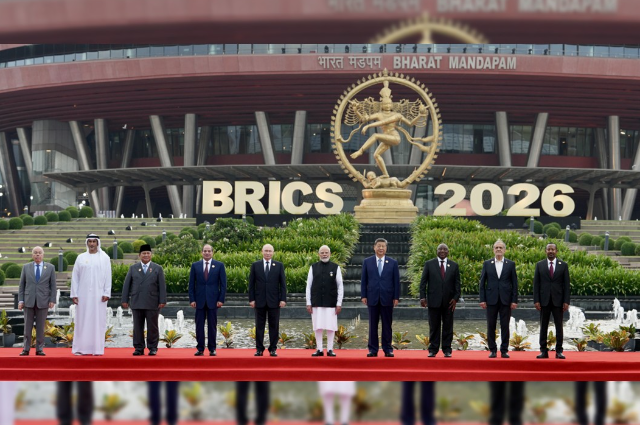
“China and India are partners, not rivals.” Chinese President Xi Jinping used this phrase while meeting Prime Minister Narendra Modi during the 18th BRICS Summit in New Delhi. The meeting took place at Bharat Mandapam on the sidelines of the summit session on inclusive global governance and stronger multilateral cooperation. China’s Ministry of Foreign Affairs said Xi presented four points for improving ties, including mutual respect, economic cooperation, border peace and coordination in global forums. The key question is whether this language signals a real improvement, a careful effort to manage tensions, or both.
Xi’s Message Sets a Diplomatic Reset
Xi’s choice of “partners, not rivals” places cooperation at the centre of China-India ties. He also described the two countries as opportunities rather than threats to each other’s development. The wording seeks to reduce the focus on strategic competition without claiming that every dispute has ended.
What the statement means for China-India ties
According to the Chinese Foreign Ministry statement cited by Mid-Day, Xi called for an objective and rational view of bilateral relations. He urged both sides to pursue win-win cooperation, support each other’s development and expand friendly exchanges.
The message also linked border issues with the wider relationship. Xi called for mutual respect and understanding while maintaining peace and stability in border areas. That makes the statement a diplomatic position, not proof that all security concerns have been settled.
Why the BRICS Summit 2026 setting matters
BRICS gives China and India a shared platform even when their national interests clash. Both countries have major roles in debates on global governance, development and the voice of emerging economies.
Xi said China and India should support each other’s BRICS presidencies and work together through bodies such as the United Nations, the Shanghai Cooperation Organisation and the G20. WION’s report also highlighted the “partners, not rivals” framing, showing how the message was tied to wider multilateral cooperation.
BRICS Summit 2026 Gives Both Countries Common Ground
The summit allows Beijing and New Delhi to discuss shared goals without requiring them to settle every bilateral dispute first. Their cooperation can affect talks on finance, trade, energy, technology and development.
China and India share several BRICS interests.
Both countries seek a stronger voice for developing economies in global institutions. They also support greater attention to development needs, fairer international decision-making and wider participation from the Global South.
That common ground has limits. China and India may agree on the need for a more balanced global system while differing over trade rules, security policy, technology controls and the future role of major institutions.
Bilateral disputes can still limit cooperation.
BRICS decisions often require broad agreement among members. Tensions between China and India could affect the language of joint statements or slow progress on shared proposals.
Security concerns, market access, supply chains and border management remain sensitive issues. Cooperation within BRICS can continue, but it may stay narrow if bilateral mistrust shapes every negotiation. Diplomatic language gains weight when it produces practical results. The next test will be whether China and India can build more predictable economic ties while keeping their strategic differences under control.
China’s Foreign Ministry said bilateral trade had reached a new high, according to the Mid-Day report. That claim needs to be read alongside trade data from India’s Ministry of Commerce, Chinese official statistics and trusted multilateral databases.
Future signs of progress could include easier customs procedures, clearer rules for businesses, new investment decisions and fewer barriers for goods and services. A large trade total alone will not prove that the relationship has improved if major imbalances or restrictions remain.
Supply chains and technology may bring both gains and friction
China and India are important players in manufacturing, pharmaceuticals, digital services and energy. Their firms may find room for cooperation in areas where both countries need stable supplies and wider markets.
Technology will be harder. Concerns about data, critical infrastructure and national security can limit cooperation even when trade expands. The partners-not-rivals message will be tested by actual policy decisions, not only by summit language.
India’s response will be equally important.
New Delhi may welcome better ties while stressing mutual respect, national security and practical action. India’s official response will show whether it accepts the partnership framing on its own terms.
A positive tone would help BRICS consensus. Clear conditions linked to border peace, fair market access or balanced cooperation would show that India sees improved relations as a process rather than a slogan.
Conclusion
Xi Jinping has publicly framed China and India as partners rather than rivals, while also calling for cooperation, border stability and stronger work through global institutions. BRICS provides the setting for that message because both countries share an interest in expanding the influence of emerging economies and the Global South.
Still, cooperation inside BRICS will not remove competition over security, technology, trade or regional influence. The real test will come through official summit declarations, bilateral meetings, economic decisions and border-related developments after the event. Follow those confirmed outcomes closely, as that will show whether the partners-not-rivals message becomes a durable framework for China-India ties or remains a statement of intent.
References