
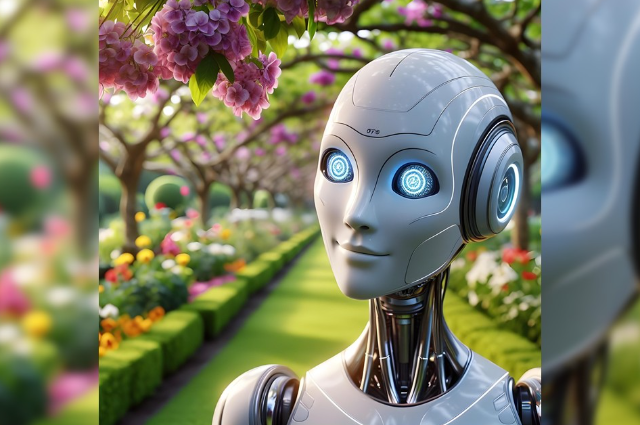
Image by myshoun from Pixabay
A humanoid robot reportedly ran 100 meters in 9.39 seconds at the World Humanoid Robot Games in Beijing on August 22, 2026. That time beat Usain Bolt's 9.58-second human record, though another robot from Honour recorded 9.32 seconds during a separate trial. The result draws attention because robot sports are more than entertainment. They test balance, speed, control systems, battery power, and machine recovery in public view. The records point to faster progress in robotics, but they don't prove that humanoid robots are ready for widespread use in homes, factories, or public services.
Chinese humanoid robots are machines built with a human-like body plan, including a torso, arms, legs, sensors, and computer-controlled movement. They use artificial intelligence, motors, cameras, and balance systems to perform tasks that often require movement through spaces made for people.
The Beijing Games offer a clear test setting. More than 2,000 robots took part in 51 events and over 1,000 competitions, including running, football, table tennis, weightlifting, and tug of war. The scale shows how quickly China is building both robots and public events around them.
How Humanoid Robots Are Defined and Why They Matter
A humanoid robot is different from a factory arm or a wheeled delivery machine because it can walk, turn, climb, and use tools with a human-shaped body. That design may help robots work in buildings, vehicles, and factories that already fit human workers.
The form also creates hard engineering problems. Two-legged machines must control balance while moving, respond to changes in the floor, and keep power use low. A robot that can sprint for 100 meters may still struggle with safe walking, long work shifts, or careful handling.
China has promoted humanoid robotics as an emerging industry, with companies targeting manufacturing, logistics, research, and consumer products. The 2026 World Robot Conference in Beijing displayed about 3,000 products during the same week as the robot games.
Competition with the United States adds pressure. China produces a large share of the world's humanoid robots, while the United States has increased scrutiny of Chinese robotics firms. The Federal Communications Commission announced a ban on imports of new foreign-made humanoid robots in July 2026, citing national security concerns.
Who Is Most Affected by the Robotics Race?
Manufacturers, warehouse operators, researchers, and government agencies have the most direct interest in humanoid robots. These groups may use robots for repetitive work, dangerous tasks, training, or public demonstrations.
Workers may feel the effects later if robots become reliable and affordable. Yet the available reports do not show how many jobs have been replaced, how much the machines cost, or how well they perform outside controlled events. Those gaps matter when judging claims about mass deployment. The Beijing games show what advanced robotics can achieve under test conditions. They also show why a sports record must not be confused with workplace readiness.
The Positive Outcomes and New Opportunities
The strongest benefit is faster testing. Sports create repeatable tasks that let engineers compare speed, balance, coordination, and recovery across machines. Public competitions also help companies find design faults that may stay hidden during demonstrations.
The results show sharp progress in one year. A humanoid high jumper reached 2.88 meters, compared with a 0.95-meter best result at the first games in 2025. A robot also surpassed Javier Sotomayor's 2.45-meter human high jump record, according to the reports. Several robots fell, broke apart, or caught fire during the competitions. The sprinting robots reportedly hit a cushion and fell at the finish so they could stop, then were carried away on stretchers. That creates a clear safety concern for workplaces, homes, and crowded public spaces.
Experts quoted in the reports said humanoid robots still mainly serve demonstrations, performances, and research. A machine may complete one fast run while lacking the battery life, software reliability, repair support, and safety controls needed for daily work.
Lightning's Reported Sprint and Half-Marathon Results
Honour's humanoid robot Lightning reportedly ran 100 meters in 9.32 seconds during a test event. It reached a peak speed of 14.5 meters per second, according to The Guardian's report.
Lightning also completed the Beijing half marathon in 50 minutes and 26 seconds. The robot stood 169 centimetres tall, had 95-centimetre legs during the race, and later received legs 10 centimetres longer. These details show how hardware changes can affect performance. The Associated Press and The Hindu reported a 9.39-second 100-meter run by a robot made by Beijing-based X-Humanoid. The machine beat Bolt's 9.58-second human record in the event, while another X-Humanoid robot reached 2.88 meters in the standing high jump.
The sources describe these as major achievements, but they also report failures among other competitors. Some machines tripped, fell, broke apart, or caught fire. The contrast shows that leading results can coexist with poor reliability across the wider field.
What the Examples Have in Common
Both examples show rapid gains in movement and control. They also show that robot performance depends on body design, leg length, test rules, and stopping methods. Neither example proves that the same machines can work safely for eight hours in a factory or move around children at home. Anyone reviewing a humanoid robot should look beyond the headline time. The useful question is whether the machine can complete a needed task safely, repeatedly, and at a reasonable cost.
Conclusion
The Beijing robot games show how far Chinese humanoid robots have advanced in one year. Machines can now perform feats that beat long-standing human records, yet falls, fires, and unusual stopping methods reveal the gap between a winning run and dependable daily work. For businesses and public agencies, the next test is practical value. Watch the records, but judge robots by safe operation, steady output, repair needs, and total cost.
Refrences