
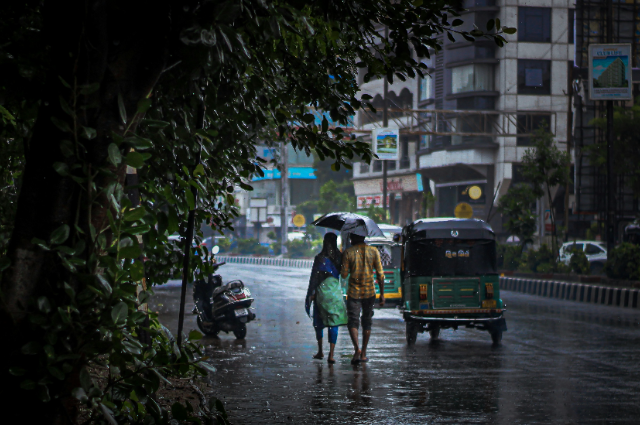
With the monsoon fast approaching, the Municipal Corporation of Delhi has launched a massive, capital-wide campaign to check the spread of vector-borne diseases. Triggered by a concerning pre-monsoon spike, the civic body’s proactive strategy focuses heavily on public awareness and the rapid deployment of resources. The initiative comes at a critical time, as Delhi has already recorded 162 confirmed cases of dengue, alongside 42 cases of malaria and 9 cases of chikungunya, well before the heavy seasonal rains have even fully arrived. To combat this brewing public health challenge, Delhi Mayor Pravesh Wahi recently flagged off a fleet of 100 specially modified auto-rickshaws. These vehicles are equipped with localized fogging machines, educational banners, and thousands of informational pamphlets. Their mission is to navigate all 250 municipal wards in the capital to eliminate mosquito breeding grounds and educate residents on how to safeguard their households.
The Pre-Monsoon Disease Footprint
Historically, vector-borne diseases in Delhi peak during or immediately following the monsoon season, typically from July to October when stagnant rainwater creates ideal breeding conditions for mosquitoes. However, the data for the first half of this year shows that the threat is already knocking on the capital's door. The distribution of these cases across Delhi's civic zones reveals distinct regional vulnerabilities, guiding the MCD on where to concentrate its field efforts. The West zone has emerged as the primary hotspot, logging the highest volume of infections with 29 dengue cases and leading the malaria tally with 14 cases. It is followed closely by the Central zone with 21 dengue cases and the Civil Lines zone in North Delhi with 20 dengue cases. This early surge has forced health authorities to pivot from a reactive treatment-based approach to an aggressive, preventive strategy designed to break the mosquito breeding cycle before the monsoon rains intensify the crisis.
Deploying the Fleet of 100 Fogging Autos
The cornerstone of the MCD's newly launched campaign is mobility. Traditional large-scale fogging trucks often face severe limitations when navigating Delhi's tightly packed residential blocks, narrow alleyways, and unauthorized colonies. To overcome these logistical bottlenecks, the civic body deployed 100 nimble auto-rickshaws retrofitted with localized fogging equipment. By traversing the city's labyrinth of streets, these autos ensure that even the most isolated neighborhoods receive vector control treatment. The dual-purpose vehicles do not just spray adulticiding chemicals to eliminate airborne mosquitoes; they double as rolling billboards. Covered in bright banners and distributing pamphlets, they continuously stream public health announcements, transforming a clinical intervention into an engaging community awareness drive.
The Strategy: Cover, Clean, and Keep Dry
While chemical fogging is highly effective at killing adult, flying mosquitoes, it does not stop new ones from hatching. Mosquitoes that carry dengue breed primarily in clean, stagnant water found inside and directly around human habitats. Therefore, long-term success relies entirely on community behavioral shifts, leading Mayor Pravesh Wahi to explicitly call upon the citizens of Delhi to actively adopt a three-pronged defense mechanism i.e., to Cover, Clean, and Keep Dry. Under the first pillar, residents are urged to securely seal all overhead water storage tanks, domestic buckets, and underground sumps with tight-fitting lids or fine mesh, as uncovered reservoirs act as an open invitation for female mosquitoes looking to deposit their eggs.
Disrupting the Mosquito Lifecycle
The second and third pillars require rigorous home maintenance. It is critical to scrub the interiors of desert coolers, birdbaths, and pet bowls at least once a week. Simply changing the water is not enough, as mosquito eggs can glue themselves tightly to the inner walls and survive dry conditions for months, hatching the moment water returns. Concurrently, citizens must actively drain out trays under refrigerators, clear stagnant puddles from terraces, empty unused flowerpots, and properly discard old tires or scrap materials lying in the open. This timeline is vital because the mosquito takes roughly 7 to 10 days to transform from an egg into a fully functioning, biting adult. By completely draining, cleaning, or drying out water containers at least once every week, residents can effectively disrupt this lifecycle, ensuring that any laid eggs never have the chance to mature into disease-carrying vectors.
Uniting Public Action and Civic Inspection
The civic administration recognizes that a top-down approach from the government cannot succeed without deep public participation. The 100-auto initiative is designed to act as a bridge, transforming passive citizens into active participants in public health. In tandem with the mobile units, hundreds of MCD domestic breeding checkers are conducting door-to-door inspections across the 250 wards. These workers check overhead tanks, issue warning notices to properties found with active breeding, and apply larvicides to stagnant water bodies that cannot be easily drained. Mayor Wahi emphasized that the overarching goal is to achieve a clean, hygienic, and green Delhi. By synchronizing government fogging drives with rigorous household cleaning routines, the city aims to build an impenetrable shield against vector outbreaks this summer.
A Call to Action for Every Household
As the monsoon clouds gather over the capital, the window for prevention is rapidly narrowing. The MCD's deployment of 100 fogging autos provides a critical line of defense, but the ultimate battlefield remains inside the home. Residents are urged to take twenty minutes every weekend to inspect their premises, clear out hidden pools of water, and ensure that their surroundings do not offer a sanctuary for mosquitoes. Through collective vigilance and civic cooperation, Delhi can successfully flatten the curve of vector infections and secure a healthier monsoon season for all its residents.
. . .
References: