
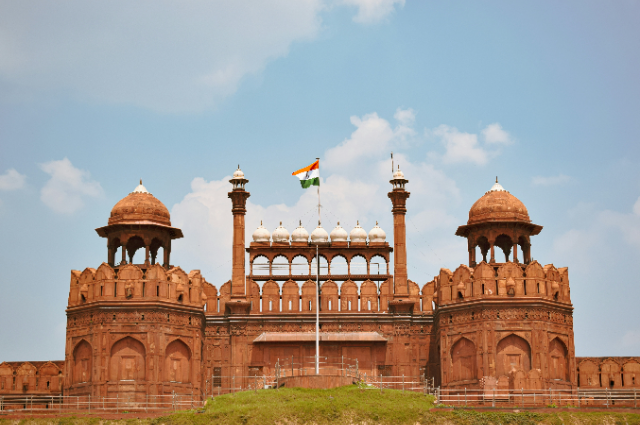
Fresh intelligence inputs have warned that Lashkar-e-Taiba (LeT), the Pakistan-based militant outfit with a long track record, may be planning a major terror attack using an improvised explosive device (IED) in the Red Fort and Chandni Chowk area of the capital. A temple in the Chandni Chowk locality has also been flagged as a possible target. Security agencies have responded swiftly, deploying additional forces around heritage sites and religious locations, intensifying vehicle checks at city entry points, and placing bomb disposal squads and quick reaction teams on standby. Officials have been careful in their communication, describing the alert as precautionary while urging the public to remain calm but vigilant.
Yet, for the millions of people who live, work, and pray in the narrow, bustling lanes of Old Delhi, calm is easier instructed than felt. When credible intelligence points to one of the world's most iconic urban corridors as a potential blast zone, the weight of that warning is not merely administrative, it is deeply personal.
Old Delhi: Symbol, Not Just Location
To understand why Red Fort and Chandni Chowk matter so much as targets, one must understand what they represent. Red Fort is not simply a monument. It is the physical embodiment of India's independence, the rampart from which the Prime Minister addresses the nation every August 15th. To strike there is to aim not at a building, but at a symbol.
Chandni Chowk, its neighbouring site, is one of Asia's oldest and most densely packed markets. It surrounds with temples, mosques, gurudwaras, and shrines sitting side by side as a living, breathing proof to India's pluralism. A terror attack here would be designed not merely to kill, but to fracture the social fabric that Old Delhi so visibly represents. This is precisely what makes the intelligence warning so alarming, and why the response must be measured, effective, and humane all at once.
The Blast That Changed Everything
This alert does not emerge in isolation. In November 2025, a car exploded near Gate No. 1 of the Red Fort Metro Station, killing at least 12 to 15 people and injuring more than 20 others. Investigators identified the explosive agent as ammonium nitrate fuel oil that the same material used in some of the most devastating terror bombings in modern history.
The National Investigation Agency (NIA) has been probing the blast ever since, tracing networks, suspects, and potential handlers. As recently as mid-February 2026, a special NIA court extended the investigation period to allow for the completion of ongoing inquiries. The fact that the investigation remains active is a reminder that the November blast was not a closed chapter it was, potentially, the opening of one. The fresh intelligence inputs now suggest that what happened in November may have been a precursor rather than a one-off incident.
The Islamabad Connection: Retaliation as Pretext
Perhaps the most troubling dimension of the current alert is the alleged trigger. According to intelligence sources cited in the warnings, Lashkar-e-Taiba's suspected plot may be linked to a February 6, 2026 blast at a mosque in Islamabad, Pakistan, an incident that Pakistani officials alleged involved foreign actors. India has categorically denied any involvement. Intelligence inputs suggest that LeT could be seeking to use this Islamabad blast as a justification or pretext for a retaliatory strike against high-visibility targets in India. This is a deeply dangerous framework, not least because it outsources the logic of escalation to a terror outfit with vested interests in fanning flames between two nuclear-armed neighbours.
It is worth stating clearly that using a contested and disputed incident in Pakistan as grounds to target civilians in India is not retaliation. It is terrorism and the world must be unambiguous about that difference.
The Machinery of Vigilance
To their credit, security agencies appear to have mobilised seriously. Surveillance via CCTV networks has been ramped up. Anti-sabotage teams have been deployed to sweep key areas. Detection dog units are operational. Bomb disposal squads are on standby. Vehicle checkpoints have been tightened at entry routes into the capital, and police presence has been visibly strengthened near markets, temples, and tourist zones.
Crucially, the coordination has extended beyond Delhi. States bordering the capital Haryana, Uttar Pradesh, and Rajasthan have received similar intelligence inputs and have activated their own precautionary measures. The inputs have also prompted security reviews at prominent temples across the country, signalling that the threat, as assessed, may not be geographically confined to the capital.
This is how a mature, federal security apparatus should respond not with panic, but with quiet, systematic readiness.
Between Vigilance and Normalcy
There is, however, a tension at the heart of every high-alert situation that governments must navigate carefully. Overcommunicating a threat risks causing mass anxiety, disrupting livelihoods, and in the worst case achieving for the terrorists what they seek paralysis and fear. Under communicating risks leaves citizens unprepared and uninformed.
The statement from a senior security official, who chose anonymity, struck the right note: "The alert is based on credible intelligence and, given the past threats and incidents, we cannot take any chances. Our priority is to ensure safety without causing unnecessary panic." That is a sound governing philosophy. But it must be backed by action as robust as it can be.
Vigilance is not fear
Delhi has lived with the threat of terror before. It has mourned, rebuilt, and endured. The lanes of Chandni Chowk have seen centuries of history invasions, partitions, pandemics and they have survived each. But survival cannot be passive. It demands that citizens trust their institutions, that institutions earn that trust, and that both work together to ensure that no group, however determined and however funded from across the border, succeeds in turning India's history into a target. The Red Fort must remain a place where the flag flies free, not a site of fear. Old Delhi's temples must remain sanctuaries not symbols of vulnerability. That is not just a security objective. It is a national imperative.
. . .
References: