
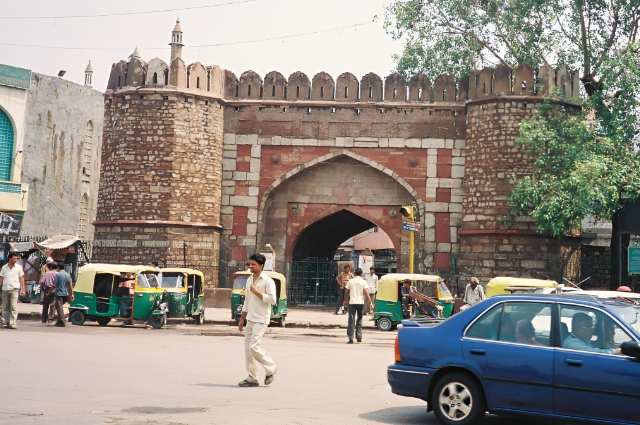

In the early hours of a 14th January morning, the narrow lanes of Delhi's historic Turkman Gate area witnessed a scene that has become increasingly familiar yet persistently contentious in India's urban landscape. Seventeen bulldozers crashed through the darkness, police barricades went up, and by dawn, structures that had stood near the Faiz-e-Elahi Masjid lay in debris. What followed was not just a municipal operation but a flashpoint that illuminates the tense relationship between legal enforcement, urban governance, and community trust in one of India's most densely populated historic quarters.
The Legal Framework: Court Orders and Compliance
The demolition drive was not an arbitrary exercise of state power but a response to a Delhi High Court directive targeting illegal encroachments. The court had identified specific structures including a dispensary and a community hall adjacent to the mosque, as unauthorized constructions on public land. In its order, the court also called for responses from the Urban Development Ministry, the Municipal Corporation of Delhi (MCD), and the Delhi Waqf Board, setting a four-week deadline with the next hearing scheduled for April 22.
From a purely administrative standpoint, the MCD was fulfilling its legal obligation. Special Commissioner Ravindra Yadav emphasized that the civic body was acting in compliance with judicial instructions, targeting encroached land that belonged to the public domain. The deployment of seventeen bulldozers and a substantial police force underscored the administration's determination to execute the court's mandate comprehensively and swiftly.
The Midnight Hour: Strategic Timing or Stealth Tactics?
The decision to commence operations around 1 am raises important questions about civic administration strategies in sensitive areas. Municipal authorities likely chose this timing to minimise disruption and fewer people on the streets, reduce traffic congestion, and theoretically, less resistance. In urban planning terms, night operations can be tactically sound for major infrastructure work in congested zones.
However, in the context of a religiously significant site, the midnight timing carried different connotations. For residents awakened by bulldozer engines and police sirens, the darkness amplified anxieties. The late-hour execution, rather than being perceived as considerate, was interpreted by some as secret where a secret operation designed to present communities by morning. This perception gap between administrative efficiency and community reception is critical to understanding what emerged next.
Violence in the Void: Stone-Pelting and Police Response
As bulldozers began their work, tensions erupted into violence. Stones were hurled at police personnel, resulting in injuries to four to five officers, though reports indicate these were minor wounds. The attackers included both local residents and what authorities described as "unidentified miscreants," suggesting a mix of spontaneous community resistance and possibly organised disruption.
The police response, as documented, showed relative restraint. Authorities deployed tear gas to disperse crowds and restore order, but avoided the kind of heavy-handed crackdown that has spoiled similar operations elsewhere. By morning, approximately ten individuals were detained for questioning, with six specifically identified as stone throwers. Investigators meticulously reviewed CCTV footage, body camera recordings, and ground-level video to identify four to five primary suspects.
Delhi Police filed an FIR against unknown persons, with officials promising strict legal action against those who disrupted the civic operation. DCP Nidhin Valsan confirmed that security arrangements remained in place as operations continued, ensuring both worker safety and order maintenance.
The Ripple Effects: Traffic, Trust, and Tension
The immediate aftermath extended beyond the demolition site. Traffic police issued advisories warning of congestion around Ramlila Maidan and connecting roads throughout the day. In Old Delhi's streets, where every lane serves multiple purposes for trade, residence, and religious practice such disruptions resound through daily life. Shopkeepers faced delayed openings, residents encountered checkpoints, and the area's normal rhythm was suspended.
More significantly, the administration's appeal to residents to "maintain peace" during the operation highlighted the fragile social equilibrium in such neighbourhoods. This was not just a law enforcement matter but a test of community relations in an area where historical memory runs deep and past complaints boil under the surface calm.
The Missing Element: Dialogue Before Demolition
What stands out most starkly in this episode is the apparent absence of meaningful community engagement before the bulldozers arrived. The court order directed responses from the Waqf Board, suggesting recognition of stakeholder interests, yet there is no indication that MCD conducted ground-level consultations with affected parties or neighbourhood representatives before the midnight operation.
Imagine an alternative scenario where MCD officials meet with Waqf Board representatives, local councilors, and community leaders weeks before the demolition. Transparent sharing of court orders, detailed explanations of which structures must go and why, opportunities for affected parties to recover belongings or relocate functions, and clear timelines communicated publicly. Such processes would not eliminate opposition, but they would transform enforcement from an adversarial raid into a negotiated, if difficult, civic obligation.
Progressive urban governance recognizes that court orders provide legal authority, not social license. The latter must be earned through transparency, consultation, and demonstrable fairness. When enforcement becomes purely procedural and legally correct but socially tone-deaf, it breeds the very resistance that then requires police force to overcome.
A Path Forward: Balancing Authority with Empathy
The measured police response in this instance deserves acknowledgement. By prioritizing identification through technology over mass arrests, by using minimal force despite provocation, authorities demonstrated restraint that prevented escalation. This approach should become the standard template for such operations.
However, the real work lies in preventing these flashpoints altogether. Delhi's civic authorities must develop protocols for sensitive-area enforcement that mandate pre-demolition dialogue, transparent timelines, adequate notice periods, and mechanisms for genuine grievance redressal. The Waqf Board and MCD should establish standing consultation frameworks for cases involving properties near religious sites.
More fundamentally, urban India must calculate with the human cost of its encroachment problem. While illegal construction cannot be overlooked, we must ask why communities build illegally in the first place, where inadequate affordable housing, Complicated approval processes, corruption in municipal licensing, and economic desperation all contribute. Enforcement without addressing root causes ensures an endless cycle of encroachment and demolition.
Reclaiming Space Without Fracturing Peace
Delhi's midnight bulldozers accomplished their legal objective by removing structures the courts deemed illegal. But in doing so, they also exposed the vast gap between judicial authority and social trust, between municipal efficiency and community dignity. As India's cities densify and land becomes increasingly scarce, such confrontations will only multiply unless governance evolves.
The Turkman Gate incident should serve as a catalyst for reform. Courts can order, municipalities can execute, but sustainable urban governance requires something more than the patient, unglamorous work of building consensus, one neighbourhood at a time. Only when communities see themselves as partners in urban planning rather than targets of urban clearance will we reclaim public space without fracturing the public peace that makes cities livable in the first place. The bulldozers have done their work. Now comes the harder task of rebuilding trust on the cleared ground.
. . .
References: