
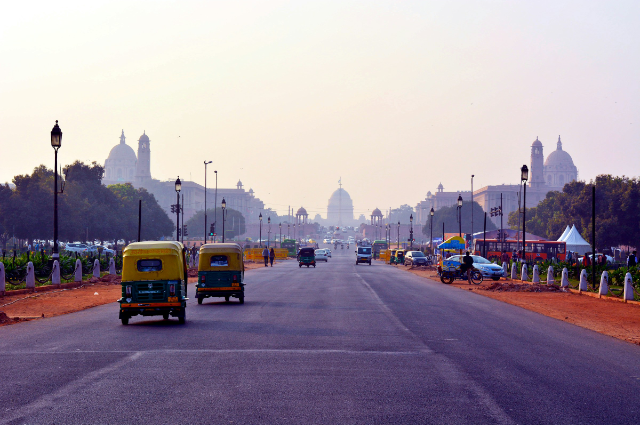
Photo by Laurentiu Morariu on Unsplash
Delhi's air quality crisis has once again reached alarming proportions, with the Air Quality Index breaching the 400 mark, a threshold that signals a public health emergency. As toxic smog is around the national capital and surrounding regions, authorities have activated Stage III of the Graded Response Action Plan, introducing stringent restrictions on construction, vehicular movement, and industrial activities. This familiar pattern, that is deteriorating air quality followed by reactive emergency measures, has become an annual ritual that exposes the deeper inadequacies in our approach to environmental governance.
The implementation of GRAP Stage III reflects the severity of the situation. When pollution levels cross into the 'severe' category, life in Delhi transforms dramatically. Construction sites fall silent, schools shift to hybrid learning modes for younger children, diesel vehicles face movement restrictions, and residents are advised to minimise outdoor exposure. These measures, while necessary in the immediate term, serve as stark reminders that we are managing indications rather than addressing root causes.
Understanding the Perfect Storm
The current pollution crisis stems from a convergence of multiple factors. As winter descends upon northern India, meteorological conditions become particularly unfavourable for air quality. Cold temperatures and stable atmospheric conditions create what environmental scientists call an overturn layer, which is a phenomenon where warmer air traps cooler air near the ground, preventing pollutants from dispersing upward. Low wind speeds compound this problem, allowing harmful particles to accumulate at ground level where people breathe.
Beyond the city's borders, regional factors worsen the crisis. Agricultural burning in neighbouring states during harvest seasons has historically added to Delhi's pollution burden. While this practice has decreased in recent years due to various interventions, its contribution during critical periods remains significant. The pollution crisis, therefore, is not merely a Delhi problem; it is a regional challenge that demands coordinated responses across state boundaries.
The Human Cost of Toxic Air
Behind the statistics and policy measures lies a profound human tragedy. Healthcare facilities across Delhi report increased cases of respiratory distress, persistent coughing, eye irritation, and throat infections during pollution peaks. Children who have developing lungs are particularly vulnerable to bear a disproportionate burden. The elderly and those with pre-existing heart or respiratory conditions face risks of severe health complications.
Medical research has established clear links between prolonged exposure to high levels of PM2.5, which is a fine particulate matter that penetrates deep into the lungs and bloodstream and serious health outcomes, including respiratory diseases, cardiovascular problems, strokes, and even premature death. The economic costs are equally stressful that including lost productivity, increased healthcare expenditure, and diminished quality of life extract a heavy toll on society.
For outdoor workers and construction labourers, street vendors, traffic police, and delivery personnel, the crisis is particularly serious. They cannot retreat indoors or work from home. Their livelihoods depend on continued exposure to hazardous air, creating a stark environmental justice issue where the most vulnerable bear the greatest burden.
The Limitations of Reactive Governance
GRAP Stage III measures represent emergency intervention, which is a necessary response when air quality deteriorates rapidly. The restrictions on construction and vehicle movement, the shift to hybrid schooling, and advisories to reduce outdoor activities aim to prevent further deterioration and provide some immediate relief. However, these reactive measures reveal the fundamental limitation of our current approach.
Emergency protocols are designed for crises that are exceptional and unpredictable. Delhi's air pollution crisis is neither. It is a predictable, recurring phenomenon that happens every winter with depressing regularity. The fact that we continue to rely primarily on emergency responses indicates a failure of long-term planning and sustained action.
Moreover, emergency measures come with high economic and social costs. Construction workers lose wages when sites shut down. Small businesses suffer. Students' education is disrupted. The economic activities that sustain millions of livelihoods cannot be continuously switched on and off in response to pollution levels without creating broader hardship.
Towards Structural Solutions
Addressing Delhi's air quality crisis requires a fundamental shift from reactive emergency management to proactive structural reform. This transformation must operate on multiple fronts simultaneously.
- Transportation Revolution: Delhi needs a comprehensive overhaul of its transportation ecosystem. This means expanding and improving public transport infrastructure, where more metro lines, cleaner buses, and better last-mile connectivity. It requires aggressive promotion of electric vehicles through subsidies, charging infrastructure, and regulatory incentives. Cycling infrastructure must be expanded to make non-motorised transport viable for short distances. Most importantly, this transformation requires making public transport so efficient and comfortable that people voluntarily choose it over private vehicles.
- Industrial Transition: Industries must be incentivised and, where necessary, compelled to adopt cleaner technologies. This includes stricter enforcement of emission standards, support for transitioning to cleaner fuels, and penalties for violations. Small and medium industries need technical and financial support to upgrade their processes without facing economic ruin.
- Construction Sector Reform: The construction industry must adopt and rigorously implement dust control measures not just during pollution emergencies but as standard practice. Real-time monitoring systems, anti-smog guns, proper site management, and strict penalties for violations should become the norm rather than the exception.
- Regional Coordination: Since pollution respects no boundaries, states must work together on coordinated policies. This includes addressing agricultural burning through viable alternatives for farmers, coordinating industrial policies, and sharing best practices and resources.
The Path Forward
The recurring nature of Delhi's air quality crisis should not result in acceptance but urgency. Clean air is not a luxury or a seasonal privilege, it is a fundamental right essential to human health and dignity. Children growing up in Delhi should not have to breathe toxic air as a normal part of their childhood. Workers should not have to choose between their health and their livelihoods.
Delhi's toxic air is a test of our collective commitment to public health, environmental justice, and sustainable development. The question is not whether we know what needs to be done, the answer is increasingly clear. The question is whether we have the determination to do it, not just during emergency episodes, but consistently, year after year, until breathing clean air in Delhi becomes the standard rather than an exception.
. . .
References: