
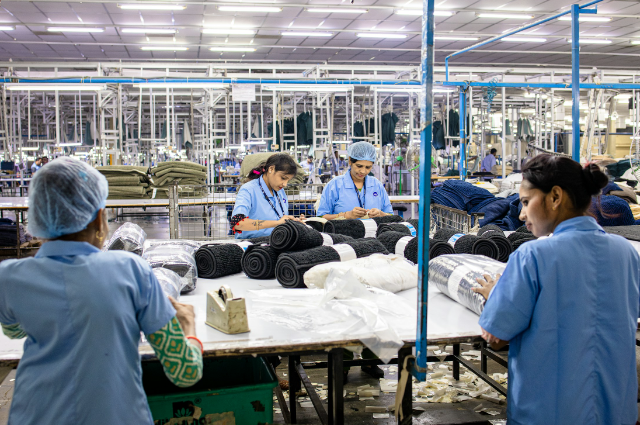
Photo by EqualStock on Unsplash
On May 25, 2026, the Small Industries Development Bank of India, known as SIDBI, celebrated its 37th Foundation Day in Mumbai. To honour this milestone, India's Union Minister for Finance and Corporate Affairs, Smt. Nirmala Sitharaman officially launched four major financial programs. These programs are designed to help small, local businesses get loans more easily, upgrade their tools, and grow their operations without facing unnecessary hurdles.
Understanding the Basics: What are MSMEs and SIDBI?
To understand why these programs matter, it helps to understand who they are for and who is running them. The term MSME stands for Micro, Small, and Medium Enterprises, which refers to businesses categorised by their size and investment. Micro enterprises are very small setups, like a neighbourhood bakery, a local boutique, or a pottery workshop. Small and Medium enterprises include larger operations, such as auto-parts workshops, textile mills, or software companies. SIDBI is a specialised government bank whose primary job is to provide financial aid and loans specifically to these small industries to help them succeed.
The Massive Impact of MSMEs on India's Economy
During her address, the Finance Minister shared data showing why the government is focusing heavily on small businesses. MSMEs are the foundational pillars of India's economy, contributing nearly 31% of the country's total economic output, which is measured as Gross Domestic Product. To explain simply, Gross Domestic Product, or GDP, is like a country's total economic scorecard, calculating the total value of all goods made and services provided within the nation over a year. Because small businesses also handle about 35% of manufacturing, 48% of total exports, and employ over 32 crore people, helping them succeed directly helps the entire nation prosper. To support this massive network, the government approved an extra equity support of ₹5,000 crore, which is a direct cash infusion to strengthen SIDBI's funds, aiming to bring 25 lakh new small business owners into the formal banking fold by 2028.
Linking Urban Funds to Rural Needs: The Co-Lending Platform
The first of the four new initiatives is the SIDBI-RRB Co-Lending Platform. In India, large development banks have a lot of money but lack a physical presence in remote villages, while Regional Rural Banks, or RRBs, operate right at the grassroots level but lack advanced digital technology or large loan capacities. This new co-lending platform is a digital bridge connecting the two, pairing SIDBI's technological power and funds with the rural network of RRBs. This joint lending model allows small village entrepreneurs to secure formal business loans quickly without having to travel to major cities.
Upgrading Traditional Trades: The MoRE Programme
The second program is the Modernisation of Rural Enterprises, or MoRE, Programme. Rural industries are highly creative but frequently rely on outdated equipment, which slows down production and hurts quality. The MoRE initiative is a targeted, cluster-based program designed to upgrade small-scale, non-farming rural businesses like local jaggery units, oil extraction mills, traditional pottery makers, and brass artisans. Cluster-based development simply means that instead of helping one isolated business at a time, the government identifies a geographic area where many similar businesses operate, called a cluster and upgrades the entire area's infrastructure at once, making it cheaper and more efficient for everyone. These businesses receive loans alongside training and tech upgrades to help them sell their products at better prices.
Collateral-Free Cash Flow: The Micro Credit Card Scheme
The third initiative is the Micro Credit Card Scheme for Micro Enterprises. Getting a standard business loan often involves a mountain of paperwork and a demand for collateral, which means the business owner must pledge personal assets, like a house or land, as a guarantee in case they cannot repay the loan. Most small entrepreneurs do not have assets to risk, so this new scheme solves that problem by offering registered micro businesses a revolving credit line of upto ₹5 lakh without needing primary security. Revolving credit works exactly like a personal credit card, meaning a business can borrow funds up to the limit, repay them as they make sales, and borrow against that limit again whenever they need cash for daily expenses. To protect the banks, the government backs these loans with a 75% guarantee coverage, meaning the government promises to cover the majority of the loss if the business fails.
A Digital One-Stop Shop: The Machinery Portal
The fourth project is the SIDBI MSME Exchange Machinery Portal. When a small factory wants to buy a new industrial machine, the process can be overwhelming because they have to find reliable manufacturers, compare prices, and then apply for a separate bank loan to pay for it. The Machinery Portal is a digital marketplace that brings this entire journey onto a single screen, allowing businesses to browse and discover the exact machinery they need while simultaneously applying for bank financing right inside the portal, which cuts out middlemen and speeds up technological upgrades.
A Shift in Vision: Moving from Lender to Partner
Ultimately, these initiatives reflect a shift away from paper-heavy, slow-moving financial systems toward real-time, digital-first financial inclusion. Finance Minister Nirmala Sitharaman emphasised that SIDBI must evolve from being a traditional lender into a market maker and risk-sharing partner that actively designs financial systems where private investors feel safe investing. By protecting lenders from high risks and providing rural entrepreneurs with modern tools, India is clearing a path for its massive small-business sector to grow from local operations into global competitors.
. . .
References: