
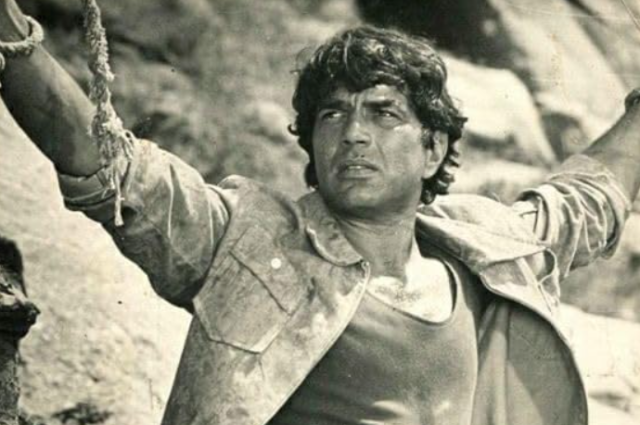
The recent passing of Bollywood icon Dharmendra at 89 has prompted a collective reflection on a life that embodied the classic Indian dream that a journey from rural obscurity to cinematic immortality. As we shift through the remaining of his extraordinary existence, what emerges is not merely the story of an actor, but a testament to authenticity, artistic integrity, and the quiet dignity that defined an entire era of Hindi cinema.
Bridge That Launched a Thousand Dreams
In the small town of Sahnewal, Punjab, there stands a bridge damaged, unremarkable to the casual observer, yet monumentally significant in the Indian cinema. This is where a young Dharmendra would stand, gazing toward distant horizons, nurturing dreams that seemed impossibly grand for a village boy. The bridge serves as a powerful metaphor for transition, for the crossing from one reality to another, from the known to the unknown.
What strikes is most about this origin story is its universality. How many of us have stood at our own metaphorical bridges, contemplating journeys that terrify and excite in equal measure? Dharmendra's decision to leave the security of his village for the chaos and uncertainty of Bombay wasn't just personal ambition; it was an act of faith in himself, in cinema, and in the possibility of transformation.
The bridge in Sahnewal remains a physical reminder that greatness often begins in the most ordinary places. It whispers to us about persistence, about the courage required to pursue dreams when the path forward is anything but clear. For Dharmendra, that crossing wasn't just geographical; it was existential where a young man reinventing himself while somehow managing to retain the earthy authenticity that would become his trademark.
An Earthy Luxury: The Lonavala Sanctuary
Success in Bollywood typically manifests in ostentatious displays by sprawling mansions with European architecture, imported furnishings, and carefully accumulated wealth. Dharmendra's 100-acre Lonavala retreat tells a different story. This wasn't merely a real estate investment or a status symbol; it was a conscious return to his roots, a physical manifestation of his inner landscape.
The property represents what we would call "grounded luxury", a space where natural beauty takes precedence over artificial magnificence. In choosing to create a haven that emphasised connection with the land rather than separation from it, Dharmendra revealed something profound about his character. Despite decades in an industry that often encourages disconnection from one's origins, he maintained a relationship with simplicity and nature.
This retreat speaks to a deeper wisdom about success. True achievement, it suggests, isn't about how far you can distance yourself from where you began, but rather how authentically you can integrate your journey's lessons while honouring your origins. The Lonavala property wasn't escapism; it was homecoming to a better place where the boy from Punjab and the Bollywood superstar could coexist peacefully.
Artistry of Restraint: Satyakam and Meaningful Cinema
When we examine Dharmendra's collaboration with Sharmila Tagore in Hrishikesh Mukherjee's 1969 masterpiece ‘Satyakam’, we encounter the actor at his artistic peak. This wasn't the action hero or the romantic lead that made him a household name, this was Dharmendra the artist, embracing complexity, ambiguity, and moral inquiry.
‘Satyakam’ explored idealism, integrity, and the painful compromises that life demands. Dharmendra's portrayal required something beyond conventional star power and it demanded vulnerability, introspection, and the courage to appear unheroic. In an industry increasingly dominated by Heroic formula, his commitment to such challenging material revealed an artist who viewed cinema as more than entertainment.
What distinguishes truly great actors from merely popular ones is their willingness to risk their carefully constructed images for artistic truth. Dharmendra's performance alongside Tagore demonstrated that his appeal wasn't purely physical; there was intellectual depth and emotional honesty that resonated with audiences seeking substance within the vision.
This aspect of his career deserves particular attention because it reveals the road not taken or rather, the road less travelled. While commercial cinema certainly has its place and value, Dharmendra's willingness to engage with meaningful, socially conscious narratives showed an artist aware of cinema's potential to illuminate, question, and inspire.
Last Giant and Redefining Masculinity
Perhaps the most compelling aspect of Dharmendra's legacy is how he redefined masculine identity in Indian cinema. The phrase "gentle giant" captures something essential about his screen presence and personal character which is a combination of physical strength with emotional accessibility, of traditional masculine attributes with surprising softness.
In an era where masculinity was often portrayed through aggression, domination, and emotional unavailability, Dharmendra offered something different. His characters could be strong without being brutal, romantic without being possessive, heroic without being invulnerable. This nuanced masculinity made him relatable across demographics and generations.
The "gentle" modifier matters immensely. It signals kindness, approachability, humility and qualities that are not traditionally celebrated in male stars. Yet Dharmendra embodied them naturally, making them aspirational rather than weak. He proved that a man could be powerful and tender, successful and humble, celebrated and accessible.
The Bridge Between Then and Now
As we bid farewell to Dharmendra, what remains is more than filmography or box office statistics. His life traces a curve from that bridge in Sahnewal to the heights of stardom, yet remarkably, he never truly left that bridge behind. It remained part of his internal geography, informing his choices, grounding his success, reminding him of who he was before the world knew his name.
In our current age of mass-produced personalities and carefully portrayed identities, Dharmendra's authenticity feels almost radical. He reminds us that true legacy isn't built on imitation but on genuine connection with one's roots, one's craft, and one's audience. The bridge in Sahnewal will continue to whisper those big Bollywood dreams to future generations, and in that whisper, Dharmendra's spirit endures.
. . .
References: