
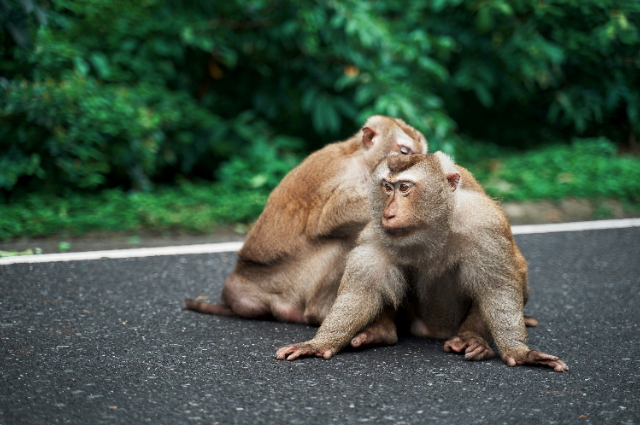
Photo by Maksym Sirman on Unsplash
The roar of engines has long drowned out the whisper of paws on India's expanding highway network. But on a critical two-kilometer stretch of the Bhopal-Jabalpur National Highway (NH-45) in Madhya Pradesh, authorities have drawn a literal red line, one that could redefine how infrastructure coexists with nature.
A Tragedy That Sparked Innovation
The substance for change arrived in the most heartbreaking form, where a cheetah cub, barely beginning its life, was struck dead on the Agra-Mumbai Highway after travelling from Kuno National Park. This wasn't an isolated incident but rather the latest casualty in an undeclared war between development and wildlife. The numbers tell an unpleasant story where Madhya Pradesh alone witnessed 237 animal-vehicle collisions over two years, claiming 94 precious lives. Each statistic represents not just an animal, but a fracture in the ecological fabric we claim to protect.
What makes this intervention remarkable is its closeness and innovation. Rather than resorting to the usual bureaucratic delays or half-measures, the National Highways Authority of India responded with decisive action, introducing what officials describe as India's first "table-top red marking" on a national highway.
The Science of Slowing Down
The solution is smartly simple yet profoundly effective. Imagine driving through a forest corridor when suddenly the familiar grey transforms into a vivid red surface, slightly raised at five millimetres thick. This isn't merely aesthetic; it's purposeful engineering designed to trigger both visual and physical responses in drivers.
The bright red acts as nature's own warning signal, an unmistakable alert that you're entering territory where humans are guests, not landlords. But the genius lies in the texture and elevation. The table-top design forces vehicles to decelerate automatically, creating what engineers call a "speed calming" effect. Drivers don't need to consciously choose to slow down; the road itself compels caution.
This two-kilometer experimental stretch within the Veerangana Durgavati Tiger Reserve represents a component of a more ambitious Rs 122.25 crore project covering 11.9 kilometers. The comprehensive approach includes approximately 25 underpasses strategically positioned based on documented animal movement patterns, chain-link fencing to guide wildlife toward safe crossing points, white shoulder lines for better road demarcation, and speed detection devices to monitor and regulate driver behaviour.
Beyond Infrastructure: A Philosophy Shift
What strikes most about this initiative isn't the technology, it's the underlying philosophy. For decades, India's development narrative has treated wildlife as an inconvenience, something to be managed around or, worse, ignored entirely. Roads carved through forests, highways bisected migration routes, and when animals died, we called it unfortunate but inevitable collateral damage.
The red marking challenges the complication. It represents a fundamental acknowledgment that highways passing through protected areas like tiger reserves aren't just transportation corridors; they're dangerous invasions into established habitats. Animals don't understand property lines or traffic laws. A tiger seeking prey, an elephant herd moving to water sources, or a young cheetah exploring its territory sees no boundary between their home.
By physically altering the road itself to accommodate wildlife safety, NHAI has essentially declared that coexistence isn't optional, it's mandatory. The authority recognises that expanding a two-lane road into four lanes, a project necessary for economic connectivity, cannot justify ecological destruction.
The Ripple Effect
This intervention matters far beyond Madhya Pradesh. India houses some of the world's most biodiverse regions, yet our highway network increasingly fragments these habitats. The Wildlife Institute of India has documented numerous "roadkill hotspots" across the country, from Kerala's Western Ghats to Assam's elephant corridors. If the table-top red marking proves effective and early implementation suggests promise then it could become a nationwide standard.
Consider the broader implications, drivers repeatedly exposed to these wildlife zones develop heightened awareness. The psychological impact of seeing that red warning, knowing you're in tiger territory, creates a lasting consciousness that extends beyond that specific stretch. It's environmental education through infrastructure.
Moreover, the comprehensive approach by combining visual warnings, physical speed reduction, protective fencing, and safe passage underpasses has addressed the problem from multiple angles. It's not enough to slow cars; you must also guide animals toward safe crossing points and prevent random road access.
The Path Forward
Admittedly, challenges remain. Will drivers become desensitised to the red markings over time? How will maintenance costs and weather exposure affect the table-top surface's longevity? Can this model scale to thousands of kilometres of highways crossing wildlife zones nationwide?
These questions deserve rigorous monitoring and honest assessment. But the willingness to experiment, to prioritize wildlife safety within infrastructure projects, represents progress worth celebrating. The cheetah cub's death wasn't in vain if it catalyses systemic change. That young animal's final, tragic encounter with human development has potentially saved countless others by forcing authorities to recognize an uncomfortable truth that our roads are killing grounds, and we have the technology, resources, and moral responsibility to change that.
The table-top red marking isn't just paint and texture, it's a statement of values. It declares that India's wildlife heritage matters enough to alter how we build and use roads. It proves that development and conservation aren't mutually exclusive when authorities approach infrastructure with creativity and conscience. As this red ribbon winds through tiger territory, it offers hope that we can engineer not just roads, but solutions that honour both human movement and wildlife survival. That's the kind of progress worth accelerating toward.
. . .
References: