
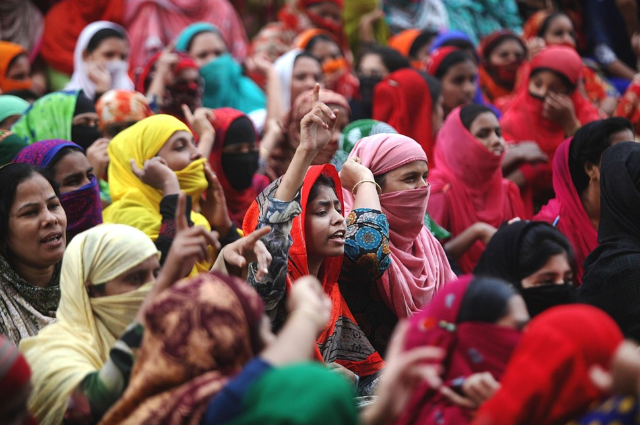
The Samyukt Kisan Morcha’s support for youth-led protests brings electoral rights into a wider public debate, while raising questions about democratic participation, coordination and the future of farmers’ demands.
When farmers take up an issue beyond agriculture, it often signals that their concerns extend beyond the boundaries of their own profession. The Samyukt Kisan Morcha (SKM), a coalition of farmers’ organisations, has announced demonstrations on October 23 in support of young protesters raising concerns about electoral rights and the Special Intensive Revision (SIR) of electoral rolls. The move has brought the farmers’ movement into a wider debate about democracy, citizenship and public accountability.
The announcement matters not simply because another group is preparing to protest, but because it brings together organisations whose immediate priorities are different. Young protesters have focused on electoral processes and the role of the Election Commission, while farmers’ organisations have long campaigned on issues such as minimum support prices, agricultural livelihoods and trade policy. Their decision to express solidarity with one another raises a broader question: can different public movements cooperate on shared democratic concerns without abandoning their individual demands?
What Is Planned for October 23?
According to reports published by The Tribune, the SKM announced demonstrations at district and tehsil levels following a meeting of farmer leaders in Karnal. Participants were expected to submit memorandums as part of their protest. Other reports have described demonstrations at district, tehsil and block headquarters, indicating that the planned action is intended to reach local communities rather than depend entirely on a single gathering in the national capital.
This distinction is important. The October 23 programme should not automatically be described as a massive march to Delhi. Reporting published by Hindustan Times on October 19 quoted All India Kisan Sabha general secretary Vijoo Krishnan as saying that the farmers’ movement was seeking to build a grassroots campaign. He also clarified that the movement was not formally joining the youth-led protest but would seek coordinated action with other organisations.
A further mobilisation has been announced for November 26, with activities planned in Delhi and state capitals. The date carries significance for the farmers’ movement because it marks the anniversary of the 2020 Delhi Chalo mobilisation against the three farm laws, which were subsequently repealed.
The two dates therefore serve different purposes. October 23 is intended to bring demonstrations to local and regional centres, while November 26 has been identified as a date for a broader mobilisation. Keeping this distinction clear is essential to understanding the movement’s plans accurately.
Why Are Farmers Raising Electoral Rights?
Farmers’ organisations have traditionally focused on agricultural policy, including remunerative prices for crops, debt relief, land rights and protection against economic uncertainty. Their decision to support protests over electoral rolls reflects a view among participating leaders that voting rights and livelihood concerns are connected to the wider functioning of democracy.
The current controversy centres on the Special Intensive Revision of electoral rolls. Critics of the exercise have raised concerns about possible deletions of eligible voters and the difficulties some citizens may face in establishing their eligibility. Protesters have demanded accountability from Chief Election Commissioner Gyanesh Kumar and called for the rollback of the revision exercise.
These are serious allegations and demands, but they need to be examined carefully. Claims about wrongful deletions or irregularities should be assessed against official records, documented cases and responses from the Election Commission. A demand for an official’s resignation is a political demand; it does not, by itself, establish that wrongdoing has occurred.
At the same time, electoral processes require public confidence. Voters must be able to understand how revisions are conducted, what documents are required, how errors can be corrected and how appeals are handled. Clear communication and accessible grievance-redressal mechanisms are essential, particularly for people who may face barriers in obtaining documents or navigating administrative procedures.
The wider issue is therefore not limited to the position of any one official. It concerns whether citizens can exercise their voting rights without unnecessary confusion or exclusion, and whether complaints about the electoral process receive transparent and credible responses.
Solidarity Does Not Mean Every Demand Is the Same
The farmers’ decision to support the youth-led protest has attracted attention because of the scale and history of the farmers’ movement. The agitation against the three farm laws demonstrated how sustained mobilisation, negotiation and public pressure can bring an issue to the centre of national politics.
However, it would be inaccurate to assume that the farmers’ movement and the youth-led protest have merged into a single organisation. Krishnan’s comments, reported by Hindustan Times, indicate that the SKM intends to coordinate with other groups while retaining its own platform and demands.
This distinction matters. Movements can stand together on a shared concern without agreeing on every political question. Farmers may support demands related to electoral rights while continuing to campaign independently for a legal guarantee for minimum support prices, protection of agricultural livelihoods and opposition to trade agreements they believe could harm domestic producers.
Such coordination can broaden public participation. Farmers have networks in villages and agricultural communities; student and youth groups may mobilise through campuses, digital platforms and urban networks. Workers’ organisations and civil society groups bring their own experiences and constituencies. Cooperation can help a concern reach people who might otherwise view it as distant from their daily lives.
But a coalition of diverse groups also faces challenges. Organisations may differ in their priorities, methods and political positions. They may disagree about negotiations, protest strategies or the issues that should receive the most attention. Lasting cooperation depends on clear communication and respect for each organisation’s independence, rather than an assumption that all participants share one agenda.
The Economic Concerns Behind the Farmers’ Stand
Electoral rights are not the only issue on the farmers’ agenda. The SKM has continued to raise demands concerning minimum support prices and trade policy. Farmers’ representatives have expressed concern that trade agreements could expose domestic producers to competition from cheaper imports, particularly where imported products come from markets with different levels of agricultural support.
Such concerns deserve public discussion, but predictions about the effects of any trade agreement should be based on its actual provisions. The consequences would depend on which products are covered, the terms of market access, safeguards for domestic producers and the ability of Indian farmers to compete. It would be premature to treat every feared outcome as inevitable without examining those details.
The broader connection is that economic security and democratic participation both affect how people experience citizenship. Farmers who feel that their livelihoods are vulnerable may also want greater transparency in the decisions that affect their future. Yet the two sets of concerns should not be treated as interchangeable. Each requires its own evidence, policy debate and practical solutions.
To make a convincing case, the movement must explain how its demands relate to one another without suggesting that every issue has the same cause or requires the same remedy.
What Will Determine the Significance of the Demonstrations?
The size of a single gathering alone will not measure the importance of October 23. Participation across districts, the diversity of groups involved, the issues raised in memorandums and the response from public authorities will all help determine the event’s significance.
Peaceful demonstrations are one way for citizens to express disagreement and draw attention to matters of public concern. Their effectiveness also depends on what follows: whether grievances are documented, whether the authorities respond, whether errors are corrected and whether the discussion leads to meaningful engagement.
Organisers, too, face a responsibility to communicate their objectives accurately. They should distinguish confirmed plans from proposals, explain the demands being raised and avoid overstating participation or claiming outcomes before they occur. Responsible reporting has a similar obligation: announcements must be verified, allegations attributed and developments separated from predictions.
The November 26 mobilisation may provide another opportunity for the farmers’ movement to pursue its own demands while coordinating with groups concerned about electoral rights. Whether that cooperation grows will depend on the priorities of the participating organisations and the response to their immediate demands.
A Wider Debate About Democratic Participation
The planned demonstrations highlight an important feature of public movements: issues that initially appear separate can become connected through a shared concern about accountability. Farmers’ organisations, young protesters and other groups may approach the debate from different experiences, but their participation can draw attention to the importance of transparent institutions and accessible democratic processes.
That does not mean solidarity should replace scrutiny. Allegations about electoral rolls must be investigated through reliable evidence, and economic concerns must be evaluated against actual policy proposals. Governments and public institutions should respond to documented grievances, while protest organisers should make their demands clear and keep their claims grounded in facts.
The October 23 demonstrations are therefore best understood as an attempt to widen participation in an ongoing public debate, not as proof that all the participating movements have become one. Their longer-term significance will depend on whether cooperation remains constructive, whether the concerns raised receive serious attention and whether public discussion leads to greater transparency and accountability.
A democracy is strengthened when citizens can raise concerns peacefully, institutions respond openly and competing claims are tested against evidence. The real measure of this mobilisation will lie not only in who gathers on the day, but also in what the country learns from the issues being raised.
References
- Parveen Arora, “Farmers’ body SKM backs Delhi protest, calls nationwide demonstrations on October 23,” The Tribune, October 12, 2026. - https://www.tribuneindia.com
- Pallavi Singhal, “Farmers plan sustained protest over voter rights, to coordinate with CJP: Vijoo Krishnan,” Hindustan Times, October 19, 2026. https://www.hindustantimes.com
- “Samyukt Kisan Morcha to take SIR, voting rights issue to village mahapanchayats from Saturday,” ThePrint (PTI), October 2, 2026. - https://theprint.in
- “ ‘Vote overrides support prices’: Farmer groups call for statewide protest on Oct 23,” The Times of India, October 19, 2026. - https://timesofindia.indiatimes.com