
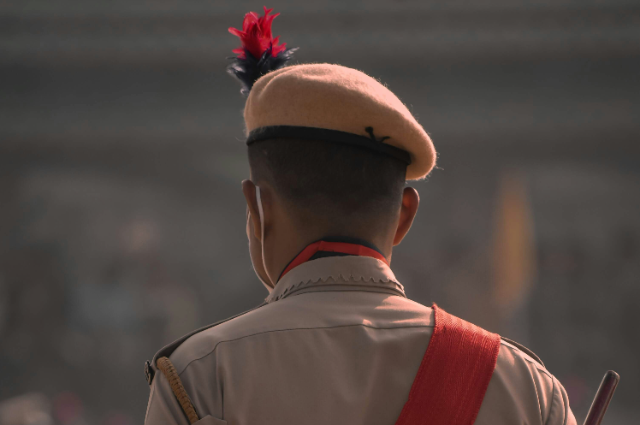
There's something profoundly instructive about Birdev Siddhappa Doné's journey from shepherd to IPS officer not because it's an isolated miracle, but because it exposes the vast distance between India's constitutional promise of equality and the lived reality of accessing that promise. His story isn't just about individual grit; it's a mirror held up to our examination systems, our social structures, and the question of who gets to exercise authority in this country.
The Starting Line Isn't the Same for Everyone
Birdev's childhood in Karnataka's pastoral landscape wasn't rural, it was labour. While his peers in urban centers attended coaching classes and solved previous year question papers, he was calculating grazing routes and seasonal patterns. This wasn't character-building in the abstract sense that privileged narratives often romanticize; it was economic necessity. His family's livelihood depended on the movement of livestock, and childhood hands were part of that equation.
What surprises most isn't that he studied while herding though that detail has understandably captured public imagination but that he had to. The structural inequities here are overwhelming. We celebrate these stories while ignoring what they reveal that talent in this country must overcome obstacles that have nothing to do with intellectual capacity and everything to do with accident of birth.
The UPSC challenge: Democracy's toughest exam
The Union Public Service Commission examination is designed to be difficult that's its purpose. It tests endurance, knowledge breadth, analytical thinking, and the ability to articulate complex ideas under pressure. But it also, inadvertently or otherwise, tests access. Access to quality education, to study materials, to coaching centers that have cracked the code of what examiners want, to the luxury of dedicated preparation time without the weight of immediate economic contribution.
Birdev didn't clear the exam on his first attempt. This matters as the narrative of instant success erases the more common reality of civil services preparation where multiple attempts, evolving strategies, learning from failure. Each attempt for someone in his position wasn't just academically demanding it was a gamble with family resources, with time that could have been spent earning, with the social capital that comes from meeting expectations.
The refinement of study plans, the revisiting of mistakes, these sound straightforward when written in newspapers. The lived experience is different. It's studying after physically exhausting work. It's accessing study materials in an environment where a personal library isn't a given. It's maintaining focus when the opportunity cost of every hour is tangible and immediate.
First Flight: The Geography of Privilege
There's a detail in this story that deserves pause as Birdev and his family travelled by flight for the first time while attending his training. Not for celebration, but for training a requirement of the position he'd earned. This isn't related colour; it's data about mobility; about how protected certain experiences remain to particular classes.
We live in a country where air travel, while increasingly common, still represents a threshold of access. That the journey from rural Karnataka to the training academy marked this threshold tells us about the distances of geographic and economic that remain unbridged for large populations. The civil services, theoretically, are meant to represent the entire nation. Yet the path to entering them is still shaped heavily by urban privilege, English-medium education, and economic cushioning.
What His Rank Actually Represents
Birdev's selection isn't about a "good rank" in the traditional coaching centre jargon where only the top 100 matter. His rank of 551 represents something more significant that successful steering of a system not designed with people like him in mind. The UPSC doesn't adjust for starting positions. It doesn't give handicaps for those who studied by kerosene lamp or balanced books while managing livestock.
This is both the strength and limitation of the examination. It maintains a certain consistency, a refusal to dilute standards. But it also continues a reality where exceptional effort from marginalized backgrounds achieves what moderate effort from privileged backgrounds accomplishes. The celebration of such stories often confuses this uncomfortable equation.
The Symbolism of an IPS Officer from the Fields
Birdev's allotment to the Indian Police Service carries particular weight. The police force in India has historically been associated with distance from the communities it regulates, sometimes with active hatred. An officer whose formative years involved daily labour, seasonal migration, and close knowledge of rural economics, brings a perspective that typical recruitment patterns don't capture.
This isn't to romanticize his background as automatically making him a better officer and competence isn't determined by origin. But perspective matters in positions of authority. Understanding isn't guaranteed by shared experience, but it's certainly aided by it. When police officials make decisions about land disputes, about migration patterns, about informal economies, having someone at the table who has lived those realities changes the conversation.
The Family Behind the Individual Success
The framing of these stories often centers the individual, but Birdev's success is fundamentally collective. A family that "believed education could change outcomes, even if the process tested patience" wasn't just being supportive, rather they were making sacrifices. Resources diverted to education are resources not available for immediate needs. Time allowed for study is time not spent on collective economic activity.
This family investment happens across India, often invisibly, but it's particularly sharp when margins are thin. The patience mentioned isn't passive; it's active faith against considerable odds. For every story like Birdev's that concludes successfully, there are countless others where similar investments don't produce the same return, not because of lesser effort but because the variables are many and systemic barriers are real.
What This Story Demands of Us
The appropriate response to Birdev Siddhappa Doné's achievement isn't just celebration though celebration is necessary. It's interrogation of the systems that make such journeys exceptional rather than accessible. It's asking why the path from rural India to the civil services remains so dramatically difficult that each success story is newsworthy. Birdev's story is inspiring precisely because it shouldn't have to be this rare. His achievement is individual, but the lesson is structural. Merit exists everywhere; opportunity doesn't.
. . .
References: