
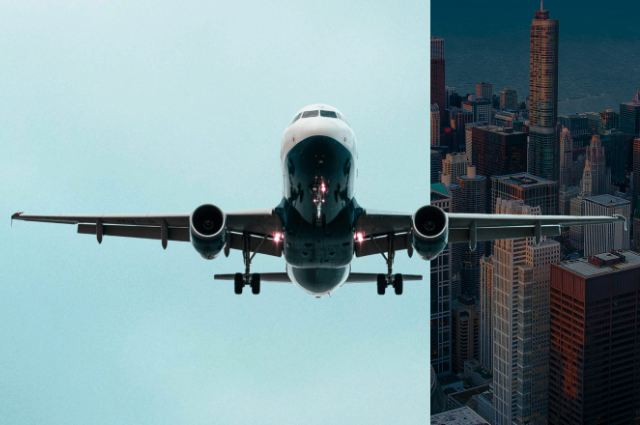
The launch of Shankh Airlines in January 2026 represents more than just another entrant into India's crowded aviation market. It's a narrative that links personal ambition with regional aspirations, state-backed enterprise with grassroots entrepreneurship, and economic realism with social possibility.
An Unlikely Aviation Pioneer
At the heart of this venture stands Shravan Kumar Vishwakarma, whose journey from loader and tempo driver in Kanpur's streets to airline founder captures a certain Indian dream. Seven years ago, Vishwakarma was navigating the gritty world of ground-level logistics in Unnao. Through strategic moves in steel, cement, and transport sectors, he accumulated not just capital but the confidence to pursue what seemed unlikely by launching Uttar Pradesh's first homegrown scheduled carrier.
The symbolism here matters. Indian aviation has long been dominated by established players and well-connected business houses. Vishwakarma's story, if it succeeds then this could demonstrate that even capital-intensive, regulation-heavy industries remain accessible to those willing to climb from the bottom. His December 24, 2025 receipt of the No Objection Certificate from the Union Ministry of Civil Aviation marked the bureaucratic blessing for this ambition, setting the stage for operations from Lucknow and the forthcoming Noida International Airport at Jewar.
Strategic Positioning in a Crowded Market
Shankh Airlines enters the dispute with a clear regional focus. The initial fleet of three leased Airbus A320neo aircraft, which are modern, fuel-efficient workhorses seating approximately 180 passengers in an all-economy configuration, will operate from Lucknow's Chaudhary Charan Singh International Airport. The route network targets obvious demand where Delhi, Mumbai, Bengaluru, and critically, intra-state destinations like Ayodhya, Varanasi, and Gorakhpur.
This isn't random. Lucknow airport had over 5.2 million passengers in 2025, marking a 25% year-on-year increase. The growth drivers are obvious including religious tourism to Ayodhya following the Ram Temple's opening, which attracted 10 million visitors in its first year, and expanding business activity across Uttar Pradesh's improving economic landscape.
Managing Director Sanjay Gupta's positioning is, “Shankh is not just about flights; it's about making air travel affordable for the common citizen.” The promise of fares below ₹3,000 for Lucknow-Delhi undercutting IndiGo and Air India Express, addresses a genuine market gap. In tier-2 India, price sensitivity remains dominant. If Shankh can maintain competitive pricing while ensuring reliability, it taps into the massive hidden demand among middle-class families for whom air travel remains occasional rather than routine.
The State as Stakeholder and Supporter
What distinguishes Shankh from purely private ventures is the backing of the Uttar Pradesh government. Chief Minister Yogi Adityanath revealed the project at the 2024 Global Investors Summit, framing it as a pillar of the UP State Aviation Corporation. The ₹500 crore initial investment through public-private partnerships provides cushioning that purely bootstrapped airlines lack.
This government involvement cuts both ways. State support offers stability, particularly crucial given India's aviation sector's notorious volatility. FlyBig's 2024 collapse due to funding shortages serves as a cautionary tale as for regional carriers that face small margins, infrastructure bottlenecks, and fierce competition. Shankh's hybrid model potentially mitigates these risks.
However, opposition voices like Congress leader Pawan Khera raise legitimate concerns about transparency and efficiency. India's experience with state-run carriers notably the old Air India's decades of losses before privatization suggests that political considerations can compromise commercial discipline. The challenge for Shankh will be maintaining operational excellence while directing the inevitable political pressures that accompany government involvement.
Lessons from the Low-Cost Carrier Playbook
India's aviation market offers instructive precedents. IndiGo began in 2006 with two aircraft and a relentless focus on operational efficiency, punctuality, and cost control. Today, it commands 35% market share, proving that disciplined regional starts can achieve scale. Shankh's adoption of modern A320neos with lower fuel consumption and maintenance costs reflects this emphasis on efficiency.
The broader context is favourable. India's domestic air traffic reached 150 million passengers in 2025, with tier-2 cities like Varanasi registering 40% growth. Post-pandemic recovery, combined with the UDAN (Ude Desh ka Aam Naagrik) scheme's subsidies for regional connectivity creates opportunity space. Shankh is on a genuine demand wave, not attempting to create one from scratch.
A Critical Assessment
The cheerfulness surrounding Shankh Airlines must be taken with realism. Aviation is unforgiving, where margins compress quickly, and operational failures compound rapidly. The airline's success will focus on execution fundamentals of aircraft utilisation rates, on-time performance, load factors, and cost control. Vishwakarma's experience in logistics and transport provides relevant skills, but airline operations demand specialised expertise in revenue management, network planning, and regulatory compliance.
The promise of 1,000 direct jobs in the first-year addresses employment needs in a state where youth unemployment remains concerning. If Shankh delivers, it provides not just mobility but livelihoods for pilots, cabin crew, engineers, ground staff, and indirect employment in additional services.
From a sustainability perspective, the A320neo's reduced emissions align with India's climate commitments, though meaningful environmental progress requires systemic changes in fuel sourcing and operational practices across the industry.
The Deeper Significance
Shankh Airlines represents a test case for regional entrepreneurship in sophisticated sectors. Can homegrown ventures compete with established giants? Can state support enhance rather than distort market dynamics? Can tier-2 India generate not just consumption but creation of complex services?
The airline's launch occurs amid India's infrastructure push and demographic dividend. Success would validate decentralised growth models, demonstrating that Delhi and Mumbai needn't monopolise high-value enterprise. Failure would reinforce doubts about state involvement and highlight the barriers facing in regional entrepreneurs.
For now, cautious optimism seems necessary. The fundamentals of demand, infrastructure, and financial backing will align favourably. But aviation has humbled far more experienced operators. Vishwakarma's journey from tempo driver to airline founder inspires, but the real measure will be whether Shankh Airlines still flies five years hence, connecting communities and delivering on its promise to make the skies accessible to ordinary citizens. That outcome will determine whether this story becomes a footnote or a blueprint.
. . .
References: