
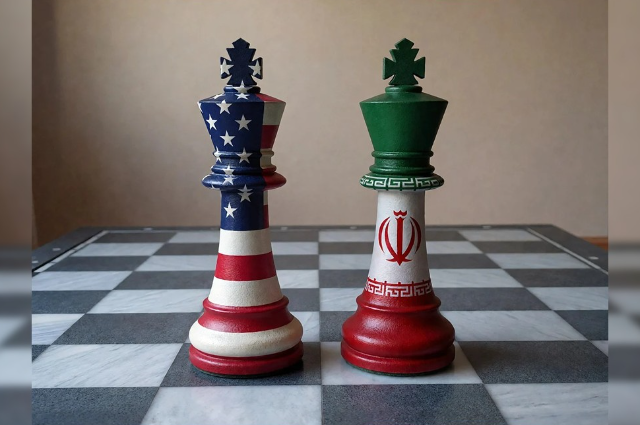
Image by S B from Pixabay
There is a particular kind of fear that comes not from one dramatic moment, but from watching a situation get worse by the hour. That is exactly what India's government has been living through over the past several days, as it struggled to keep nearly two thousand of its citizens safe inside a country that was edging towards the edge of a catastrophe.
The story begins on February 28, when the United States and Israel launched strikes on Iran that killed the country's Supreme Leader and several senior military commanders. That single event set off a chain reaction across the entire Middle East. Iran retaliated. Tensions exploded. The Strait of Hormuz, which is one of the most important shipping routes in the world, was blocked. Global energy markets shook. And somewhere in the middle of all this chaos, thousands of Indian nationals, including students and fishermen, found themselves trapped inside a country that was rapidly becoming a war zone.
First Advice: Don't Move
India's first instinct, as any responsible government would be, was to keep its people in place. The Indian Embassy in Tehran issued an advisory telling Indian nationals to stay exactly where they were for 48 hours. Do not go outside. Avoid electrical and military installations. Stay away from the upper floors of tall buildings. If you absolutely must travel on a highway, clear it with the embassy first.
For those staying in hotels arranged by the embassy, the message was even simpler to stay inside, keep your phone on, and keep talking to the embassy staff on the ground. Emergency numbers were shared. A control room was set up. The message was clear that we see you, we know you are there, and we are managing this. This kind of shelter-in-place order makes sense when the danger is uncertain. When no one knows where a missile might land or which building might become a target, stillness is safety.
Then Came Trump's Deadline
But stillness has limits, and the situation in Iran was not standing still. President Trump publicly warned that if Iran did not comply with US demands by 8 pm Eastern Time on then, there would be consequences. He made this threat in the kind of language that leaves very little room for interpretation. Fresh strikes hit Iran's Kharg Island, which is a strategically vital oil facility as well as key bridges and infrastructure. The region was not calming down. It was heating up. With that reality staring it in the face, India changed its course.
New Advice: Leave Now
On April 8, the Indian Embassy in Tehran issued a completely different kind of advisory. Instead of telling people to stay put, it told them to leave quickly, carefully, and only through routes the embassy had approved. "Expeditiously exit Iran," the embassy said. It was firm, direct, and urgent.
The warning that came with this advice was equally serious. Do not try to reach a border crossing on your own. Do not approach any international land border without speaking to the embassy first. The reasoning behind this is practical; border areas during active or recently paused conflict can be dangerous, unpredictable, and poorly controlled. An Indian national walking up to a land border without coordination could end up in far more danger than the one they were trying to escape.
What India Has Already Done?
By the time this second advisory was issued, India had already been quietly working in the background. Additional Secretary Aseem R. Mahajan, who oversees Gulf affairs in the Ministry of External Affairs, confirmed that the embassy had already helped 1,862 Indian nationals leave Iran. They were taken through Armenia and Azerbaijan before making their way back to India. Among those evacuated were 935 students and 472 fishermen, people who had no part in this conflict but found themselves caught inside it. Since late February, roughly 7,60,000 passengers have travelled from the broader West Asia region back to India, with flights continuing from all countries where airspace was still open. These are not small numbers. This is a large, coordinated operation happening in real time under enormous pressure.
A Ceasefire That Does Not Quite Settle Things
There is now a tentative two-week ceasefire between the US and Iran, reportedly brokered with help from Pakistan. On paper, this should be good news. It has paused active fighting and reopened shipping lanes through the Strait of Hormuz.
But the word "tentative" is doing a lot of heavy lifting here. Trump himself called Iran's initial peace proposal "workable," then reversed course and called it fraudulent without explaining what changed. Israel agreed to the ceasefire with Iran, but its Prime Minister Benjamin Netanyahu was clear that the fighting against Hezbollah in Lebanon would continue. Pakistan, which claims to have helped broker the deal, suggested that broader peace talks could begin soon, but that contradicts what the Israeli side is saying. In other words, this ceasefire is a pause, not a peace. It is fragile, contested, and built on ground that is far from stable.
India clearly understands this. The embassy is treating the ceasefire not as a sign that things are safe, but as a narrow window, perhaps the only one available, to get its remaining citizens out before the situation shifts again.
The Bigger Picture
What this episode reveals is how quickly a regional conflict can become a personal crisis for thousands of ordinary people who had nothing to do with it, and students chasing a degree, and fishermen making a living. India's response has been measured, practical, and focused on one thing and getting people home safely.
References
- https://timesofindia.indiatimes.com
- https://www.msn.com
- https://www.moneycontrol.com
- https://economictimes.indiatimes.com