
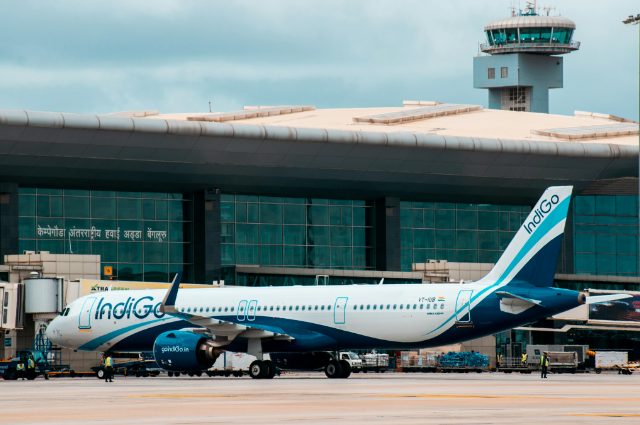
The mass cancellation of IndiGo flights last week wasn't just another routine airline interruption, it was a systemic failure that reveals a troubling disconnect between regulatory intent and operational readiness in Indian aviation. What we witnessed was the crash of stricter safety standards with an airline's apparently inadequate planning, leaving thousands of passengers stuck and exposing the limitations on which India's largest carrier operates.
The problem of this disruption lies the Directorate General of Civil Aviation's revised Flight Duty Time Limitations (FDTL) norms, which came into full force on November 1, 2025. These aren't arbitrary bureaucratic impositions, they're scientifically-backed safety measures designed to address a genuine and potentially disastrous risk which is pilot exhaustion.
The new rules fundamentally restructure how airlines can deploy their crews with three critical changes that directly impacted IndiGo's operations. First, pilots are now permitted only two landings between midnight and 6:00 AM per week, a dramatic reduction from the previous limit of six. For an airline that has built its business model around maximizing aircraft utilization through flights and early-morning departures, this restriction effectively reduced available pilot hours overnight.
Second, mandatory weekly rest periods were extended from 36 to 48 hours, giving pilots more time to recover between duty cycles. Third, the definition of "night hours" itself was expanded, by imposing additional constraints on crew scheduling during periods when human daily times are most vulnerable to exhaustion.
The Planning Failure: Eighteen Months Wasn't Enough
Here's what makes this situation particularly frustrating as IndiGo had eighteen months to prepare for these changes. The regulations weren't imposed on the airline suddenly; they were announced well in advance to allow carriers adequate time to adjust their crew planning, recruitment, and adopting to systems.
Yet when the implementation date arrived, IndiGo's operation essentially collapsed under the new requirements. The airline's crew system with the complex technological and administrative purposes that matches pilots to flights while ensuring regulatory compliance, had proved completely inadequate for the task. What should have been a managed transition instead became a crisis, with the airline unable to assign sufficient crew to operate its scheduled services.
This represents a fundamental failure of operational planning. Airlines operate in a highly regulated environment where rules change periodically to reflect evolving safety understanding. A well-managed transporter builds buffers into its system, maintains adequate crew assets, and stress-tests its operations against expected regulatory changes. IndiGo, despite being India's aviation giant with dominant market share, seemingly did none of these things adequately.
Compounding Vulnerabilities: When Problems Multiply
The crew shortage, while primary, didn't exist in isolation. IndiGo was already operating with compromised fleet capacity due to a separate technical issue and a significant number of its Airbus A320neo aircraft remained grounded because of persistent durability problems with their Pratt & Whitney engines. These powerplant issues have beset the A320neo family globally, but they hit particularly hard at airlines like IndiGo that operate large fleets of these aircraft.
With fewer planes available, IndiGo was forced to maximize utilization of its remaining aircraft, running a tighter operation with less flexibility. When the new crew regulations removed additional capacity from the pilot pool, there was simply no cushion left to absorb the shock. The airline was effectively operating without any operational buffer and in a dangerous position for any carrier, but especially for one handling the volume of passengers IndiGo manages daily.
Adding to these pressures were reports of a required software update for the Airbus A320 family addressing commanded pitch-down events another factor temporarily impacting aircraft availability. Minor technology glitches, winter schedule adjustments, and increased airport congestion further strained an already weakened system.
The Broader Implications: Safety Versus Efficiency
This crisis illuminates a fundamental tension in modern aviation that the balance between operational efficiency and safety margins. Airlines operate on especially thin profit margins, with every percentage point of aircraft utilization and crew productivity directly impacting the bottom line. IndiGo's business model has been predicated on high-frequency operations, quick turnarounds, and maximum use of available flying hours that will be essentially, running low to keep costs down and maintain its competitive pricing.
The new FDTL rules force a recalibration of this model. By limiting how hard airlines can work their pilots, regulators are essentially mandating the reintroduction into the system, that costs money but saves lives. Pilot exhaustion isn't an abstract concern; exhausted crews have contributed to numerous aviation accidents throughout history. The regulations recognize that human beings cannot be treated as extremely flexible resources to be optimized like aircraft engines.
What This Says About IndiGo's Priorities
The most critical aspect of this situation is what it suggests about IndiGo's operational philosophy. The airline had ample warning, yet apparently chose not to hire and train sufficient additional pilots to meet the new requirements comfortably. This suggests a calculated gamble that either the regulations wouldn't be strictly enforced, or that the airline could somehow manage with its existing crew match despite the new restrictions.
That gamble failed and passengers paid the price through cancelled flights, disrupted plans, and the chaos of mass rebooking. It raises serious questions about whether IndiGo prioritized short-term cost savings over operational resilience and regulatory compliance.
The Path Forward
For IndiGo, the immediate task is clear to recruit, train, and integrate sufficient additional pilots to operate its network under the new regulatory framework. This cannot be accomplished overnight and pilot training is time-consuming and expensive, but it should have been accomplished over the past eighteen months.
For regulators, this episode validates their decision to implement stricter rules while highlighting the need for robust enforcement mechanisms. The DGCA cannot allow airlines to treat safety regulations as optional guidelines subject to business convenience. For passengers, this disruption serves as a reminder that the cheapest ticket isn't always the best value if it comes from an airline operating with no operational buffer. Reliability matters, and it requires investment in excess capacity where crew, aircraft, and systems that may not show up in the base fare but proves invaluable when things go wrong.
Ultimately, the IndiGo crisis represents a cautionary tale about the dangers of optimization without resilience of squeezing every drop of efficiency from a system until there's no margin left for error, disruption, or regulatory evolution. In aviation, where safety must always come first, that's a philosophy that inevitably leads to exactly the kind of failure we witnessed last week.
. . .
References: