
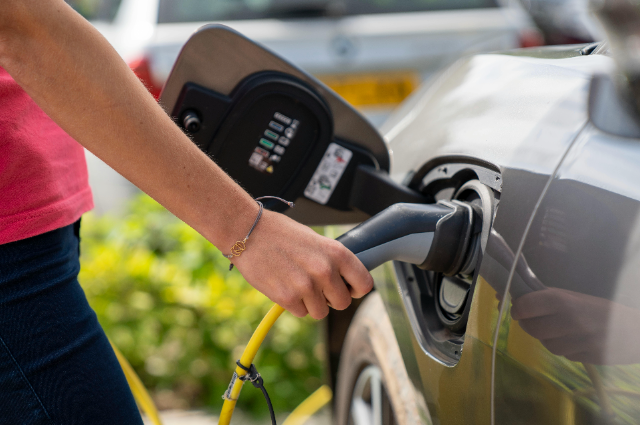
April 11, 2026, and India finds itself fighting battles on multiple fronts. One is fought with smog. Another, with silence. Let's start on the ground, literally, at street level in Delhi, where the air is thick enough to taste. The Delhi government has released a draft Electric Vehicle (EV) Policy for 2026–2030, and the headline is striking, where new two-wheelers running on fossil fuels will be banned from 2028, as part of an effort to manage emissions in one of the world's most polluted cities. This is not a distant dream or a vague aspiration. It is a draft policy, uploaded for public feedback, with a 30-day comment window before it becomes official.
The Numbers Don't Lie, But the Road Ahead Is Long
The logic behind this decision is hard to argue with. Two-wheelers make up approximately 67% of Delhi's total vehicle stock, making their rapid electrification critical for achieving meaningful reductions in vehicular emissions. And vehicular pollution is not a minor contributor; a recent report identified it as the largest contributor to air pollution in the National Capital Region, accounting for about 23% in winters. Every winter, Delhi chokes. Every winter, there are political rows. Every winter, children miss school and the elderly stay indoors. This policy is an attempt to break that cycle structurally, not just seasonally.
Phase by Phase: What the Policy Actually Proposes
The proposed plan is phased and, on paper, sensible. Only electric three-wheelers will be permitted for new registration starting in 2027, and only electric two-wheelers from 2028. By 2030, 30% of all school buses will have to be electric. The government is also sweetening the deal, purchase incentives for electric two-wheelers, three-wheelers and goods vehicles are on offer, alongside tax breaks for those buying electric vehicles, including cars.
This is bold urban policymaking. But the success of this plan will hinge not on the policy document itself, but on the infrastructure that supports it. Charging stations, affordable EV options for the working class, reliable electricity supply are the real tests. Banning petrol bikes is easy to write into law. Replacing them with something accessible and practical is a different challenge entirely. Delhi has made ambitious environmental pledges before. What will matter is whether 2028 looks different from every year before it.
Pakistan's Moment in the Sun And India's Uncomfortable Silence
Now, zoom out because while Delhi wrestles with its smog, India is grappling with something equally suffocating on the global stage, which is invisibility. As leaders from the US and Iran gathered in Pakistan to negotiate a conflict, many Indians watched with narrowed eyes. The optics were painful for a country that has spent years cultivating an image of rising global stature. Pakistan, which is India's arch-rival, a country New Delhi has long tried to diplomatically isolate, was suddenly hosting one of the most consequential diplomatic meetings of the year. On Indian soil, that stings.
The 'Vishwaguru' Narrative Under Strain
Prime Minister Narendra Modi has spent over a decade carefully crafting India's image as a global leader. The 'Vishwaguru' teacher of the world narrative has been central to his political identity at home. Watching Islamabad step into a mediator's role punctures that narrative uncomfortably.
The opposition has not missed the moment. India's largest national opposition party, the Indian National Congress, blamed the government's "incompetence" for allowing Pakistan to claim a pivotal role in great-power competition in Asia, warning it would give Islamabad leverage over India on bilateral matters through third parties. Other opposition voices echoed the frustration. Akhilesh Yadav said the BJP had "ruined our foreign policy," and that India appeared weak internationally while Pakistan strengthened its standing.
New Delhi's Careful Non-Answer
The government's response has been careful, almost clearly so. Foreign Ministry spokesperson Randhir Jaiswal welcomed the US-Iran ceasefire and called for "de-escalation, dialogue and diplomacy," but notably did not comment on Pakistan's role as mediator. Silence, in diplomacy, is often its own statement.
There is context here that matters. Relations between India and Pakistan hit rock bottom in May 2025 after an attack on civilians in Indian-administered Kashmir led to cross-border drone and missile attacks. Indian Foreign Minister Jaishankar had previously called Pakistan a 'dalal', a broker, a word that, while technically neutral, carries unmistakably negative connotations in Hindi. That Pakistan is now being treated as a legitimate diplomatic actor by the United States is a shift that no amount of wordplay fully softens.
West Bengal: Where Elections Are Fought Over Identity and Fish
Amid all this, India's most politically charged state heads toward elections. In West Bengal, Prime Minister Modi pledged to speed up the implementation of the Citizenship Amendment Act if elected, warning "infiltrators" to pack their bags while simultaneously reassuring refugee communities that their futures were protected. It is a delicate balancing act and a revealing one. The CAA, passed in 2019 amid nationwide protests, fast-tracks citizenship for Hindu, Sikh, Buddhist, Jain, Parsi and Christian immigrants from Pakistan, Bangladesh and Afghanistan but excludes Muslim immigrants, marking the first time in India to set religious criteria for citizenship.
The Fish That Swam Into Politics
West Bengal is also witnessing the strangest of political theatre, a debate over fish. Chief Minister Mamata Banerjee warned that the BJP would "ban fish, meat and even eggs" if elected. In response, a local BJP candidate campaigned with a raw fish hanging around his neck, a video that went viral. In a state where fish is deeply tied to culture and identity, the absurdity of the scene carries a serious subtext about how elections are increasingly fought over symbols, fears and identity rather than policy.
. . .
References: