
The mid-year point of 2026 brings an array of wide-ranging financial, digital, and energy policy updates across India. Rolling out through June and July 2026, these comprehensive revisions affect everything from how you send money via your phone to how your household cooking gas is delivered and billed. Staying on top of these changes ensures you protect your digital security, avoid heavy penalties, and maximize savings on daily essentials.
UPI Reboots with Anti-Scam Measures and New Quotas
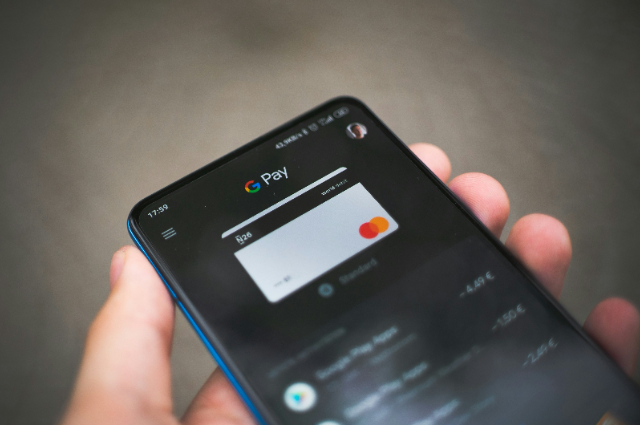
The Unified Payments Interface (UPI) has been rebooted with critical anti-scam measures introduced by the National Payments Corporation of India (NPCI). For high-value transactions, popular payment apps like Google Pay, PhonePe, and Paytm can no longer rely solely on your standard 4-digit or 6-digit UPI PIN. Instead, they now prompt you for biometric authentication, such as a fingerprint or Face ID scan, or device-linked third-party verification to authorize the payment. To eliminate misdirected payments, these apps must also securely retrieve and display the officially registered bank account holder's name before you complete the transaction. Additionally, banks are now counting cardless ATM withdrawals made via UPI QR codes against your standard monthly allotment of free ATM transactions, meaning that exceeding your limit will now result in regular bank fees.
Cooking Gas Overhaul: The Shift from LPG to PNG
Simultaneously, the cooking gas sector is undergoing a massive policy modernization designed to accelerate the shift from traditional Liquid Petroleum Gas (LPG) cylinders to Piped Natural Gas (PNG). Under the "One Household, One Gas Connection" framework, maintaining both connections at the same time is now restricted. If your neighborhood has an active PNG pipeline, you have a 90-day window to sign up for the utility or face a suspension of your cylinder supply.
Once your PNG line is fully activated, you must formally surrender your LPG cylinder to your distributor within 30 days to avoid having your account blocked. Everyday cylinder logistics have also seen revisions; the minimum mandatory gap between ordering domestic refills is now strictly set to 25 days for urban areas and 45 days for rural areas. To safeguard your active gas subsidies, completing your electronic Know Your Customer (e-KYC) biometric verification is now mandatory. On the pricing front, small businesses receive a welcome relief as the price of a 19-kg commercial LPG cylinder has been cut by ₹183.50, dropping to ₹2,930 in Delhi, while standard 14.2-kg domestic cylinders remain unchanged at ₹942.
Administrative Updates: Aadhaar and Passport Fees
Important updates have also hit essential administrative services. On one hand, the Unique Identification Authority of India (UIDAI) has provided a temporary waiver by completely removing the previous ₹75 fee for updating or linking email addresses to an Aadhaar card through its official mobile application, a waiver that remains active until December 31, 2026. On the other hand, traveling or working abroad has become noticeably more expensive due to a sharp upward revision in passport application costs under amended rules. The fee for a normal adult 36-page passport has risen from ₹1,500 to ₹2,500, while the 60-page alternative has jumped from ₹2,000 to ₹3,500. For expedited processing, Tatkaal application rates have increased to ₹5,000 for 36 pages and ₹6,000 for 60 pages.
Landmark Rural Reforms and Banking Adjustments
In a massive structural shake-up for rural economies, the central government has fully operationalized the Viksit Bharat, Guarantee for Rozgar and Ajeevika Mission (Gramin) Act, which officially replaces MGNREGA. This historic legislation expands the guaranteed wage employment period for eligible rural families from 100 days to 125 days within a financial year, backed by an initial funding pool of ₹95,692.31 crore to secure strong rural safety nets. Meanwhile, urban banking and credit privileges are tightening. Major card issuers like HDFC Bank have raised the bar for complimentary domestic airport lounge access, requiring cardholders to record a minimum spend of ₹60,000 in the preceding calendar quarter to unlock benefits, while SBI Card and PhonePe cobranded cards have heavily compressed their monthly reward point earning caps.
The Immediate Takeaway for Taxpayers
Finally, taxpayers must keep an eye on the upcoming tax calendar as the hard deadline for filing Income Tax Returns (ITR-1 and ITR-2) for the Financial Year 2025-26 approaches on July 31, 2026. Missing this timeline invites hefty late fees, restricts your ability to carry forward structural financial losses, and adds unnecessary legal resistance.
Taking a small amount of time this week to verify your UPI configurations, check your gas connection status, and map out your filing documentation will help you smoothly navigate these changes and protect your household budget.
. . .
References: