
.jpg)
The world today is facing one of its most dangerous geopolitical moments in recent years. A major conflict in the Middle East has disrupted global trade routes and threatened the steady supply of oil to many countries. In the middle of this crisis lies a narrow but extremely important waterway known as the Strait of Hormuz. Despite the chaos around it, India has managed to keep some of its ships moving through this corridor. This has not happened by chance. It is largely the result of careful diplomacy and long-standing relationships.
A Waterway That Powers the World
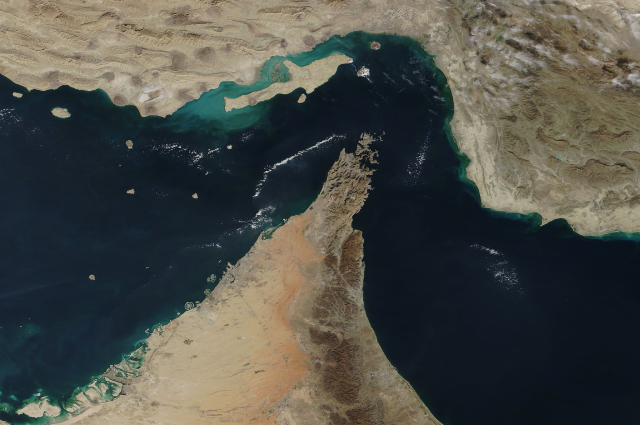
The Strait of Hormuz connects the Persian Gulf to the open seas. It is one of the most important routes for global energy supply. Every day, millions of barrels of oil normally pass through this narrow channel. In fact, nearly one-third of the world’s oil shipments travel through this waterway.
When such a crucial route is disrupted, the effects are felt across the world. Countries that rely on oil imports face immediate problems. India is one of those countries. As the world’s third-largest importer of crude oil, India depends heavily on energy supplies coming from the Middle East. Around forty percent of India’s oil imports come from this region and pass through the Strait of Hormuz. So, when the Strait suddenly stopped functioning normally in late February 2026, it quickly became a serious problem for India.
How the Crisis Began?
The disruption started after a major escalation in the conflict between the United States, Israel, and Iran. Joint military strikes by the United States and Israel targeted Iran, and during these attacks, Iran’s Supreme Leader Ali Khamenei was killed.
Iran responded strongly. The country’s powerful military wing, the Islamic Revolutionary Guard Corps, announced that the Strait of Hormuz would be closed to shipping linked to its enemies. Soon after this announcement, tanker movement in the region collapsed. Reports suggested that shipping traffic dropped by almost seventy percent, and many vessels began waiting outside the strait instead of risking passage. Within days, traffic through the waterway had nearly stopped completely.
Immediate Impact on India
For India, the effects were felt almost immediately. Energy supplies are closely linked to everyday life. When oil shipments slow down, the impact is not limited to international trade, it reaches ordinary households. Several Indian cities began facing a shortage of domestic gas cylinders used for cooking. Panic buying and supply concerns started appearing in some areas. At the same time, around thirty-seven India-flagged ships were stuck near the Strait of Hormuz. These vessels carried more than 1,100 crew members who were effectively trapped in a tense and unpredictable region.
The crisis was no longer just a foreign policy issue. It had become a practical problem affecting energy supplies, shipping safety, and the well-being of Indian citizens.
India’s Diplomatic Effort
Instead of reacting publicly or aggressively, India chose a quieter path. The government began working through diplomatic channels to solve the problem. India’s External Affairs Minister S. Jaishankar held several conversations with Iranian leaders. These talks focused on ensuring maritime safety and protecting energy shipments. At the same time, discussions also took place at the highest political level.
Prime Minister Narendra Modi spoke with Iran’s President Masoud Pezeshkian as part of these efforts. India’s message was straightforward. It asked Iran to allow safe passage for Indian ships so that essential supplies like crude oil and liquefied petroleum gas (LPG) could continue reaching the country.
Iran’s Positive Signal
Iran eventually responded in a supportive way. Iran’s Ambassador to India, Mohammad Fathali, publicly confirmed that Iran considered India a friendly country. He explained that Iran and India share common interests in the region and that both countries have helped each other during difficult times. According to him, the difficulties faced by Indian people were understood by Iran, and therefore, Iran was willing to cooperate.
This response was not only about diplomacy. It was also linked to recent gestures of goodwill by India. After the conflict began, India allowed 183 Iranian sailors to dock safely at Indian ports. In addition, three Iranian ships returning from a naval exercise in the Bay of Bengal were also allowed to enter Indian waters. These actions helped build trust between the two countries.
The Ships That Passed Through
The result of this diplomatic effort was significant. Iran allowed two Indian LPG tankers, the Shivalik LPG tanker and the Nanda Devi LPG tanker, to pass safely through the Strait of Hormuz. One of these vessels, the Shivalik, was carrying around 40,000 metric tonnes of LPG. After leaving Bandar Abbas Port, the ship crossed the Strait with protection from the Indian Navy and began its journey toward the Indian coast.
This was an important development because the waters had effectively become a conflict zone. Since the crisis began, Iran has reportedly attacked several ships passing through the region. Allowing Indian vessels to move safely was, therefore a rare exception. Earlier, another ship had also managed to reach India. The tanker at Shenlong, captained by an Indian mariner, successfully navigated the route and reached Mumbai port. It became the first crude shipment to arrive in India after the conflict escalated.
. . .
References: