
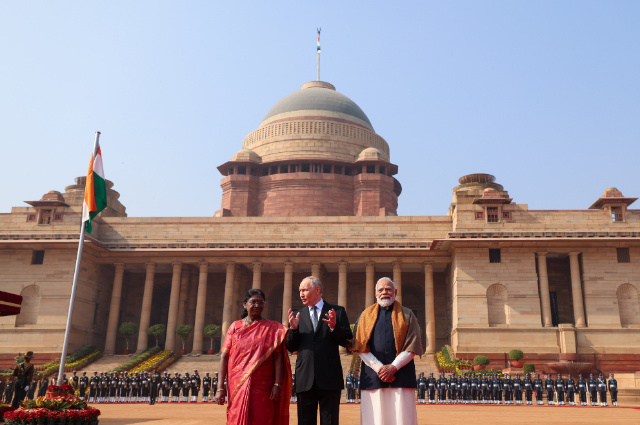
On December 5, 2025, Prime Minister Narendra Modi announced a significant policy shift that could reshape India-Russia people-to-people connections. During the 23rd India-Russia Annual Summit in New Delhi, attended by President Vladimir Putin, India showed free 30-day e-tourist and group tourist visas for Russian citizens. This decision eliminates the previous ₹2,500 fee and removes biometric verification requirements, marking a deliberate attempt to revive tourism flows that have suffered dramatically in recent years.
The Numbers Tell a great Story
The context behind this announcement reveals a tourism relationship in distress. Russian visitor numbers to India have collapsed from 187,000 in 2019 to fewer than 60,000 in 2024, a decline of nearly 70 percent. Multiple factors contributed to this downturn, where the ongoing Ukraine conflict, dramatically increased airfares exceeding ₹1 lakh for basic routes, and severely limited flight connectivity between the two nations.
Currently, only 10 weekly flights connect India and Russia, a number sadly inadequate for sustaining robust tourism exchanges between the two countries with historically strong ties. Round-trip tickets between Delhi and Moscow now frequently exceed ₹1.2 lakh, pricing out middle-class Russian travellers who once formed a significant portion of India's international visitors.
Indian officials project this visa waiver could attract an additional 100,000 Russian visitors by fiscal year 2026-27. Aeroflot's resumed Delhi-Moscow routes and IndiGo's consideration of Moscow service suggest the aviation sector is cautiously optimistic about recovery prospects.
Understanding the New Visa Framework
The free visa facility applies specifically to leisure travel, covering both individual e-tourist visas and group tourist visas for 30-day stays. These are single-entry permits requiring applicants to demonstrate return tickets, sufficient financial resources, and valid passports. The application process remains entirely online but now carries no financial burden for Russian travellers.
Importantly, the waiver excludes business and medical visa categories, which retain their existing fee structures. This targeted approach suggests Indian policymakers want to specifically boost leisure tourism rather than opening all visa categories. Overstaying these visas carries penalties under India's Immigration and Foreigners Act, maintaining enforcement mechanisms despite the liberalised access.
Tourism as Diplomatic Currency
Prime Minister Modi framed this initiative as strengthening people-to-people bonds, explicitly connecting it to broader manpower mobility, skilling programs, and economic partnerships. President Putin reciprocated with expressions of gratitude for India's hospitality, emphasising their "close working dialogue" aimed at elevating bilateral strategic cooperation.
This visa announcement accompanied the signing of 16 agreements spanning defense, trade, energy, and health sectors. The summit also unveiled "Vision 2030," an ambitious roadmap targeting $100 billion in bilateral trade and triple of the current levels, alongside cooperation on Arctic training, critical minerals, nuclear energy, and defense manufacturing.
Travel industry representatives have noted how such policies can humanise diplomacy during periods of geopolitical strain. By facilitating ordinary citizens' movement, countries signal relationship depth beyond government-to-government transactions. For India, which has maintained its strategic autonomy regarding the Ukraine conflict, this visa policy demonstrates a continued commitment to the Russia relationship while avoiding overt political statements.
Economic Implications for Indian Tourism
Russian tourists have historically gravitated toward India's diverse offerings like Goa's beaches, Himalayan trekking routes, spiritual centres like Rishikesh, and Kerala's backwaters. Industry experts anticipate renewed interest in group tours from Siberia and the Urals, where demand for yoga retreats and Ayurvedic wellness experiences has persisted despite travel complications.
Stakeholders from hotel associations in Rajasthan and Uttarakhand project 20-30 percent occupancy increases during peak winter seasons. The removal of visa fees addresses what industry voices identify as a major barrier for middle-class Russians, potentially channelling millions of rupees into local economies across tourist destinations.
The timing appears strategic, coinciding with early signs of recovery. Russian visitor numbers showed 25 percent year-on-year growth in early 2025, building on pandemic recovery momentum. The visa waiver could accelerate this trend significantly.
Historical Context and Future Trajectory
India-Russia tourism interdependence stretches back decades, with regular Moscow-Delhi flights carrying adventure seekers to Ladakh and families to southern India. The Ukraine war disrupted these patterns, forcing expensive third-country routings that made India less competitive as a destination for Russian travellers.
Recent developments suggest warming aviation ties. Aeroflot's route expansions and IndiGo's Moscow considerations indicate growing carrier confidence. Combined with this visa liberalization, the infrastructure for renewed tourism flows appears to be taking shape.
Cultural exchanges have continued despite challenges, including Buddha relic displays in Russia's Kalmykia Republic. These initiatives maintain relationship continuity even when tourist numbers fluctuate, providing foundations for rebuilding travel connections.
Broader Questions of Reciprocity and Expansion
Industry groups have used this announcement to call for reciprocal visa easings from other countries, specifically mentioning Japan. This suggests Indian tourism stakeholders see potential for similar bilateral arrangements that could boost overall international arrivals.
No stakeholder opposition to the Russia visa waiver has been reported, indicating broad support within India's tourism sector. The policy appears carefully designed to minimize controversy while maximizing practical impact on visitor numbers.
A Realistic Balancing Act
India's free visa announcement represents pragmatic diplomacy in action. It advances economic interests by reviving a lucrative tourism segment, strengthens bilateral ties through enhanced people-to-people contact, and demonstrates relationship commitment without requiring explicit political positioning on contentious issues.
For Russian citizens priced out of international travel by economic sanctions and limited connectivity, India becomes one of the few welcoming, affordable destinations offering rich cultural experiences. For India, Russian tourists represent valuable foreign exchange and employment generation in tourism-dependent regions.
The success of this initiative will ultimately depend on whether flight connectivity improves sufficiently to make travel practical and whether Russian consumers respond to the reduced barriers. Early indicators suggest cautious optimism, but transforming policy into measurable tourism growth requires sustained effort from both governments and private sector players.
As global travel patterns continue evolving, India's willingness to adapt visa policies for strategic partners demonstrates flexibility that could serve as a template for other bilateral relationships. Whether measured in tourist arrivals, economic impact, or diplomatic symbolism, this visa waiver carries significance far beyond its administrative simplicity.
. . .
References: