
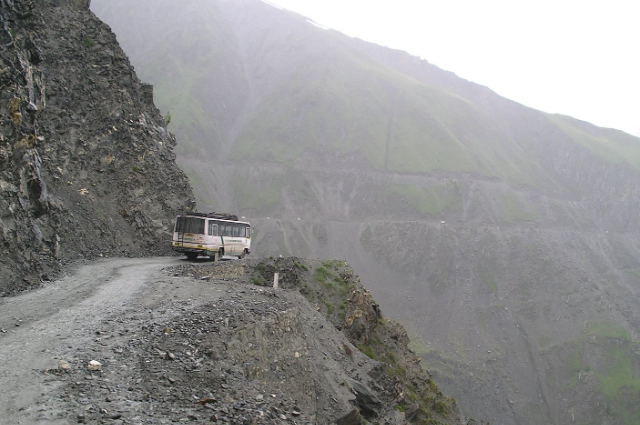

For decades, the high-altitude geography of Northern India has dictated human lives with unyielding finality. When winter arrives in the Himalayas, it brings a heavy white blanket of snow that seals off entire civilisations. The most notorious symbol of this seasonal isolation has long been the Zojila Pass. Situated at an altitude of over 11,500 feet, this mountain pass on the Srinagar-Leh National Highway serves as the only terrestrial thread binding the Kashmir Valley to the cold desert region of Ladakh. Yet, every single year, nature cuts this thread, forcing Ladakh into roughly three to four months of absolute isolation due to severe blizzards and unpredictable avalanches.
The historic breakthrough at the Zojila Tunnel changes this dynamic forever. By executing a controlled blast to connect the two ends of what will become Asia’s longest single-tube bi-directional mountain tunnel, engineers have accomplished something once deemed nearly impossible. They have bridged a massive geographical divide, moving India closer to a long-held dream of year-round, all-weather connectivity across the Himalayas.
An Engineering Marvel Beneath the Ice
The Zojila Tunnel project tackles this challenge head-on by going directly through the mountains rather than over them. Stretching a massive 13.15 kilometres from Baltal in central Kashmir’s Ganderbal district to Minimarg in Ladakh’s Drass district, it is a marvel of human ingenuity.
Designing a tunnel of this magnitude at an elevation of 11,578 feet presents a logistical puzzle. The geology of the Himalayas is notoriously unstable. Unlike the older, harder rock formations found in Europe, the Himalayas are relatively young mountains. The rock is fragile, brittle, and highly unpredictable. Drillers frequently encounter hidden pockets of water, shifting faults, and sudden rockfalls. To pierce through this unforgiving rock, the engineering team deployed a highly sophisticated technique known as the New Austrian Tunnelling Method (NATM).
Human Resilience: A Tale of Two Homes
Behind the heavy machinery, the explosives, and the complex geological blueprints is a story of profound human dedication. Building a 13-kilometre highway inside a frozen mountain requires thousands of labourers and engineers to live and work in an ecosystem that is openly hostile to human life. They have braved terrifying winter blizzards, thin mountain air with low oxygen levels, and the ever-present psychological weight of working deep underground beneath millions of tons of unstable rock.
This shared struggle has forged deep emotional bonds. A prominent example of this human connection is Yousef Es'haghpour Rahimabadi, an expert engineer from Iran who serves as the project's Authority Engineer. Having spent years on the project navigating the harsh Himalayan terrain, Rahimabadi spoke with deep emotion during the breakthrough ceremony, officially declaring India his "second home."
His sentiment reflects the spirit of the entire workforce. The Zojila Tunnel is more than just a combination of concrete, steel, and asphalt; it is a shared triumph of global expertise and local grit, proving that human determination can conquer the most intimidating barriers of nature.
A Paradigm Shift in Time and Economy
When the tunnel is fully completed and thrown open to the public, which is expected by February 2028, the impact on the region will be immediate and transformative. Currently, driving across the treacherous Zojila Pass takes anywhere from one to more than three hours, assuming the weather is clear and there are no military convoys or trucks stuck in the mud. The new tunnel will bypass this entire treacherous stretch, compressing that stressful journey into a smooth, safe, 15-minute drive.
Old Route vs New Route Comparison
This shift from a three-hour struggle to a 15-minute drive will completely revitalise the local economy. Businesses in Ladakh will no longer need to halt operations during the winter, and local farmers will be able to transport their goods to markets in Kashmir and the rest of India year-round. Tourism, which is the financial lifeblood of Ladakh, will expand into a year-round industry, allowing travellers to safely witness the breathtaking beauty of the winter landscape without the fear of getting stranded.
Elevating National Security
Beyond the clear economic and humanitarian benefits, the strategic value of the Zojila Tunnel cannot be overstated. The Ladakh region borders two sensitive international boundaries. Maintaining a reliable, uninterrupted line of communication to these border zones is a vital national security priority. Historically, the winter closure of the Zojila Pass meant that if a security crisis emerged during the winter months, the military had to rely entirely on expensive airlifts to move troops, heavy artillery, and ammunition. The new tunnel ensures that the military can move assets smoothly and safely at a moment's notice, regardless of the blizzard raging on the peaks above. It provides India with permanent geopolitical stability, ensuring its northern territories are never left isolated or vulnerable.
Looking Ahead to 2028
While the successful breakthrough marks the completion of the most unpredictable phase, the actual excavation of the rock, a project of this scale, requires careful finishing. Over the next two to two-and-a-half years, engineers will focus on the extensive civil and electrical works required to make the space safe for thousands of daily vehicles.
This includes installing high-tech ventilation systems to clear vehicle exhaust, setting up automated firefighting equipment, placing bright, energy-efficient lighting, and building advanced drainage systems to handle melting snow water. Though it is not yet open for daily civilian traffic, officials have noted that the tunnel's rough structure is already coherent enough to be used for emergency services or critical military movements if a crisis arises.
The breakthrough at the Zojila Tunnel stands as a powerful reminder of what can be accomplished when vision, engineering expertise, and human endurance come together. It takes a historic geographical barrier, ensuring that the people of Ladakh are permanently woven into the social and economic fabric of the rest of the nation.
. . .
References: