
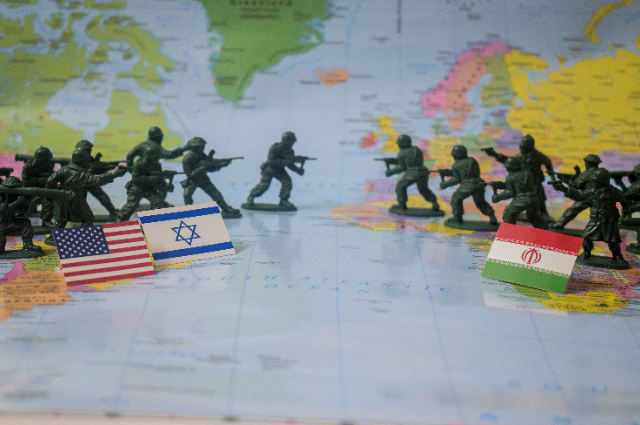
Photo by Saifee Art on Unsplash
The recent escalation between Iran, Israel, and the United States has created one of the most serious crises in the Middle East in recent years. What began as a sudden military strike has rapidly grown into a wider confrontation involving multiple countries. The situation continues to change quickly, with attacks, political reactions, and humanitarian concerns shaping the story each day.
The conflict intensified when Israel launched large-scale military strikes against targets in Iran. Israeli leaders described the operation as a necessary step to protect their national security. According to their statements, the strikes were aimed at preventing future threats from Iran’s missile and nuclear programs. These attacks targeted important military facilities and strategic locations connected to Iran’s defense infrastructure.
Explosions and Immediate Aftermath
The scale of the operation surprised many observers. Explosions were reported in several areas, including the capital city of Tehran. These attacks marked one of the most direct confrontations between the two countries.
For years, Israel and Iran had been rivals and opponents in regional politics, but their conflict was usually carried out indirectly through cyberattacks, intelligence operations, or through allied groups in other countries. Direct military action between them represents a major shift in the nature of their rivalry and shows how tensions have intensified.
Following the strikes, Iran promised a strong response. Iranian leaders said the country would not allow such attacks to go unanswered. Soon afterward, missiles and drones were launched toward targets connected to Israel and the United States in the region.
Several military bases and strategic facilities were placed on high alert as defenses attempted to intercept incoming attacks. This quick retaliation showed that Iran was prepared to respond forcefully, increasing fears that the conflict could grow into a larger war.
The Conflict Spreads Across the Region
The crisis did not remain limited to Iran and Israel. Neighboring countries in the Middle East soon began to feel the effects. Some missiles and drones reportedly passed through or landed near areas where American forces are stationed.
Air defense systems were activated in several countries to intercept potential threats. The possibility that the conflict could involve additional nations has raised serious concerns among international observers. If more countries become directly involved, the situation could turn into a much larger regional war.
Another important development occurred in Lebanon, where the armed group Hezbollah operates. Hezbollah is widely considered one of Iran’s closest allies in the region.
As the conflict escalated, Israel carried out airstrikes targeting Hezbollah positions in Lebanon. These attacks created fear among civilians and forced many families to leave their homes. The opening of another front in Lebanon made the situation even more complicated and dangerous.
Impact on Civilians
Civilian populations in several countries have already been affected by the conflict. Explosions, military alerts, and air raid warnings have disrupted everyday life.
In some cities people rushed to shelters or attempted to leave urban areas because they feared further attacks. Hospitals have reported casualties, and emergency services have struggled to respond to multiple incidents. These developments highlight the human cost of the conflict, which often falls most heavily on ordinary people rather than military forces.
Uncertainty About Iran’s Leadership
Political uncertainty has also increased because of conflicting reports about the condition of Iran’s leadership. Some claims suggested that Iran’s Supreme Leader may have been killed during the Israeli attacks.
These reports created confusion and speculation about the future of Iran’s government. The supreme leader holds enormous authority in Iran’s political system. If such a major leadership change were confirmed, it could lead to a period of instability or major political transformation inside the country.
The Role of the United States
The United States has strongly supported Israel during this crisis. American officials have stated that they stand with Israel’s right to defend itself against threats.
At the same time, U.S. forces in the region have increased their readiness in case the conflict spreads further. Military bases, naval ships, and air defense systems have been placed on alert as a precaution. This shows how the conflict could potentially draw in larger global powers.
Global Economic Concerns
The crisis has also affected global economic stability. The Middle East is a major center for oil production, and any conflict in the region can quickly affect energy markets.
Governments and investors around the world are watching developments closely. If the conflict disrupts oil production or transportation routes, it could lead to rising energy prices and economic uncertainty in many countries.
Calls for Diplomacy
International leaders and organizations have urged restraint from all sides. Many governments have called for diplomacy and negotiations to prevent further escalation.
Despite these calls for calm, the situation remains tense because both Iran and Israel have indicated that they are prepared to continue responding to each other’s actions. This makes diplomatic solutions more difficult to achieve.
A Region Facing Uncertainty
The current crisis also reflects the long history of mistrust between Iran and Israel. The two countries have disagreed for decades over security issues, regional influence, and Iran’s nuclear ambitions.
These tensions have slowly built up over time, and the recent confrontation shows how fragile the balance of power in the region has become.
For now, the Middle East remains in a period of deep uncertainty. Military operations, political statements, and international diplomacy are unfolding at the same time. The decisions made in the coming weeks will determine whether the crisis moves toward negotiation or continues to escalate into a wider conflict.
. . .
References: