
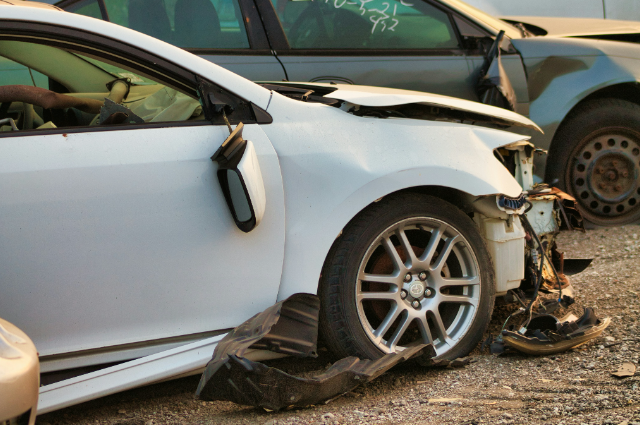
Photo by Josh Sonnenberg on Unsplash
India's infrastructure story over the past decade reads like an engineering marvel. More than 60,000 kilometres of national highways have been added since 2014, a network that now connects remote villages to urban centres, farmers to markets, and students to universities. These roads represent opportunity, economic growth, and social mobility.
Yet, this remarkable achievement carries a weight. Everyday, over 460 Indians lose their lives on these very roads. Annually, approximately 1.7 lakh people, roughly 11% of all global road fatalities, die in accidents across the country. The Sadak Suraksha Abhiyan, the government's comprehensive road safety initiative, emerges from this stark reality that infrastructure without safety consciousness is a foundation built on sand.
Understanding the Real Toll
When we hear "1.7 lakh deaths annually," it's easy for the mind to gloss over the number. But each figure represents an employee who won't return home, a student whose dreams ended on a highway, or a parent whose children must now figure out life without guidance. Families plunge into a financial crisis overnight. A mother who depended on her son's income suddenly faces hardship. A father disabled in an accident becomes dependent on children who should still be in school. Survivors often carry physical disabilities that limit their ability to work, along with psychological scars like anxiety, depression, and post-traumatic stress that society rarely acknowledges or supports.
This is where the Sadak Suraksha Abhiyan's message becomes deeply personal to "take your responsibility." It's a recognition that behind every crash digit lies a web of broken lives that could have been preserved through simple, conscious choices.
The Economic Reality We Ignore
Road accidents aren't just personal tragedies; they're economic disasters. India loses nearly 3% of its GDP annually to road crashes. Think about what that means, billions of rupees spent on emergency healthcare, long-term rehabilitation, legal proceedings and the permanent loss of productive workers who could have contributed to the economy for decades.
In rural areas, where new roads promise access to better markets and opportunities, accidents undermine these very gains. A farmer who finally has road connectivity to sell crops in the city becomes trapped in debt when an accident damages both his vehicle and his ability to work. In urban centres, traffic incidents overwhelm hospital emergency departments, creating bottlenecks that affect everyone's access to healthcare.
Safety, therefore, isn't a luxury or an afterthought, it's fundamental to ensuring that infrastructure actually delivers on its promise of development.
What is the Government Doing?
The Sadak Suraksha Abhiyan represents a multi-pronged approach to tackling this crisis. The government has strengthened the Motor Vehicles Act, increasing penalties for violations not merely as punishment, but as deterrence. Simultaneously, Driver Training Institutes are being upgraded nationwide to move beyond simply teaching people how to operate vehicles; they're instilling scientific driving practices suited to India's diverse road conditions.
The Bharat New Car Assessment Program (Bharat NCAP) empowers consumers to make safety-conscious choices by providing transparent safety ratings for vehicles. When buyers can compare how well different cars protect occupants during crashes, manufacturers face market pressure to prioritise safety features.
Perhaps most innovative is the RaahVeer program, which recognises ordinary citizens who stop to help accident victims. This addresses a critical problem where many crash victims die not from their injuries but from delayed treatment because bystanders fear legal complications. The upcoming cashless treatment scheme further removes barriers, ensuring that financial concerns don't prevent immediate medical care.
The Simple Actions That Save Lives
Here's the uncomfortable truth for most road deaths are preventable through basic behavioural changes. Wearing a helmet while riding a two-wheeler reduces the risk of fatal head injury by nearly 70%. Seatbelts cut the risk of death for front-seat passengers by 45-50%. Not using a mobile phone while driving eliminates a major distraction that causes countless accidents.
Respecting speed limits, stopping at traffic signals even when roads seem empty, and giving pedestrians the right of way, these aren't complicated safety measures requiring technical knowledge. They're simple disciplines that, when practised collectively, transform road culture.
The Sadak Suraksha Abhiyan emphasises this collective responsibility. It's not enough for the government to build safer roads or enforce stricter laws. Every driver, rider, and pedestrian must internalise that their choices affect not just themselves but everyone sharing the road.
Measuring Success: A Cultural Shift
The true success of the Sadak Suraksha Abhiyan won't be measured merely in enforcement statistics or infrastructure upgrades. It will be evident when road safety becomes ingrained in India's collective consciousness when wearing a helmet feels as natural as locking your door, when driving responsibly becomes a point of pride rather than inconvenience.
Success looks like families not receiving that devastating late-night phone call. It's children growing up with both parents. It's emergency rooms treating routine ailments instead of being overwhelmed with trauma cases. It's GDP growth that isn't offset by accident-related losses.
Community-driven awareness, supported by institutional frameworks, is creating this shift. Schools teaching road safety, residential associations organising awareness drives, and media campaigns highlighting real stories, these grassroots efforts complement top-down policy changes.
The Road Ahead
India stands at a crossroads. Our highways are expanding, our vehicles are multiplying, and our economy is growing. But growth without safety is unsustainable. The Sadak Suraksha Abhiyan recognises that technological solutions and policy reforms must be matched by something deeper and a fundamental change in how we view our responsibilities on the road.
Every journey we take involves a choice to prioritise convenience or safety, speed or caution, our individual hurry or collective wellbeing. Roads connect us to opportunities, but only if we reach our destinations alive. The Abhiyan's call to "take your responsibility" isn't a slogan; it's an invitation to recognise that we hold other people's lives in our hands every time we travel. The question isn't whether India can afford to prioritise road safety. It's whether we can afford not to. With 460 lives lost daily, the answer becomes painfully clear. Infrastructure has given us the means to progress, now responsibility must guide us forward.
. . .
References: