
The ongoing blockade and compounding maritime frictions in the Strait of Hormuz have sent shockwaves across global energy networks, forcing net energy-importing nations to rapidly re-evaluate their systemic vulnerabilities. For India, a country where Liquified Petroleum Gas (LPG) is not merely an industrial fuel but the foundational bedrock of millions of domestic kitchens, the prolonged crisis has elevated a supply-chain headache into an existential strategic imperative. In a robust institutional response, the Government of India has formally directed public and private oil marketing companies (OMCs) to establish and maintain a strict 30-day operational reserve of LPG. This policy directive marks a structural departure from traditional, market-optimized inventory management, signalling New Delhi's realization that geopolitical instability is no longer a temporary deviation, but a permanent structural variable.
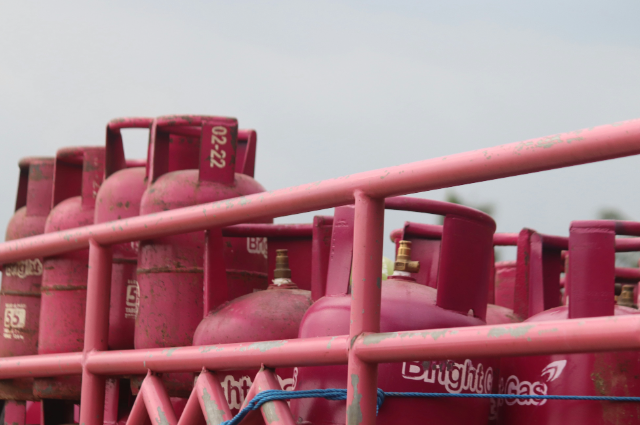
Historically, India’s strategic energy security focus has focused predominantly on crude oil. The nation has invested heavily in subterranean Strategic Petroleum Reserves (SPRs) located across Padur, Mangaluru, and Visakhapatnam to guard against catastrophic supply shocks. However, the unique supply architecture of LPG has long flown beneath the mainstream national security radar, despite its overwhelming domestic challenges. Today, over 300 million households rely on LPG cylinders for daily sustenance, a feat heavily accelerated by national welfare initiatives like the Pradhan Mantri Ujjwala Yojana (PMUY). This widespread success has created a structural dependence as India imports roughly 60% of its total domestic LPG consumption, with an overwhelming majority originating from nations bordering the Persian Gulf, including Qatar, Saudi Arabia, and the United Arab Emirates. Consequently, any prolonged disruption at the mouth of the Gulf does not merely challenge macroeconomic stability; it threatens the fundamental food security and political equilibrium of the country.
The Chokepoint Dilemma
The Strait of Hormuz is widely recognized as the world's most critical maritime energy system. A narrow waterway separating Iran from Oman, it handles the transit of nearly one-fifth of global petroleum products and more than a quarter of the world's liquefied natural gas and LPG trade. As the current blockade drags into successive weeks, the systemic fragility of a "just-in-time" supply framework has been exposed. Tankers face skyrocketing insurance premiums, prolonged re-routing delays, and the imminent threat of dynamic exclusions. For an economy growing at over seven percent annually, relying on floating shipments that can be frozen overnight by localized regional friction is an unacceptable vulnerability.
"Energy security is no longer an exercise in price optimization; it is an active defense posture where physical buffers must protect sovereign populations from distant geopolitical crossfires."
By mandating a 30-day buffer, the state is effectively absorbing the premiums of geopolitical risk to shield the end-consumer. Prior to this directive, oil marketing companies typically maintained lean operational inventories, often extending to just a few days or weeks, relying heavily on continuous sea lanes and a highly synchronized cycle of offloading, bottling, and distribution. The new rule forces an immediate shift towards an active accumulation strategy. This shift requires OMCs to systematically lease storage infrastructure, maximize capacity at existing import terminals, and optimize the inland distribution web to ensure that a month-long total blackout of incoming tankers would fail to trigger a domestic shortage or panic-buying.
Logistical Hurdle and Structural Adjustments
While the strategic rationale behind a 30-day reserve is irrefutable, the practical implementation poses substantial logistical and financial hurdles for India's oil sector. Unlike crude oil, which can be stored relatively cheaply in vast underground salt caves or unlined rock, LPG requires highly pressurized or refrigerated conditions to remain liquefied. Building or leasing cryogenic tanks and pressurized bullet storage farms requires massive capital expenditure and lengthy construction timelines. In the short term, OMCs will have to rely on a mix of floating storage, where holding inventory on massive gas carriers anchored safely outside conflict zones, and maximizing every cubic meter of available capacity at coastal ports such as Mundra, Kandla, Mangalore, and Visakhapatnam.
Furthermore, the financial burden of carrying a month's worth of idle inventory cannot be ignored. Holding millions of metric tons of LPG ties up substantial working capital, introducing exposure to global commodity price volatility. If global gas prices crash while OMCs are holding expensive strategic reserves, they face severe balance-sheet strains. The government must step forward with a clear financial framework, outlining whether these strategic holding costs will be compensated through budgetary subsidies, viability gap funding, or partially passed onto the consumer via minor and structured price revisions. To expect corporate entities, even state-run enterprises like IOCL, BPCL, and HPCL, to shoulder the entire premium of state-level energy security without a fiscal cushion is unsustainable.
The directive to enforce a 30-day LPG reserve is an assertive, timely, and protective intervention that demonstrates India's evolving geopolitical maturity. In a fractured global order where maritime choke-points are increasingly weaponized or paralyzed by state and non-state actors, the separation between economic planning and national security has vanished. By prioritizing the stability of its domestic cooking fuel supply, the government is ensuring that the daily lives of hundreds of millions of citizens remain uncoupled from international conflict. However, the true measure of this policy's success will depend on the speed and efficiency with which infrastructure bottlenecks are cleared and financial liabilities resolved. India has rightly chosen to reinforce its defenses; the task now is to ensure those defenses are built to withstand a changing global landscape.
. . .
References: