
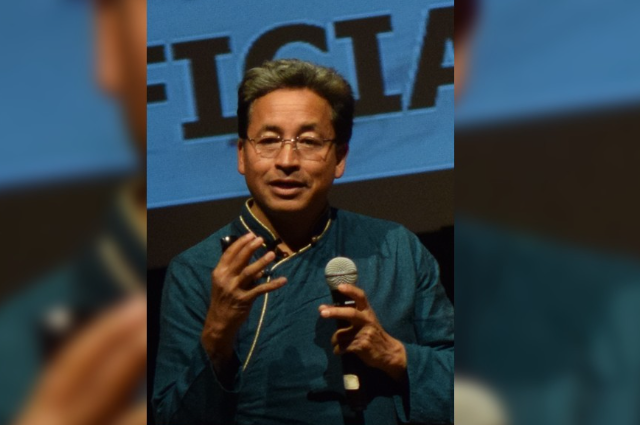
The release of Sonam Wangchuk after nearly six months in detention marks an important moment in the ongoing conversation about governance and public dissent in Ladakh. On March 14, 2026, the central government cancelled his detention order and ordered his immediate release. For many people across India, Wangchuk is not just a public figure but a symbol of innovation and environmental consciousness. His work on the “Ice Stupa,” an artificial glacier, and his contributions to alternative education in the Himalayan region have earned him recognition far beyond Ladakh.
Yet his detention and subsequent release raise difficult questions that go beyond the story of one individual. They force a closer look at how the state responds to public protests, how laws meant for national security are used, and whether the deeper concerns of Ladakh’s residents are truly being addressed. His release may have ended one chapter, but the issues that led to his arrest remain unresolved.
The Arrest and the Context
Wangchuk was detained on September 26, 2025, shortly after violent protests erupted in Leh two days earlier. These protests were not sudden or isolated. They were the result of long-standing demands from the people of Ladakh, who have been asking for stronger political representation and constitutional safeguards. Among the most significant demands were the call for full statehood for Ladakh and the inclusion of the region under the Sixth Schedule of the Constitution of India.
The Sixth Schedule provides a system of autonomous governance for certain tribal areas, particularly in northeastern India. It is designed to protect tribal communities by giving them greater control over land, culture, and local governance. Many Ladakhi activists argue that such protection is essential for their region as well, especially because Ladakh is culturally distinct and ecologically fragile.
The protests on September 24 turned violent and reportedly resulted in the deaths of four people and injuries to more than 160 others. Authorities claimed that Wangchuk’s speeches had encouraged large numbers of young people to gather and protest, raising concerns about public order in a strategically sensitive border region. Ladakh shares borders with both China and Pakistan, which has often led the government to treat unrest in the region with heightened caution.
The Man Behind the Movement
Understanding why Wangchuk’s detention drew such widespread attention requires understanding who he is. Over the years, he has built a reputation as an engineer, innovator, educator, and environmental activist. His Ice Stupa project, a system that stores winter water as cone-shaped ice towers that slowly melt during spring, has been praised as a creative solution to water scarcity in the Himalayan region.
Beyond technological innovation, Wangchuk has also been involved in reforming education in remote mountain areas. His work has focused on designing systems that reflect local realities rather than blindly copying urban models of schooling. Because of these contributions, many people view him not as a political agitator but as a social reformer who has consistently worked for the welfare of Ladakh’s communities.
This is precisely why his detention raised concerns among civil society groups and observers. The image of a climate activist and educator being held in a distant jail for months without trial made many question whether the state had chosen an overly harsh response to what was essentially a political and social movement.
Why did the Government revoke the Detention?
The Ministry of Home Affairs (India) stated that the decision to revoke Wangchuk’s detention was taken in order to create an atmosphere of peace and allow space for dialogue with the people of Ladakh. According to the government, prolonged protests and shutdowns had begun to affect everyday life in the region. Students, job seekers, small businesses, and the tourism sector were all facing difficulties due to the unrest. However, the timing of the release raised some eyebrows. Wangchuk had already spent nearly half of the maximum period permitted under the National Security Act. In that sense, his release could also be interpreted as a procedural step rather than purely an act of political goodwill.
Another factor that may have influenced the decision was an upcoming hearing in the Supreme Court of India. Wangchuk’s wife, Gitanjali Angmo, had approached the court challenging the legality of his detention. The hearing was scheduled for March 17, only a few days after the government announced his release. While no official link has been acknowledged, the proximity of these events naturally invites speculation.
Beyond One Man’s Release
The story of Wangchuk’s detention and release ultimately reflects a broader tension within democratic governance. Governments must maintain law and order, especially in sensitive border regions. At the same time, democratic societies depend on the ability of citizens to voice their concerns and demand accountability.
There is an uncomfortable contradiction in claiming a commitment to dialogue while simultaneously using preventive detention against a prominent activist. True peace in any region cannot be built merely by preventing protests. It comes from ensuring that people feel their voices are heard and their concerns are taken seriously.
Wangchuk’s release, therefore, represents more than a personal victory. It offers an opportunity for the government to rebuild trust and engage in meaningful discussions with Ladakh’s communities. But that opportunity will matter only if it leads to concrete action.
References