
A fresh global report puts Bengaluru among the world's worst for congestion. The numbers are hard to ignore and the lessons are harder still.
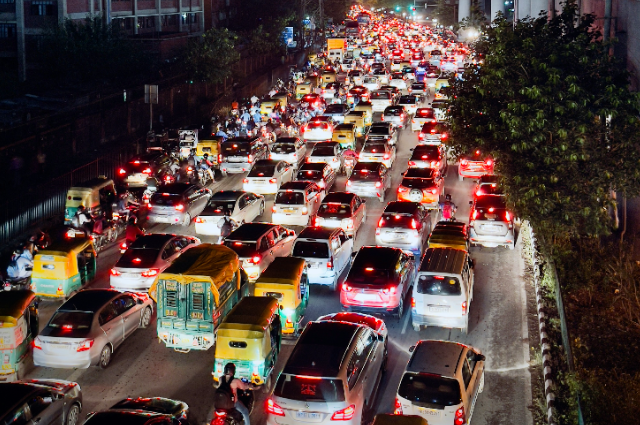
Every morning, millions of Indians step into their cars expecting a short drive to work. What greets them instead is a wall of brake lights, a crawl that stretches for kilometres, and a slow erosion of the hours that make up their lives. A new global report, released in January 2026 by the Dutch technology firm TomTom, has put hard numbers to a problem that most Indian commuters already know in their frames and our cities are running out of road.
The TomTom Traffic Index 2025 examined nearly 500 cities worldwide. It used hidden GPS trackers inside vehicles to measure real driving speeds and travel times no guesswork, just actual data from over 3.65 trillion kilometres of journeys. The findings for India are striking. Bengaluru, once celebrated as the country's technology capital, now holds the unpleasant title of the second most congested city on the planet, sitting just behind Mexico City.
Hours Lost in Traffic Per Year, Bengaluru - 168 hours, Pune - 152 hours, Kolkata — 150 hours, Mumbai - 126 hours and New Delhi - 104 hours. Think about what 168 hours means for a Bengaluru commuter. That is seven full days and forty minutes spent sitting inside a car, going nowhere fast. The average speed on the city's roads dropped to just 16.6 kilometres per hour. To travel a mere four kilometres, a driver needs fifteen minutes atleast on a good day, and compared to last year, things have actually gotten worse. In 2024, it took about 34 minutes to cover 10 kilometres. In 2025, that same stretch now takes over 36 minutes. A small number on paper, but repeated five days a week, fifty weeks a year, it adds up to a life quietly consumed by traffic.
Bengaluru is not alone. Pune, India's rapidly growing industrial and educational hub, ranked fifth in globally, is the second Indian city to crack the world's top ten. Six of the ten most congested cities in all of Asia belong to India, Bengaluru, Pune, Mumbai, New Delhi, Kolkata, and Jaipur. The country ranks second in Asia for overall congestion, beaten only by the Philippines. This is not a city-level problem anymore. It is a national one.
Mumbai and New Delhi tell their own versions of the same story. Mumbai saw a small improvement this year where congestion was dropped by 3.3 percentage points compared to 2024. That is encouraging on paper. But even with that dip, commuters in India's financial capital still lost 126 hours of their lives to traffic last year. Delhi, meanwhile, moved in the opposite direction. Its congestion level climbed to 60.2 percent, rising by 3.5 points, and its drivers lost 104 hours annually. Kolkata, which was actually ranked second in the world for congestion just one year ago, has slipped to 29th - though its drivers still spent 150 hours stuck in traffic.
There is one city offering a faint thread of hope. Hyderabad, ranked 15th in Asia, recorded a drop in congestion of 1.3 percentage points compared to the previous year. It is one of the very few Indian cities to actually improve. Chennai and Bengaluru, by contrast, both saw congestion rise by one percent, Bengaluru by 1.7 points. Globally, the picture is equally unattractive. Overall congestion across the world climbed from 20 percent to 25 percent in a single year. Only 34 cities anywhere on Earth recorded faster travel times than the year before.
The deeper question is not just how bad the traffic has become, but why the pace of road and transportation upgrades continues to lag behind the speed at which our cities are filling up. India's urban population is growing fast. People are moving to cities for jobs, for education, and for opportunity. But the roads, the public transport systems, and the planning frameworks are not keeping up. The result is predictable, where more cars, the same amount of space, and an ever-tightening grip on daily life.
The TomTom report is, at its core, a mirror held up to Indian urban planning. The data does not point fingers at any single government or agency. It simply shows the outcome and the outcome, measured in lost hours, packed speeds, and worsening congestion year after year, demands a serious and honest conversation not just about building more roads, but about rethinking how Indian cities move altogether.
. . .
References: