
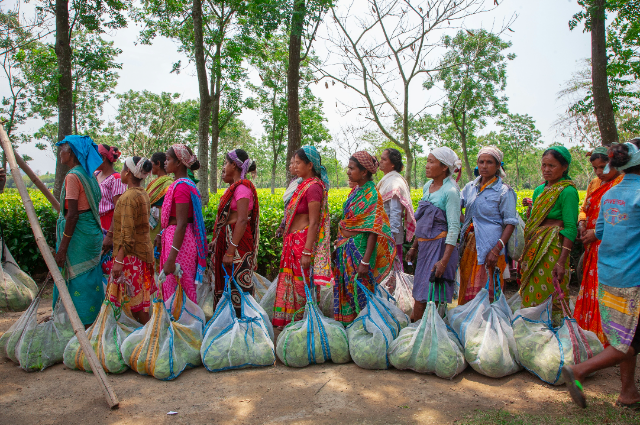
Photo by Rohit Dey on Unsplash
In the sun-scorched plains of Maharashtra, the sweetness of the global sugar trade is built upon a foundation of profound bitterness. While we stir sugar into our tea, a silent, surgical epidemic is sweeping through the "sugar belt" of India. Thousands of women, some as young as twenty, are undergoing hysterectomies, the total removal of the uterus, not because of a medical crisis, but because their bodies have become a "hindrance" to the machinery of industrial agriculture.
This is not a story about medical advancement; it is a story about the structural violence of a labor system that has effectively declared the female reproductive system a financial liability.
The Anatomy of a Forced Choice
To understand why a 25-year-old mother would "choose" to have her womb removed, we must look at the brutal economics of the Jodi (pair) system. In the sugarcane fields, labor is not hired by the individual but by the couple. A husband and wife are treated as a single production unit. Their survival depends on their ability to work 12 to 16 hours a day, seven days a week, for six months straight.
In this environment, the "no work, no pay" rule is enforced with a cruelty that borders on the medieval. If a woman misses a single day of work due to menstrual cramps, heavy bleeding, or the general exhaustion that comes with manual labor, the couple is slapped with a fine often as high as 500 rupees per day. For families already drowning in debt and fleeing the parched, drought-stricken fields of the Beed district, this fine is the difference between eating and starving.
Menstruation, in the eyes of the sugar mill contractors (the mukkadams), is seen as "lost time." For the women, it is the "pain and the stain" and a monthly ordeal exacerbated by a total lack of sanitation, clean water, or privacy in the temporary camps where they live.
The Creation of the "Problematic" Body
The materials provided reveal a chilling socio-medical conspiracy. When these women seek help for recurring pelvic infections or menstrual pain, where conditions often caused by the very lack of hygiene in the fields, they are met by a predatory private medical sector. Instead of offering antibiotics or hormonal management, doctors often push for a hysterectomy.
They frame the surgery as a "preventative" measure. "Why keep it if you’ve already had your children?" they ask. "It will only lead to cancer later." By removing the womb, the woman is "fixed" for the labor market. She becomes a more "efficient" worker and a machine that doesn't bleed, doesn't need breaks, and doesn't "complain" of feminine ailments.
This is what researchers call Constructing the Female Labouring Body. It is the literal re-engineering of a human being to fit the demands of a heartless capitalistic structure.
The Climate Connection: Migration as a Trap
We cannot ignore the role of the environment in this crisis. The women of Beed are not in the sugar fields by choice; they are climate refugees. Decades of recurring droughts and failed harvests in the Marathwada region have destroyed local livelihoods. The sugar mills of western Maharashtra represent the only available lifeline.
However, this migration is a trap. The debt-bondage cycle begins before they even leave their villages, with advance payments that must be worked off. Once they arrive at the mills, they are at the mercy of a system that offers no legal protection, no maternity leave, and no dignity. The hysterectomy becomes a desperate survival strategy which is a way to ensure they can fulfill their contract and return home with enough money to survive the next dry season.
The Invisible Aftermath
The tragedy does not end with the surgery. The long-term consequences of premature hysterectomies are devastating. These women are thrust into sudden, surgical menopause. Without the protective effects of estrogen, their bodies begin to fail in new ways. They suffer from:
- Osteoporosis: Brittle bones that make the heavy lifting of sugarcane even more dangerous.
- Hormonal Imbalance: Weight gain, extreme fatigue, and mental health struggles.
- Chronic Pain: Backaches and joint pain that often render them physically "spent" by their late thirties.
They trade their long-term health for short-term labor productivity. They are effectively "disposable" tools in the eyes of the industry.
A Call to Conscience
From an editorial perspective, we must ask ourselves what the true cost of our sugar? Is it measured in rupees, or is it measured in the bodies of women who have been forced to surgically alter themselves to stay employed?
The government’s response is that forming up of committees and monitoring hospitals is a band-aid on a gaping wound. The real issue is the total lack of labor rights in the unorganized sector. As long as there are no toilets in the fields, no paid sick leave, and no protection against predatory fines, women will continue to seek these "needless" surgeries.
The "bitter harvest" of Maharashtra is a mirror held up to our society. It shows us what happens when we value profit over the most basic human rights. We have created a world where a woman’s womb is considered an obstacle to her survival. If that doesn't provoke a sense of outrage, nothing will.
True progress isn't just about higher yields or better exports; it’s about ensuring that no woman has to sacrifice her physical integrity just to earn a day's wage. Until the sugar industry recognizes the humanity of its workers, the sweetness it produces will always have a taste of injustice.
. . .
References: