
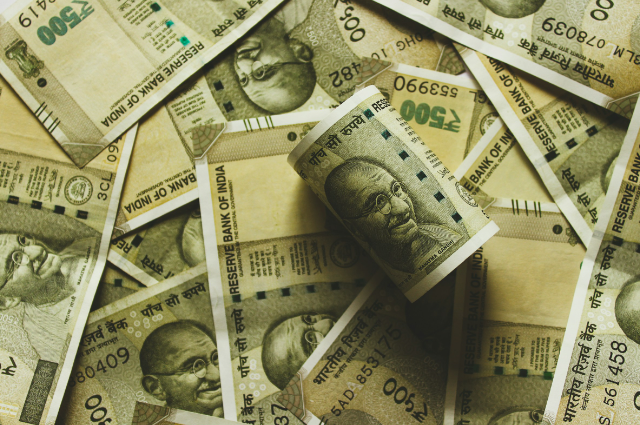
Photo by rupixen on Unsplash
In public discussions about national economies, the word "debt" often triggers immediate anxiety. For decades, conventional wisdom held that when a country borrows money from global lenders, it walks a treacherous tightrope. One misstep, and it could plunge into a financial crisis, requiring emergency rescues from international institutions like the International Monetary Fund (IMF) or the World Bank.
However, recent statements by senior political leadership, reflecting on the country's economic trajectory over the past decade, paint a radically different picture. A striking assertion has emerged that India currently holds the financial capacity to settle up to 94 percent of its entire foreign debt in a single day if the situation ever demanded it.
To the average person, this sounds like a staggering statistic. How can a country that owes trillions of rupees to foreign creditors simultaneously possess the means to wipe nearly all of it out in 24 hours? To understand this, we need to look beyond the scary headlines about national debt and explore how international finance actually works, why "good debt" exists, and what truly keeps a country’s balance sheet secure.
From Emergency Lifelines to Financial Sovereignty
To fully appreciate where India stands today, it is essential to look back at the historical context. There was a time, most notably during the balance of payments crisis in 1991, when the nation faced severe economic vulnerability. During that era, the country’s foreign currency reserves had depleted to such a critical degree that they could barely cover a few weeks of essential imports, like oil and medical supplies. The threat of defaulting on international obligations was a tangible fear. The survival of the economy hinged on structural adjustments, financial aid package negotiations, and pledging gold reserves as collateral.
Fast forward to the present day, and that narrative of vulnerability has been completely replaced by a story of economic self-reliance. The transition from an economy dependent on international lifelines to one that commandingly sits as the world's fourth-largest economic powerhouse by firmly crossing the $4.5 trillion mark and progressing toward a $5 trillion valuation is not an overnight miracle. It is the result of systematic fiscal management and structural evolution.
When a country reaches a point where it can hypothetically pay off 94 percent of its external obligations immediately, it signals to global markets that it is no longer at the mercy of sudden international economic shocks. It means the nation operates from a position of absolute strength, not fragility.
The Concept of National Debt: Why Do Wealthy Countries Borrow?
Before examining how India can clear its debts so quickly, it is important to address a fundamental question that If a nation is doing so well and has so much money, why does it have foreign debt in the first place? Why not just pay everything off and owe nothing to anyone?
In personal finance, debt is often something people try to avoid. But in the world of macroeconomics, national debt operates quite differently. Think of a thriving corporation. Even if a business makes immense profits, it will still take out loans or issue bonds. Why? Borrowing allows it to build new factories, invest in research, and expand much faster than if it only used its immediate cash holdings.
Similarly, for a developing nation, external debt is a strategic tool. When India borrows funds globally, it isn't borrowing to buy groceries or pay daily administrative expenses. Instead, that money is funnelled into massive, long-term wealth-generating projects that build high-speed rail corridors, modernise seaports, upgrade highway networks, expand renewable energy grids, and digitalise public infrastructure.
These projects take years to construct but pay massive economic dividends over several decades. If the government relied solely on the tax revenues collected in a single year to fund these multi-billion-dollar projects, infrastructure development would grind to a crawl. Borrowing allows a country to build the future today and pay for it tomorrow using the very wealth that the new infrastructure helps generate. Therefore, having debt is not a sign of weakness; having unmanageable debt is.
A Shift in the Global Power Dynamic
The revelation that India possesses the liquidity to clear 94 percent of its foreign debt in a single day is ultimately less about a literal plan to write a massive check to international creditors, and more about a declaration of financial immunity. No country would ever actually liquidate its foreign reserves to pay off all its debt at once, as doing so would starve the domestic market of necessary foreign currency and halt international trade.
Instead, this capability serves as an ultimate safety certificate. It sends a clear message to international investors, rating agencies, and global markets that the Indian economy is stable, highly liquid, and structurally sound. The days of worrying about a sudden collapse or being forced to accept restrictive foreign bailouts are firmly in the past. Backed by ₹66 lakh crore in foreign reserves, steady near-8% GDP growth, and a world-class digital transaction infrastructure, the nation is navigating global challenges not as a vulnerable bystander, but as a resilient leader of the modern economic order.
. . .
References: