
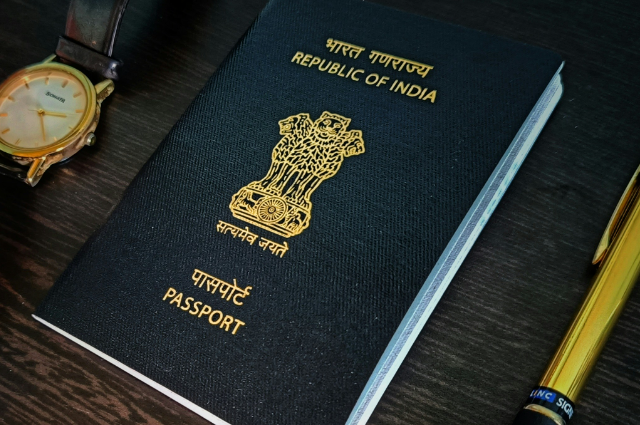
The recent declaration by the Ministry of External Affairs that an Indian passport is fundamentally a travel document, rather than conclusive proof of citizenship, has sent a wave of bewilderment through the public. For generations, the average citizen has viewed the dark blue booklet as the ultimate validation of their national identity and an elite credential issued only after rigorous local police verification and central government scrutiny. Yet, this sharp institutional clarification forces us to confront an unsettling question that if a passport is not the whole answer, how does an individual conclusively prove they belong to the Republic of India? The answer lies within a complex maze of constitutional provisions, statutory exceptions, and judicial precedents that separate everyday identity from legal nationality.
The Statutory Loophole in the Passports Act
To understand why the government has decoupled the passport from absolute citizenship, one must look at the fine print of the law that governs its issuance. Under Section 20 of the Passports Act of 1967, the Central Government retains an override power to issue a passport or travel document to an individual who is explicitly not a citizen of India, provided it deems such an action necessary in the "public interest." This provision is typically reserved for stateless persons, foreign refugees, or individuals under special diplomatic protection. Because the statutory framework itself permits non-citizens to hold Indian travel documents under exceptional circumstances, the passport cannot legally function as an absolute, self-contained guarantee of citizenship. It is a powerful administrative permit allowing an individual to cross international borders under the protection of the state, but it does not automatically establish or protect constitutional status if that status is formally challenged.
The High Court Precedent on Administrative Papers
This statutory reality is reinforced by long-standing judicial interpretations. High courts across the country, most notably the Bombay High Court, have repeatedly observed that common identity documents cannot settle a dispute over nationality when a person's status is legally questioned. The judiciary views a passport as a secondary document issued based on underlying evidence provided by the applicant. If the foundational documents used to obtain the passport, such as a residency certificate or an affidavit, are found to be flawed, fraudulent, or structurally deficient, the passport itself loses its evidentiary value. In the eyes of the law, identity and citizenship are entirely separate concepts; an administrative error by a government official cannot create a constitutional right to citizenship where none exists.
The Three Eras of Belonging by Birth
In the absence of a single "Citizenship Card" for the vast majority of Indians, nationality must be proven by establishing specific facts of birth or descent backed by an unbroken chain of records. Under the Citizenship Act of 1955, the legal burden of proving citizenship by birth shifts dramatically depending on the exact window of time in which an individual was born. For those born between the inception of the Constitution in 1950 and July 1, 1987, the law is straightforward, mere birth on Indian soil is enough to grant citizenship, requiring only a basic birth certificate or school-leaving record. However, for individuals born between July 1, 1987, and December 3, 2004, the legal standard tightens, requiring proof that at least one parent was an Indian citizen at the time of birth. For anyone born after December 3, 2004, the law is at its strictest, demanding that both parents be citizens, or that one parent be a citizen while the other is not an illegal migrant. Consequently, a modern birth certificate is no longer a standalone proof of nationality; it must be legally tethered to the ancestral status of the parents.
The Devaluation of Everyday Identity Cards
The public anxiety surrounding this debate is amplified by the fact that almost every primary identity document used in daily life has been systematically decoupled from citizenship by the state. The Aadhaar card, while universal, is governed by a framework that explicitly states it is proof of residence and biometric identity, not nationality. Similarly, the Permanent Account Number card is a financial instrument issued to any resident taxpayer, including foreign nationals doing business in India. Even the voter identification card, which theoretically should be exclusive to citizens, has been treated by tribunals as a rebuttable document. The courts have consistently held that the accidental inclusion of a non-citizen's name on a local electoral roll by a municipal officer cannot override the strict constitutional requirements of nationality.
The Strict Judicial Burden of Proof
When a person’s nationality is formally brought into question before a court or an administrative tribunal, the legal standard applied is unforgiving. The Supreme Court of India has firmly established that the statutory burden of proof lies entirely upon the individual claiming to be a citizen. Because the facts regarding an individual's ancestry, place of birth, and family lineage are within their own personal knowledge, the state is not required to prove a person is a foreigner; rather, the person must produce the necessary historical documents to prove they are an Indian. While landmark rulings acknowledge that a passport carries immense weight and forms a strong presumption of nationality, it remains a presumption that the state can challenge and dismantle if the underlying lineage records fail to match the statutory criteria.
The Missing Link in National Documentation
The systemic issue underpinning this legal paradox is that India has never fully implemented a centralized, universally issued national identity card dedicated exclusively to citizenship. Although an amendment to the Citizenship Act in 2004 introduced Section 14A, giving the central government the power to compulsorily register every citizen and issue a National Identity Card, this framework has not been executed on a nationwide scale. Until such a definitive document exists, proving Indian citizenship will remain a matter of maintaining a flawless, aligned tapestry of ancestral records, birth certificates, and educational timelines. A passport will continue to open doors across the globe, but within domestic legal borders, it is merely one piece of a much larger evidentiary puzzle.
. . .
References: