
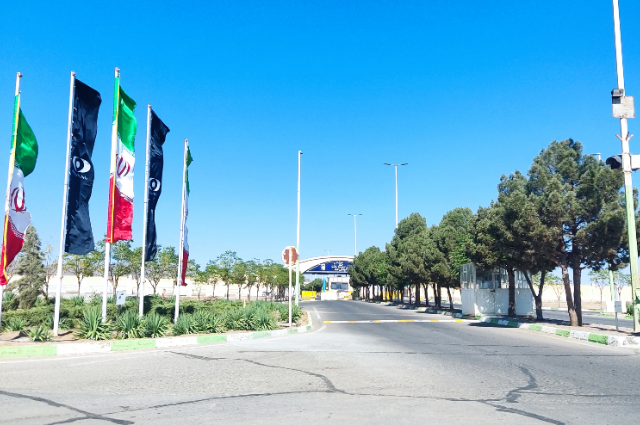
In the high-stakes theatre of modern geopolitics, few locations carry as much weight or as much risk as Iran’s Natanz nuclear facility. This week, as the conflict in West Asia entered its fourth gruelling week, the facility once again found itself in the crosshairs of a joint military operation by the United States and Israel. While the headlines focus on the immediate absence of radiation leaks, the underlying story is one of a region shaking on a knife-edge, where every strike is a gamble with global consequences.
The Strike at the Heart of the Dispute
On March 21, 2026, the silence of central Iran was shattered by a fresh wave of airstrikes. Iranian state-linked media, specifically the Tasnim news agency, confirmed that the Natanz uranium-enrichment complex had been targeted. This was not a random act of aggression but a calculated move by the U.S.-Israeli alliance. From their perspective, Natanz represents the "crown jewel" of Iran’s nuclear ambitions, which is a site they believe must be neutralised to prevent the development of a nuclear weapon.
The Iranian Atomic Energy Organisation was quick to label the event a "criminal attack" by the "appropriating Zionist regime" and the United States. Yet, amidst the fiery rhetoric, there was a sigh of relief that no radioactive materials were reported to have leaked. The International Atomic Energy Agency (IAEA) verified this, noting that off-site radiation levels remained stable. For now, a potential "nuclear nightmare" has been avoided, but the physical degradation of the facility is undeniable.
A War of Shifting Justifications
What makes this current editorial perspective so complex is the shifting nature of the war itself, often referred to as "Operation Epic Fury." When the conflict began on February 28, the stated goals were a mix of strategic and political, where they were eliminating Iran’s missile and nuclear capabilities while simultaneously hoping to spark a domestic uprising that would topple the current leadership.
However, as we move into late March, the reality on the ground tells a different story. There have been no public signs of a popular uprising. Instead, the conflict has settled into a punishing cycle of "tit-for-tat" exchanges. While President Donald Trump has recently suggested that the U.S. is "winding down" its military efforts, his administration is simultaneously requesting $200 billion in additional funding and deploying thousands more Marines to the region. This contradiction suggests that while the rhetoric may lean towards peace, the military machine is still very much in high gear.
The Resilience of the Underground
One of the most striking aspects of this conflict is the sheer resilience of Iran’s infrastructure. Despite three weeks of intense bombardment, including the use of 5,000-pound "bunker buster" bombs on underground missile caches, Iran’s ability to strike back remains strong.
Just hours after the Natanz strike, Iran demonstrated its reach by attempting a long-range ballistic missile strike on the joint U.S.-U.K. base at Diego Garcia in the Indian Ocean. This move signalled that Tehran’s "mobile launchers" are still operational and capable of shifting positions to avoid detection. This resilience is a central theme in our current understanding, where they are destroying buildings and factories may be possible, but dismantling a decentralised, deeply entrenched nuclear and military program is a far more difficult task.
Global Tremors: Oil and Diplomacy
The shockwaves from the strikes on Natanz and other Iranian energy hubs are being felt far beyond the borders of the Middle East. Global energy markets have been shaken, with Brent crude prices soaring as the Strait of Hormuz and the world’s most vital oil refinery remain flashpoints.
In a surprising twist of economic necessity, the U.S. recently announced it would lift sanctions on some Iranian oil already at sea to help stabilise the stock markets and rising fuel prices. This highlights the irony of modern warfare that even as the U.S. strikes Iran’s nuclear heart, it must rely on Iranian oil to keep the global economy afloat.
The Human Cost and the Road Ahead
Behind the maps and the military strategies lies a rising human toll. Human rights groups estimate that between 600 and 1,300 civilians have been killed in Iran, with casualties also rising in Lebanon and Israel. In Tehran, residents describe a state of "total uncertainty," living under a communications blackout and the constant threat of overnight airstrikes.
Diplomacy, meanwhile, is in a state of paralysis. Iranian President Masoud Pezeshkian has reached out to international stakeholders like India’s Prime Minister Narendra Modi, urging the BRICS nations to play an "independent role" in reducing the aggression. However, with Israeli Defence Minister Israel Katz warning that attacks will "increase significantly" in the coming week, the window for a ceasefire appears to be nowhere.
Final Thoughts
The strikes on Natanz are more than just military operations; they are a litmus test for regional stability. As long as the U.S. and Israel remain committed to a policy of "degradation" and Iran remains committed to its policy of "martyrdom" and resilience, the cycle of violence is likely to continue.
The lesson of the past three weeks is clear: while technology can precision-strike a bunker, it cannot so easily strike down a nation’s strategic resolve. As we look towards the next week of conflict, the world watches Natanz not just for signs of radiation, but for any sign of a path towards a lasting, comprehensive peace that currently remains out of reach.