
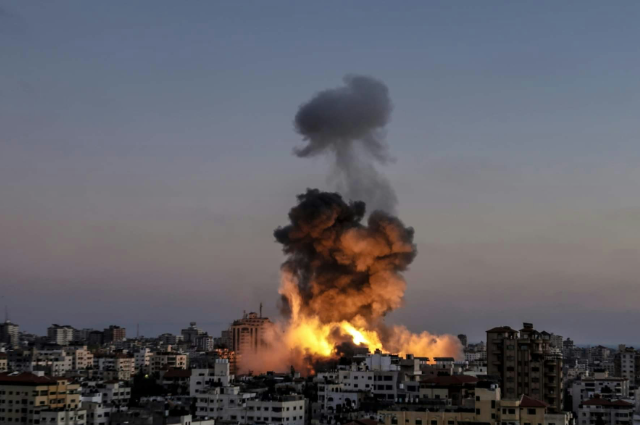
On May 4, an Iranian drone struck the Fujairah Petroleum Industries Zone, a large oil storage and refinery area on the eastern coast of the United Arab Emirates. The strike caused a major fire. Three Indian workers at the site were moderately hurt and rushed to hospital. The Indian Embassy in Abu Dhabi quickly confirmed it was in touch with local authorities to make sure the men received proper care.
This was not an isolated incident. For months now, Iran and the United States, along with Israel, have been locked in open conflict. Since US and Israeli forces launched attacks on Iran in late February, Iran has struck back in many directions. The Strait of Hormuz, the narrow sea channel through which roughly a fifth of the world's oil passes, has been effectively shut down by Iranian threats against ships trying to cross. Fujairah has become critical precisely because it offers an alternative route. Oil can be piped there from Abu Dhabi overland and shipped out directly into the Gulf of Oman, bypassing the blocked strait entirely. Before the crisis, Fujairah handled about 1.17 million barrels of oil per day. By March, it was handling 1.62 million. It is now one of the most important oil export points in the world.
Iran's attacks on the UAE came just weeks after a shaky US-Iran ceasefire was declared in early April, a ceasefire that clearly has not held. The UAE's air defences intercepted 12 ballistic missiles, three cruise missiles, and four drones on the day of the Fujairah strike. Despite this, one drone got through and caused the fire. India called the attack "unacceptable." That is a mild word for a situation in which ordinary Indian migrant workers, people who went to the Gulf to support their families back home, are getting caught in the crossfire of a war between major powers.
There are millions of Indians living and working in the UAE. They send home billions of rupees every year. When missiles start falling near oil refineries, these workers face a threat they did not sign up for and cannot easily escape. The Indian government's response, a tweet from the embassy saying it was "in touch with local authorities," is the bare minimum. As this conflict shows no sign of ending, India needs to be more vocal and more proactive in protecting its citizens abroad, not just after they are hurt, but before.
A political earthquake in Bengal
On the other side of the country, another kind of upheaval was unfolding. The results of the 2026 West Bengal Assembly elections handed the Bharatiya Janata Party a historic victory. The BJP won over 200 seats in the 294-member assembly, a commanding majority. The Trinamool Congress, which had ruled West Bengal for 15 years under Chief Minister Mamata Banerjee, was reduced to around 80 seats. It is one of the biggest political reversals the state has seen in decades.
Mamata Banerjee refused to accept the result or resign. She told reporters and party members that the votes had been stolen, that more than 100 constituencies saw their mandates looted, and that the Election Commission had created a dark chapter in Indian democratic history. In a private meeting with party leaders, she reportedly dared the BJP to impose President's Rule and said she would not step down on her own terms. Within 48 hours of the result, TMC leaders were privately blaming the party's own top brass for the defeat. The internal cracks were showing fast.
Across Bengal, post-election violence broke out, with both sides blaming each other. Several people were reported killed in clashes between BJP and TMC supporters. Government employees at the state secretariat were reportedly seen waving saffron flags. The political change was already being felt on the ground, and not peacefully.
Meanwhile, Congress leader Rahul Gandhi took a careful position. Rather than criticising TMC, he warned his own party workers not to celebrate the result. He argued that the BJP had not simply won but had stolen Bengal's mandate, and that this was a serious blow to Indian democracy. He urged everyone to put petty politics aside, stressing that the matter was not about one party but about the future of India. His message was aimed at Congress members who were quietly relieved to see TMC finally brought low, but it also served to preserve the idea of opposition unity even after a crushing defeat for one of the bloc's most powerful members.
Two crises, one question
These two events, a drone strike hurting Indian workers in the Gulf and a seismic election defeat reshaping Indian politics at home, are very different in nature. But together they reveal the pressures India is navigating right now. Abroad, ordinary Indians are paying the price of conflicts they have no say in. At home, the question of whether democratic processes are free and fair is being loudly contested. Both situations demand more than reactive statements. They demand long-term answers.
. . .
References: