
The United States and Iran are preparing to sit down for crucial talks, but before they even begin, there's already disagreement about where to meet and what to discuss. It's a telling sign of just how complicated and weak this diplomatic effort has become.
The Venue Dispute: Why Location Matters
Iran wants the meeting held in Oman, not Turkey, as originally planned. More importantly, Tehran insists the conversation should focus only on nuclear issues and nothing else. The Americans, however, want a broader discussion that includes Iran's missile program and its support for armed groups across the Middle East. This disagreement over the agenda reveals the fundamental tension underlying these negotiations, where Iran wants to keep things narrow and focused, while the US wants to address what it sees as multiple security threats.
Why does the location matter so much? For Iran, Oman represents a safer, more controlled environment. The Gulf nation has historically played the role of neutral mediator between Tehran and Washington. Previous nuclear discussions have taken place there, creating a sense of continuity and trust. Turkey, on the other hand, might have opened the door to a larger, more complicated gathering with other regional players. By pushing for Oman and bilateral talks only, Iran is essentially trying to control the terms of engagement.
Rising Military Tensions
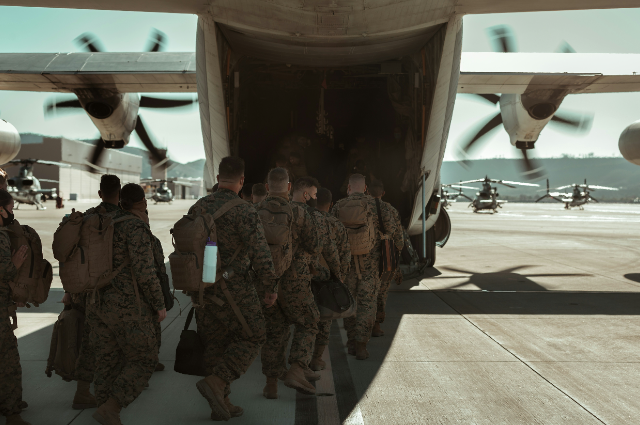
The backdrop to these negotiations couldn't be more tense. The US has been building up its military presence in the Middle East, sending warships and aircraft to the region. This show of force followed violent protests in Iran last month, where the government cracked down hard on demonstrators. President Trump initially threatened to intervene but stopped short of military action. Instead, he's demanding nuclear concessions from Iran while parking a navy warship near its shores, which is a classic case of speaking softly while carrying a very big stick.
Dangerous Incidents at Sea
The military tensions aren't just for show. An American fighter jet shot down an Iranian drone that approached the USS Abraham Lincoln aircraft carrier in the Arabian Sea. The US military said the drone was acting aggressively, though Iran claimed it simply lost contact with the aircraft in international waters. On the same day, Iranian boats and a drone approached a US-flagged oil tanker in the Strait of Hormuz, ordering it to stop and prepare to be boarded. The tanker refused, sped up, and continued on its way with protection from a US Navy warship. These incidents show how quickly things could have turned out of control.
Trump's Three Demands
President Trump has been characteristically blunt about what he expects. According to Iranian sources, he's laid out three demands from Iran that must stop enriching uranium entirely, limit its ballistic missile program, and end its support for armed groups in places like Lebanon, Yemen, and Iraq. For Iran, these are non-negotiable red lines. The clerical leadership sees them as attacks on Iranian sovereignty and the right of a nation to make its own decisions about defense and foreign policy.
The Missile Problem
Interestingly, Iranian officials have indicated that while all three demands are problematic, the missile program is the biggest sticking point. Iran has one of the largest missile arsenals in the Middle East, and it views these weapons as essential for defending itself, especially after being attacked by Israel last year. Tehran says it has restocked its missile supplies and will use them if its security is threatened.
Room for Compromise on Nuclear Issues
On uranium enrichment, however, there seems to be some twists and turns. One Iranian official suggested that Tehran might be willing to show flexibility, possibly even agreeing to zero enrichment and handing over hundreds of kilograms of highly enriched uranium. Since US and Israeli strikes hit Iranian nuclear facilities in June, Iran claims it has stopped enriching uranium altogether. If true, this could provide a foundation for agreement.
Domestic Pressure on Iran's Leadership
But why would Iran's leadership even consider making concessions? The answer lies in domestic politics. According to current and former Iranian officials, the government is genuinely worried that another US military strike could push an already angry population back into the streets. The protests last month were reportedly the deadliest since Iran's 1979 revolution. The regime fears that foreign military action could become the spark that reignites widespread unrest and threatens its grip on power.
Iran's Weakened Regional Position
Iran's position has also weakened significantly on the regional stage. Israel's military campaigns have damaged or destroyed many of Iran's allied groups, Hamas in Gaza, Hezbollah in Lebanon, the Houthis in Yemen, and various militias in Iraq. The fall of Syrian President Bashar al-Assad, a close Iranian ally, has further diminished Tehran's influence. Iran finds itself more isolated and vulnerable than it has been in years.
Regional Powers Caught in the Middle
The regional powers are watching nervously. Gulf Arab states like the United Arab Emirates have openly stated that the region cannot afford another war and that negotiations are essential. They have good reason to worry, as Iran has threatened to strike US military bases on their territory if Trump attacks again. These countries are caught in the middle, hosting American forces while trying to maintain working relationships with their Iranian neighbour across the Gulf.
The Path Forward
What happens in Oman could determine whether the Middle East moves toward stability or slides closer to conflict. Both sides have painted themselves into corners with tough rhetoric and military posturing. Trump has warned of "bad things" if no deal is reached. Iran has declared its missile program untouchable. Yet both sides are showing up to talk, which suggests they recognise the alternatives are worse.
The challenge will be finding a formula that allows both sides to claim victory while making real compromises. Can Iran accept limits on its nuclear program without feeling it has surrendered its sovereignty? Can the US declare success without addressing Iran's missiles and regional activities? These are difficult questions with no easy answers. For now, the world watches and waits to see if diplomacy can succeed where threats have failed. The stakes couldn't be higher, not just for the US and Iran, but for an entire region that has already seen too much conflict and desperately needs peace.
. . .
References: