
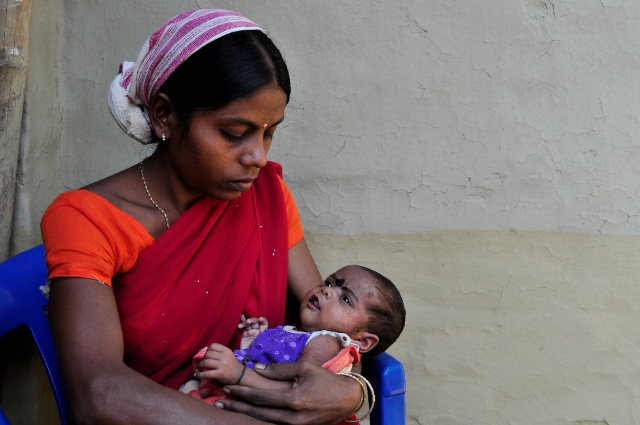
A recent scientific investigation has uncovered a troubling environmental health issue in Bihar where the presence of uranium in the breastmilk of mothers across six districts has been found. Published in Scientific Reports, this groundbreaking study represents the first comprehensive assessment of uranium contamination in breastmilk within the Gangetic plains, a region already grappling with exposure to heavy metals like arsenic, lead, and mercury.
Scope of the Investigation
The research team, comprising scientists from Mahavir Cancer Sansthan & Research Centre in Patna, Lovely Professional University, NIPER-Hajipur, and other collaborative institutions, examined breastmilk samples from 40 lactating mothers aged between 17 and 35 years. These women were selected from six districts, Bhojpur, Samastipur, Begusarai, Khagaria, Katihar, and Nalanda. Each participant provided informed consent and underwent detailed interviews about breastfeeding practices, child growth patterns, and residential history.
The findings were striking. Every single breastmilk sample tested positive for detectable uranium (specifically U-238), with concentrations ranging up to 5.25 micrograms per litre. While no international health organisation has established an official permissible limit for uranium in breastmilk, the mere presence of any radioactive heavy metal in infant nutrition is considered a legitimate public health concern.
Geographic Patterns of Contamination
The study revealed significant district-wise variations in uranium levels. Khagaria district emerged with the highest average contamination burden at 4.035 micrograms per litre, while Nalanda recorded the lowest mean concentration at 2.354 micrograms per litre. The decreasing order of mean uranium exposure followed this pattern - Khagaria, Samastipur, Begusarai, Katihar, Bhojpur, and Nalanda. Interestingly, Katihar registered the highest single peak uranium concentration at 5.25 micrograms per litre, despite not having the highest average levels.
These spatial patterns suggest underlying hydrogeochemical factors and environmental sources that vary across the region, pointing to a complex contamination landscape that requires further investigation.
Why Infants Are More Vulnerable
The research employed sophisticated statistical modelling by specifically a Monte Carlo simulation running 10,000 iterations, to assess potential health risks. The analysis revealed that approximately 70% of infants face a risk of developing non-carcinogenic health effects if uranium exposure continues through breastmilk.
Infants are considerably more susceptible to uranium toxicity than their mothers for several physiological reasons. Their organs are still developing, their body weight is significantly lower, and their body organs are still in the developing phase and they cannot efficiently eliminate uranium from their bodies. Consequently, even relatively small amounts of uranium can have a proportionally greater impact on infant health compared to adults.
The researchers evaluated both potential kidney-related effects and long-term cancer risks. Reassuringly, the study detected no signs of cancer risk from the uranium levels found in breastmilk. However, the exposure levels were sufficient to raise concerns about non-carcinogenic effects, particularly given infants' sharp sensitivity to heavy metals.
The Groundwater Connection
Although the study did not directly test water or food sources consumed by the participating mothers, the researchers point to their earlier work documenting uranium contamination in 273 groundwater samples across Bihar. Some districts recorded alarmingly high levels of 82 micrograms per litre in Supaul, 77 micrograms per litre in Nalanda, and 66 micrograms per litre in Vaishali all exceeding the World Health Organization's recommended limit of 30 micrograms per litre for drinking water.
Given Bihar's heavy dependence on groundwater for both drinking and agricultural purposes, the contamination likely stems from multiple sources that include uranium-rich geological formations, over-extraction of groundwater, phosphate fertiliser use, industrial effluents, and inadequately treated wastewater. The researchers emphasize that uranium contamination in Bihar is not a localised problem and at least 11 districts have recorded unsafe groundwater uranium levels.
The Breastfeeding Dilemma
Despite these alarming findings, the study strongly advises against any abrupt cessation of breastfeeding. The researchers explicitly state that breastfeeding remains the optimal method for infant nutrition and should only be discontinued based on clinical indication. Breastmilk provides unmatched nutritional and immunological benefits, and the uranium levels detected, while concerning, do not warrant stopping breastfeeding without proper medical guidance.
Dr. Ashok Sharma, Additional Professor at AIIMS Delhi, reinforced this message, clarifying that the uranium concentration of 5.25 micrograms per litre found in breastmilk samples is well below WHO permissible limits. He noted that most uranium absorbed by mothers is excreted primarily through urine rather than concentrated in breastmilk, and therefore breastfeeding remains recommended unless clinical circumstances suggest otherwise.
Path Forward: Recommendations and Solutions
The study concludes with several critical recommendations for addressing this public health challenge. These include implementing statewide biomonitoring of uranium contamination, conducting regular groundwater testing, issuing public health advisories particularly for pregnant and breastfeeding women, pursuing further research into uranium mobility through water, soil, and food chains, and ensuring safer water access through filtration methods capable of removing uranium, such as reverse osmosis systems.
The researchers stress the urgent need for broader biomonitoring of U-238 in these regions to fully understand the extent of exposure and implement appropriate interventions.
A Growing Environmental Health Crisis
Bihar has already made headlines over the past decade for arsenic, lead, and mercury contamination, with several studies documenting heavy metal exposure in both mothers and infants. This latest uranium study underscores a recurring pattern that includes the mounting environmental burden on Bihar's families, particularly in rural districts where groundwater serves as the primary water source.
The study's conclusion is measured yet clear. While uranium levels in breastmilk were not high enough to indicate immediate cancer risk, 70% of infants carry a risk of non-carcinogenic effects due to their lower body weight and developing kidneys, making them susceptible to toxicity even at concentrations that might be considered relatively safe for adults.
This research highlights the complex intersection of environmental contamination, public health, and maternal-child nutrition in Bihar. It calls for a coordinated response involving government agencies, healthcare providers, environmental scientists, and communities to address the root causes of groundwater contamination while ensuring that mothers continue to receive support for optimal infant feeding practices. The challenge ahead lies not in discouraging breastfeeding but in cleaning up the environmental sources of contamination that threaten the health of Bihar's most vulnerable population i.e. its infants.
. . .
References: