
.jpg)
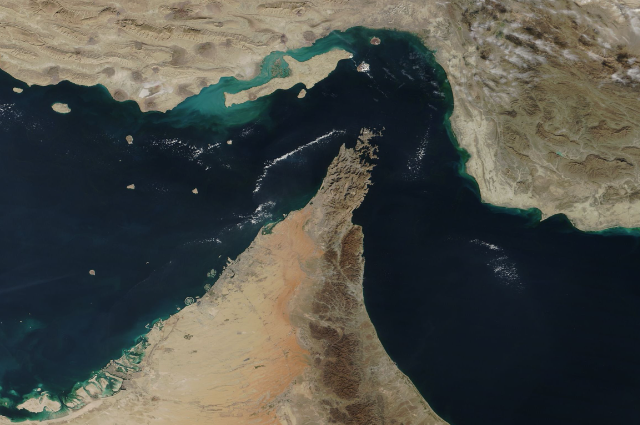
There is a narrow strip of water, just 33 kilometres wide, sitting between Iran and Oman. Most people have never thought about it. But it quietly controls the price of petrol at your nearest pump, the cost of cooking gas in your kitchen, and now, the condition of the road outside your door. This is the Strait of Hormuz and in 2025–2026, it stopped being a geography lesson and became a daily reality for India.
What happened, and why did India feel it so sharply?
After US-Israel strikes on Iran in early 2026, the strait effectively shut down. Iran's military declared it closed. Around 150 oil tankers are anchored outside, unable to move. Major shipping companies stopped sending vessels through. Crude oil prices jumped sharply. The temporary pause in the conflict has brought some relief, but the disruption has already done its damage.
For most of the world, this was a serious problem. For India, it was almost personal. About half of India's crude oil imports travel through this single passage. In the first two months of 2026 alone, India was importing nearly 2.6 million barrels of oil per day from Gulf countries. When that route gets blocked, there is no easy substitute. Russia, which had been a major supplier, was also becoming harder to rely on because of tightening US sanctions. India, in short, had fewer options precisely when it needed more.
India does keep emergency oil reserves, but they cover only about 9.5 days of national needs on their own. Adding commercial stockpiles brings the total to roughly 74 days. That sounds like a cushion until you realise that a prolonged closure of the strait could push oil prices to anywhere between $130 and $300 per barrel, triggering a collapse in tanker insurance and global supply chain chaos. At that point, 74 days is not a comfortable buffer. It is a countdown.
Roads are cracking, and the reason is the same
Here is where the story gets closer to the ground, quite literally. Road construction in India depends heavily on the black, sticky material that forms the surface of most roads and highways. Bitumen comes directly from crude oil refining. So, when crude oil prices spike and shipping gets disrupted, bitumen prices go up too, and quickly. In recent weeks, prices in several regions rose by 20 to 30 per cent. Supplies became irregular as logistics and refining costs climbed.
For contractors already working on fixed-price road contracts, where costs are agreed upfront, a sudden 25 per cent jump in a major input material is financially devastating. Many have had to stop work, scale back, or quietly absorb losses. Road projects worth hundreds, even thousands, of crores have stalled. The cost of ongoing projects has risen by 5 to 8 per cent in some cases. Pothole repairs, usually done on tight budgets just before the monsoon season, are being deferred. In Delhi and other cities, migrant workers who depend on construction jobs are feeling the pressure too, as sites slow down or go quiet. This is what a geopolitical crisis in the Persian Gulf looks like on the ground in India, not just at the petrol pump, but in delayed highways, crumbling road surfaces, and workers sitting idle.
India's quiet defence: ethanol blending
Against this backdrop, there is one policy that deserves far more attention than it gets, India's Ethanol Blending Programme.
The idea is simple. Instead of mixing 100 per cent petrol made from imported crude into vehicle fuel, you mix in a percentage of ethanol, which is produced from crops like sugarcane and maize grown right here in India. Every litre of ethanol that goes into your tank is one fewer litre of crude oil that needs to travel through the Strait of Hormuz.
India started this programme seriously in 2014, when ethanol made up just 1.53 per cent of the petrol mix. By September 2025, that number had climbed to nearly 19.17 per cent. Production capacity has grown from around 400 crore litres a year to over 1,810 crore litres. Over the past decade, this programme has saved India over one lakh crore rupees in foreign exchange, displaced 181 lakh metric tonnes of crude oil, and cut carbon emissions by 544 lakh metric tonnes. It has also put over 87,000 crore rupees directly into the hands of farmers who grow the feedstock.
India is now close to reaching a 20 per cent ethanol blend called E20. At that level, studies suggest petrol prices could fall by up to ₹8 per litre if the cost savings are passed on to consumers. More importantly, a country with 20 per cent ethanol blending is structurally less vulnerable to a Strait of Hormuz shock than one running on pure imported crude.
The bigger point that is being missed
What is rarely said plainly is this that an ethanol distillery is not just an agricultural facility. It is, in effect, a small domestic oil field. It produces liquid fuel from Indian soil, using Indian crops, employing Indian workers. Unlike a barrel of crude sitting in a tanker at the mercy of Iranian military decisions, ethanol produced in Uttar Pradesh or Maharashtra cannot be blocked by a foreign government or a 33-kilometre stretch of water.
This reframing is important. When we think about energy security, we tend to picture oil reserves, pipelines, or naval power. But India's most practical, near-term tool for reducing its vulnerability is already up and running at distilleries across the country. The programme also solves multiple problems at once and it reduces import dependence, gives farmers a stable market for their surplus crops, and cuts pollution. That is genuinely rare in policy.
. . .
References: