
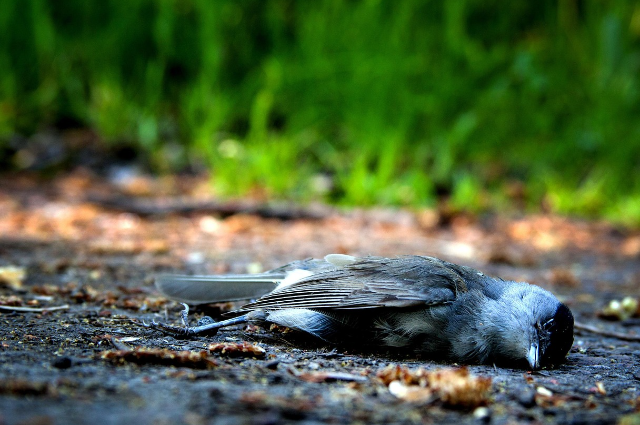
As the skies above Bangalore fill with a kaleidoscope of colourful kites during Makar Sankranti, a parallel tragedy unfolds under the festive canopy. While humans celebrate the harvest season and the transition from winter to spring, thousands of birds face a brutal reality and their wings are sliced, their freedom is stolen, their lives are hanging by a thread, quite literally.
Silent Victims of Festival Joy
The statistics are shocking. Since 1996, the People for Animals Wildlife Hospital in Bangalore has documented over 14,800 cases of birds injured by manja the thread used in kite flying. This isn't just a number on paper; each case represents a creature that fell from the sky, its natural grace interrupted by human negligence.
What makes this tragedy particularly painful is its preventability. In 2016, the Karnataka government banned the use of Chinese manja nylon thread mixed with glue and powdered glass under Section 5 of the Environment Protection Act. The law explicitly permits only cotton thread "free from any sharp, metallic or glass components." Yet, as Colonel Dr. Navaz Shariff, Chief Wildlife Veterinarian at Wildlife Hospital, and environmentalist Mahalakshmi Parthasarathy observe, enforcement remains a distant dream. The deadly threads continue to slice through the air, invisible death traps for unsuspecting birds.
Understanding the Weapon Disguised as Recreation
The transformation of kite flying from innocent pastime to ecological hazard didn't happen overnight. Traditional cotton threads, once the standard for the sport have been replaced by their cheaper and deadlier counterparts. Chinese manja, designed specifically for competitive kite battles where the objective is to cut down rival kites, has turned the skies into a minefield.
The mechanism of injury is brutal in its simplicity. Birds flying at speed cannot detect these nearly invisible threads stretched across their flight paths. When a collision occurs, the glass-coated string acts like a razor blade. The results are devastating: fractured wings, deep lacerations cutting to the bone, severed feathers, and neck injuries. Raptors, birds of prey like black kites and eagles, are particularly vulnerable due to their high-altitude flight patterns and rapid speeds.
But the danger extends beyond birds. Bikers have resorted to wearing neck collars for protection. Human casualties, including throat injuries and even deaths, have been reported. Yet somehow, the practice persists, evidence to either our collective indifference or the failure of regulatory mistake.
Innovation Born from Compassion
Against this backdrop of tragedy, Wildlife Hospital represents a beacon of hope and innovation. Dr. Shariff has pioneered the use of a technique where donor feathers are surgically attached to injured birds that have lost their primary and secondary flight feathers. The process is careful where the bird is anaesthetized, its damaged feather stumps trimmed to create receptacles, and matching donor feathers from their feather set are attached using surgical glue.
This feather bank is itself a marvel of community engagement. Throughout the year, collection bins are strategically placed across Vijayanagara and Kengeri areas, encouraging citizens to drop off any feathers they find. Currently stocking feathers from 32 bird species, this repository has become crucial for rehabilitation efforts. Each donated feather potentially saves a bird's life, allowing it to pass the critical 24-hour flight test before release back into the wild.
The hospital's rescue infrastructure is equally impressive. Recognizing that many injured birds become entangled at heights of 80 to 100 feet which is beyond the reach of conventional rescue equipment, the team developed interlocking poles that can extend upto 120 feet. Five specially equipped vehicles now patrol the city, ready to respond to distress calls.
A Shared Responsibility
The burden of change cannot rest solely on wildlife hospitals and rescue organizations. Every individual who participates in kite flying carries responsibility for their choices. The decision to use cotton thread instead of glass-coated manja is simple, affordable, and life-saving. It doesn't diminish the joy of the festival; it just ensures that joy isn't built on the suffering of innocent creatures.
For those who witness a bird in distress in Bangalore, the Wildlife Hospital rescue number (+91 99000 25370) should be treated as urgently as any emergency hotline. Every minute matters when a bird is dangling from a building or tree, slowly losing strength.
Incomplete Victory
Since 1996, wildlife Hospital has facilitated the rescue of over 48,331 urban wild animals spanning 235 species. Their advanced facilities including specialised ICU, surgical units, X-ray equipment, laser physiotherapy machines, and quarantine units, represent the gold standard in wildlife care. Yet their success stories come with a caveat for some birds will never fly again. For them, life is changed forever, their natural state irreversibly compromised by human recreation.
This reality should weigh on our collective conscience. These aren't acceptable casualties of celebration; they're preventable tragedies. When Parthasarathy describes seeing birds "dangling and hopeless," completely helpless against the manja that entangles them, it's a mirror held up to our priorities. What does it say about us when our festivities require such sacrifice from creatures who have no say in the matter?
Reclaiming Tradition with Responsibility
The solution isn't complex. Cotton thread exists. It's traditional, it's safe, and it allows for the same competitive kite flying that enthusiasts enjoy. The International Kite Festival and Makar Sankranti celebrations can continue with their full cultural richness without requiring birds to pay with their wings, their freedom, or their lives.
What's needed is a cultural shift that views enforcement not as restriction but as protection. Protection for birds, for children, for motorcyclists, for anyone who shares the space beneath our skies. We need retailers who refuse to stock illegal manja, communities that shame its use rather than enable it, and authorities who treat violations as the serious offenses they are.
The Wildlife Hospital and similar organisations across India do heroic work, but they shouldn't have to. Their expertise should be reserved for natural injuries and illnesses, not for treating the consequences of human negligence season after season.
As Dr. Shariff and his team prepare their interlocking poles and stock their feather banks for yet another festival season, the question swings in the air as surely as those deadly threads: When will we finally choose to celebrate in a way that honours all life, not just our own? Until that day comes, every kite that rises into the sky casts a shadow far darker than its makers intended.
. . .
References: