
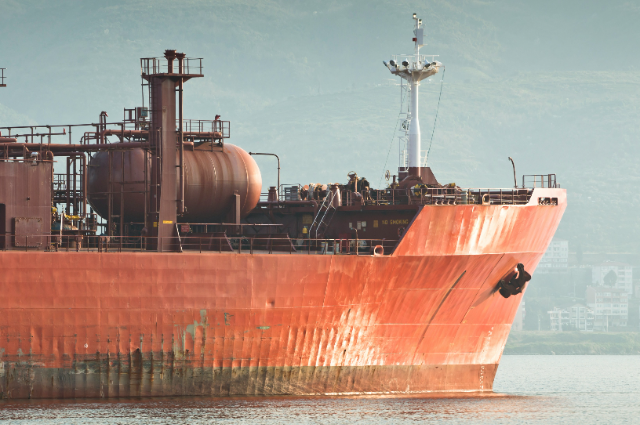
Photo by Adem Percem on Unsplash
The recent approval by President Donald Trump of the Sanctioning Russia Act 2025 has sent repercussions through India's economic and diplomatic corridors. This bipartisan legislation proposes imposing tariffs as high as 500% on countries continuing to purchase Russian petroleum products, with India, China, and Brazil squarely in its crosshairs. While the bill hasn't been passed yet, Senator Lindsay Graham has indicated it could come up for a vote early next week, making this threat very real and very immediate. For India, this development represents far more than just another geopolitical headache, it's a direct challenge to the nation's strategic autonomy and economic stability.
The Immediate Economic Fallout
The markets have already spoken. India's stock benchmarks recorded their steepest decline in over four months following the announcement, with both the Nifty 50 and Sensex losing approximately 1.7-1.8% in a single week. Foreign investors, those perpetually nervous barometers of confidence, offloaded shares worth $900 million in January alone. The oil and gas sector bore the brunt of this anxiety, falling 2.8% by its worst session in nine months.
These aren't just abstract numbers on a screen. They represent real erosion in wealth, investor confidence, and India's attractiveness as a stable investment destination. When Reliance Industries, one of the nation's corporate giants, loses 2.2% of its value and publicly announces it hasn't received Russian cargo at its Jamnagar refinery since December, we see the immediate behavioural changes fear can trigger.
The Energy Security Question
Here's where the complexity deepens. India has imported approximately 35-40% of its crude oil from Russia at significantly discounted prices following Western sanctions on Moscow. For a nation that imports over 85% of its crude oil requirements, these discounts aren't merely a bargain, they're a critical tool for managing inflation and sustaining economic growth.
The arithmetic is unclear, where a sudden shift away from discounted Russian oil could raise India's annual import bill by $9-11 billion. In practical terms, this translates to higher fuel prices at the pump, increased transportation costs, elevated inflation, and ultimately, slower economic growth. For a developing economy trying to lift millions out of poverty, these consequences cannot be dismissed as acceptable collateral damage. Reliance's announcement that it expects no Russian oil in January signals that companies are already improvising their strategies. But this reactive approach, driven by fear rather than planning is exactly what India needs to avoid.
The Dominion Rule Trap
What makes this situation particularly annoying is the fundamental challenge it poses to India's foreign policy independence. The United States is essentially saying that countries should align with its geopolitical priorities or face economic punishment. This isn't diplomacy; it's coercion dressed in legislative clothing.
India has carefully cultivated a position of strategic autonomy in global affairs. It has maintained historically strong ties with Russia, a relationship built over decades while simultaneously deepening partnerships with the United States and other Western democracies. This balancing act has served India well by allowing it to pursue its national interests without being drawn into rigid bloc politics.
The 500% tariff proposal fundamentally undermines this approach. It forces India to choose between its economic relationship with Russia and its trade relationship with the United States. The irony is rich as America preaches the virtues of free trade and market economics while simultaneously using trade as a weapon to enforce geopolitical compliance. Moreover, President Trump's recent comment that Prime Minister Modi is "not that happy" with the imposition of these tariffs reveals a troubling casualness about weaponising trade policy. The subsequent revelation that US Commerce Secretary Howard Lutnik claimed a potential trade deal collapsed because PM Modi didn't call Trump and that India was given "three Fridays" to decide by suggesting a transactional, almost bad-tempered approach to international relations.
A Path Forward
India's response to this crisis must be complex. First, sustained diplomatic engagement with the United States is essential. India must articulate clearly that as a nation importing over 85% of its crude oil, it cannot afford sudden disruptions to affordable supply chains. The case must be made that energy security is national security, and no responsible government can compromise it under external pressure. Second, India needs to accelerate and not panic with its diversification strategy. Gradually increasing sourcing from West Asia, Africa, and the Americas makes strategic sense. However, this must be done systematically, ensuring that any shift doesn't create price shocks that harm the economy.
Third, this crisis should catalyse renewed commitment to India's renewable energy targets. The goal of achieving 500 GW of non-fossil fuel capacity by 2030 isn't just an environmental imperative, it's increasingly a geopolitical necessity. Every percentage point reduction in oil dependence is a percentage point increase in strategic freedom.
Finally, India must work with other emerging economies facing similar pressures. Brazil and China are also targeted by this legislation. While these nations may have different interests, they share a common concern about having their sovereign economic choices dictated by external powers. Creating informal coalitions to resist such pressure could prove valuable.
The Stakes are High
This isn't simply about oil or tariffs. It's about whether middle powers like India can chart independent foreign policies in an increasingly polarised world, or whether they'll be forced into new versions of Cold War-style bloc politics. It's about whether economic interdependence will be used to enable cooperation or enforce compliance.
India has worked too hard, over too many decades, to build its strategic autonomy to surrender it now. The response to America's tariff threat must be firm but measured, principled but practical. India must make clear that while it values its relationship with the United States, that relationship cannot come at the cost of India's fundamental sovereign right to make its own economic and foreign policy decisions. The world is watching. How India steers this challenge will define not just its relationship with America and Russia, but its broader role in shaping the emerging global order. The stakes couldn't be higher.
. . .
References: