
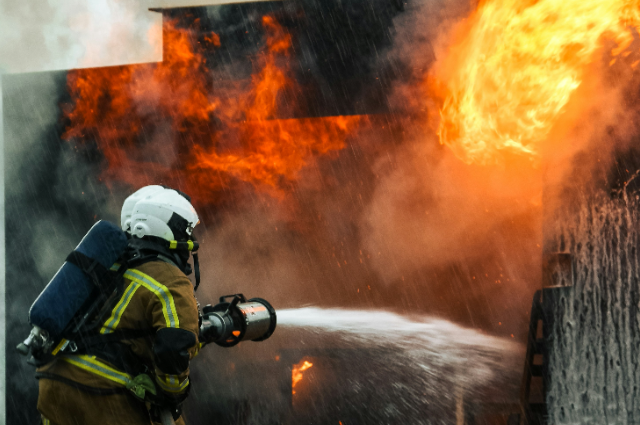
Photo by Natalia Marcelewicz on Unsplash/ Representative Image
The fire that consumed Birch by Romeo Lane on December 7, 2025, was not merely a fire, it was a disastrous collapse of accountability that cost 25 lives. As electric firecrackers lit up the dance floor during a "Bollywood Banger Night," patrons initially mistook the sparks for part of the show. Within moments, palm-leaf decorations ignited like kindling, transforming a packed nightclub into a crematorium. This tragedy demands more than grief; it demands a fundamental reckoning with how India's hospitality industry operates at the expense of human safety.
The Night the Music Died
Around 11:45 PM, approximately 100 people and travellers had filled the Arpora nightclub's dance floor. Witnesses describe electric firecrackers bursting during a performance, with people initially cheering what they believed was planned entertainment. No fire alarm sounded. No evacuation announcement was made. By the time reality struck, escape routes had become death traps.
The venue's design sealed its fate. Built on an "island" in the Arpora River backwaters, the club featured a single narrow entrance connected through tight winding lanes. As panic erupted, many guests made a fatal miscalculation they ran downstairs towards the kitchen and basement, believing it offered safety. Instead, they found themselves trapped as thick smoke filled enclosed spaces. Twenty of the 25 victims were club employees from states like Jharkhand, Uttarakhand, Assam, and West Bengal. Five tourists also perished, including four from Delhi.
Most victims died from suffocation rather than burns. The temporary construction materials, particularly decorative palm leaves, transformed the venue into a tinderbox. When fire engines arrived, narrow access roads forced them to park 400 meters away, losing precious minutes. By 2:00 AM, when flames were controlled, the damage was irreversible.
A Structure Built on Violations
The nightclub opened in 2024 on land disputed for two decades. The original landowner, Pradeep Ghadi Amonkar had repeatedly flagged illegalities to authorities, but his complaints were ignored. Both the local gram panchayat and the Goa Coastal Zone Management Authority issued demolition notices for illegal construction on a salt pan. However, these orders were stayed after appeals, allowing operations to continue.
The club received another legal notice in November 2024 about the illegal structure, yet operations continued. The premises operated even after its trade license expired in March 2024. Under the Goa Panchayat Raj Act, local bodies were empowered to seal such premises, yet officials failed to act. The club lacked even a fire department NOC, which is the most basic requirement for any public establishment.
Flight and Accountability
The owners' actions immediately after the fire illustrate their consciousness of guilt. The Bureau of Immigration confirmed that Saurabh and Gaurav Luthra fled to Phuket, Thailand, at 5:30 AM on December 7, just hours after the fire. Their swift departure left behind grieving families and a path of administrative failures.
Goa Police issued a Lookout Circular, and Interpol issued a Blue Corner Notice to apprehend the brothers. Four club managers were arrested, along with Bharat Kohli, who was apprehended in Delhi. Even the Arpora-Nagoa panchayat sarpanch was detained. The government suspended three senior officials for allowing the nightclub to commence operations in 2023. Yet suspensions feel inadequate when systemic failures are this profound.
The Human Cost Behind Tourism's Glamour
Twenty of the 25 victims were staff members and migrant workers who form the backbone of Goa's hospitality industry. They work long hours for modest wages, and their safety is rarely prioritised. When flames erupted and smoke filled the basement and kitchen areas where they worked, these individuals had no escape route because their employers never considered proper emergency exits necessary.
The tragedy also claimed tourists, including a Delhi family that lost four members. When safety standards collapse, they endanger everyone equally. Yet migrant workers have fewer options and virtually no leverage to demand better conditions. Their deaths expose the risky foundations upon which Goa's tourism paradise is built.
Political Responses and Public Outrage
Congress leaders demanded a thorough investigation and strict accountability, with Rahul Gandhi characterising the incident as "a criminal failure of safety and governance." President Droupadi Murmu and Prime Minister Narendra Modi expressed condolences, with the PM announcing ₹2 lakh compensation for victims' families and ₹50,000 for the injured. Chief Minister Pramod Sawant pledged an additional ₹5 lakh and ₹50,000, respectively from state disaster funds.
These gestures cannot replace prevention. Financial compensation acknowledges loss but doesn't restore lives or prevent future tragedies. Goa needs rigorous enforcement of safety standards before disasters occur, not reactive measures afterwards. The state has ordered a magisterial inquiry and fire safety audits for all nightclubs, and measures that should have been routine rather than reactive.
Chief Minister Sawant ordered the demolition of all establishments operated by the Luthra brothers, including their flagship Romeo Lane Vagator property. These actions suggest authorities knew about violations for years but only acted after the catastrophic loss of life forced their hand.
Systemic Failures, Predictable Outcomes
This fire was not an accident, and it was the inevitable result of compounding negligence. Consider the chain of failures where illegal construction on disputed land had stayed the demolition orders, expired licenses ignored, absent fire safety approvals, flammable decorative materials, indoor pyrotechnics in a crowded space, a single narrow exit, poor ventilation, an inaccessible location for emergency vehicles, and staff trapped in basement areas with no escape routes.
Local activist Ravi Harmalkar repeatedly warned officials and faced threats from the Luthra brothers, eventually approaching the Bombay High Court, which ordered demolition. Why does it take private citizens' persistent advocacy and court intervention to address flagrant safety violations? The answer lies in a toxic mixture of corruption, administrative lethargy, and a tourism economy that values spectacle over substance.
A Blueprint for Change
Real reform demands concrete measures where mandatory structural inspections by independent agencies before licensing; non-negotiable fire safety standards including multiple exits, evacuation routes, suppression systems, and trained staff; worker protection with emergency training in languages they understand; accessible emergency response with proper urban planning; transparent digital licensing systems that immediately cease operations when licenses expire; accountability for officials who enable violations; and protection for whistleblowers.
Safety Cannot Be Optional
Twenty-five people entered Birch by Romeo Lane expecting entertainment and left as statistics in a preventable tragedy. Their deaths expose uncomfortable truths about India's development model, where rapid economic growth outpaces regulatory capacity and profit motives overpower public welfare.
Goa's identity as a world-class tourist destination cannot rest on Instagram-worthy aesthetics while ignoring safety infrastructure. Every person who enters an entertainment venue, whether as a worker or a guest deserves assurance that basic safety standards have to be met. This isn't unreasonable; it's a fundamental right.
The real test for Goa now is whether this tragedy catalyses genuine reform or fades into the familiar cycle of outrage, investigation, and amnesia. The families grieving 25 lost lives deserve more than compensation; they deserve commitment that no other family will suffer the same fate. Until Goa's tourism economy prioritises human life over commercial convenience, the next disaster is merely a matter of when, not if.
The flames at Arpora have been extinguished, but the questions they ignited must continue burning until real answers and real change have to emerge from the ashes.
. . .
References: