
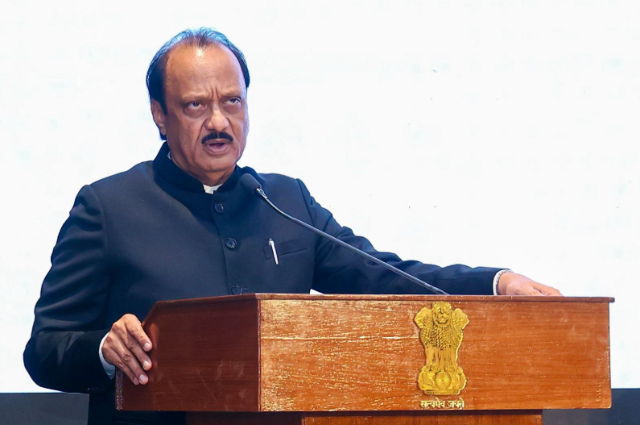
On the morning of January 28, 2026, the political landscape of India's wealthiest state changed permanently. A Learjet 45XR operated by VSR Aviation crashed during a charter flight from Mumbai to Baramati Airport in Maharashtra, killing Deputy Chief Minister Ajit Pawar and all four others on board. In an instant, a plane crash transformed from a routine tragedy into a political event, thereby leaving Maharashtra and indeed the nation, which was grappling with both grief and uncertainty.
The Final Journey
The aircraft crashed at approximately 09:12 IST while attempting a second approach to runway 11 at Baramati Airport, veering off the runway, bursting into flames and being destroyed on impact. The circumstances were straightforward, where a seasoned crew, an experienced aircraft operator, and weather conditions that allegedly compromised visibility converged into a disaster.
What makes this particularly moving is the pattern of Ajit Pawar's mission that morning. He was travelling to Baramati to address multiple public meetings in connection with the upcoming Zilla Parishad elections, the bread and butter of democratic politics, the unglamorous work of constituency service that forms the foundation of political careers. Instead of addressing rallies about local governance, Pawar's final journey became a national news event.
The human cost extends beyond the high-profile passenger. The pilot, Sumit Kapur had logged 16,500 hours of flight time, while the co-pilot was identified as Shambhavi Pathak and the flight attendant as Pinky Mali, alongside Pawar's personal security officer, Vidip Jadhav. Each represented years of training, experience, and individual stories now abruptly ended.
A Political Life in Transition
To understand the magnitude of this loss, one must appreciate Pawar's unique position in Maharashtra's complex political ecosystem. At 66, he was a key political figure who served as the second-highest elected official in Maharashtra, India's wealthiest state. But his career was defined not by a steady rise but by dramatic shifts that reflected and shaped the state's political realignments.
In 2019, Pawar briefly left the NCP to join the BJP's cabinet in Maharashtra as a deputy chief minister, later returned to the party, and in 2023, arranged a split within the NCP by aligning with the BJP-led coalition. This wasn't political opportunism in the conventional sense; it was strategic direction in a state where coalition politics determines power. In February 2024, the Election Commission of India acknowledged Ajit Pawar's section as the official NCP, and the same year, he was sworn in as Maharashtra's deputy chief minister for a sixth time.
That sixth swearing-in tells its own story. In Indian politics, survival across multiple administrations, ideological shifts, and party fractures requires not just political skill but an almost intuitive understanding of power's flow. Pawar possessed this in abundance.
He built his political base through the grassroots cooperative movement and exercised considerable influence in the state's vibrant sugar belt, known for his ability to mobilise rural voters. This wasn't merely electoral machinery; it represented deep roots in Maharashtra's agricultural economy and social fabric. The cooperative movement, particularly in sugar production, has long been the backbone of political power in western Maharashtra and Pawar understood how to translate economic influence into electoral dominance.
The Machinery of Tragedy
The aircraft itself deserves examination, not for dark curiosity but because it illuminates broader questions about aviation safety and political transport. The aircraft involved was VT-SSK, a 16-year-old Learjet 45XR operated by VSR Aviation not ancient by aviation standards, but not new either.
VSR Aviation's track record adds uncomfortable context. Another Learjet operated by VSR, arriving from Vishakhapatnam crash-landed at Mumbai airport in September 2023 during heavy rain and reduced visibility, though all eight occupants survived. This prior incident raises questions about operational protocols, maintenance standards, and decision-making under challenging weather conditions.
Flightradar24 reported the aircraft was attempting a second approach to Baramati airport when it crashed. A second approach suggests the crew recognised unsafe conditions on the first attempt, where a responsible decision was taken. What happened on that second approach remains the subject of investigation, but it emphasises in aviation, where experience, judgment, and conditions must align perfectly.
The owner of VSR Aviation offered a revealing assessment, claiming technical failure was unlikely and low visibility was the primary factor behind the incident. This shifts responsibility from mechanical failure to environmental conditions and potentially crew decision-making. But such statements, made in tragedy's immediate aftermath, often serve institutional interests rather than investigative clarity. The truth will emerge from forensic examination, flight data analysis, and careful reconstruction of processes that take months, not hours.
Mortality and Power
What strikes most profoundly about this tragedy is its reminder of mortality's indifference to power. Ajit Pawar exercised enormous influence, commanded political machinery across western Maharashtra, and occupied the second-highest office in India's wealthiest state. Yet on that morning, he was simply a passenger on an aircraft attempting to land, subject to the same physical laws and vulnerabilities as anyone else.
PM Modi's tribute described Pawar as "widely respected as a hardworking personality" with "passion for the empowerment of the poor and the deprived", perhaps political rising to higher ranks, but not entirely hollow. Pawar's career demonstrated genuine engagement with rural development, cooperative movements, and agricultural policy. His legacy will be contested, as all political legacies are, but it will be measured in infrastructure built, policies enacted, and communities served.
The Path Forward
Pawar's last rites were held with full state honours at Vidya Pratishthan ground in Baramati, with Prime Minister Modi and Home Minister Shah expected to attend. The funeral was a moment of collective grief, political theatre, and perhaps genuine reflection on a consequential political life cut short.
But funerals end, and politics continues. Maharashtra must now direct succession, coalition dynamics, and the approaching elections without a figure who, for better or worse, shaped its political landscape for decades. The NCP faction he led must decide whether to maintain its course or seek understanding with Sharad Pawar's group. The BJP-led coalition must determine how to retain the constituencies Ajit Pawar brought to the alliance.
. . .
References:
- https://thefederal.com/category/news/today-news-live-update
- https://www.aljazeera.com/news/2026/1/28/plane-crash
- https://www.thehindu.com/news/national/maharashtra
- https://www.thehindu.com/news/national/maharashtra
- https://www.bbc.com/news/articles/c98prmd0jl0o
- https://www.ndtv.com/india-news/ajit-pawar-plane-crash