
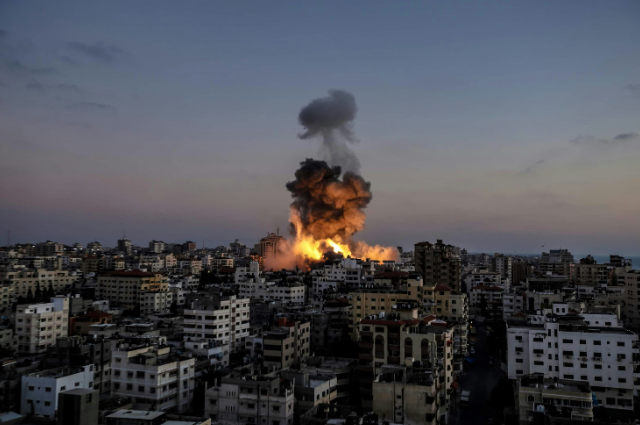
The early morning explosions that shook on 4th January marked a watershed moment in geopolitical relations, one that raises profound questions about sovereignty, justice, and the limits of American power. What unfolded was not merely a military operation but a dramatic reassertion of interventionist doctrine that dates back to earlier chapters of U.S.-Latin American relations.
The Operation Itself
In the pre-dawn darkness, explosions rang out across Venezuela's capital. At least seven blasts echoed through the city as low-flying aircraft swept overhead. The target was clear on President Nicolás Maduro and his wife, Cilia Flores, who were captured from their residence within the Fort Tiuna military installation. According to reports, elite Delta Force operatives conducted the snatch-and-grab operation while bombs fell on military and civilian installations. The entire strike lasted less than thirty minutes, yet its aftershocks will be felt for years.
President Trump announced that Maduro and Flores were aboard the USS Iwo Jima, being transported to New York to face charges. The image he posted on social media showed Maduro blindfolded in a sweatsuit aboard the warship, and it was designed to project victory. Trump's declaration that America would "run the country" until a proper transition could occur raised immediate questions about what such governance would entail and how long it might last.
The Legal Justification
The legal architecture supporting this operation remains dark. Attorney General Pam Bondi announced new indictments against both Maduro and Flores on narco-terrorism conspiracy charges, adding to earlier 2020 accusations. The administration framed the operation as law enforcement rather than warfare, yet the distinction seems to change when bombs are falling and people are dying. The comparison to the 1990 Panama invasion that led to Manuel Noriega's capture is instructive and intentional. That operation, too, was justified partly on drug trafficking grounds, though its legality remained contested.
What's notably absent is authorisation. Lawmakers from both parties expressed deep concerns, with some demanding immediate briefings. The Armed Services committees, which have jurisdiction over military matters, reportedly received no advance notification. This raises fundamental questions about the separation of powers and the president's authority to wage what amounts to war without legislative approval.
The Human Cost
Lost in the geopolitical theatre are the Venezuelan people caught in the crossfire. The operation killed an undisclosed number of Venezuelan civilians and military personnel. Neighbourhoods lost power. People rushed into the streets in terror, uncertain whether they were witnessing liberation or invasion. The emotional landscape of Caracas reflected the nation's deep polarization and some celebrated in the streets while others demanded Maduro's return, chanting desperately into the night.
This polarisation is rooted in Venezuela's complex political reality. Maduro inherited power from Hugo Chávez in 2013 and presided over economic collapse, humanitarian crisis, and increasingly authoritarian governance. The 2024 election, which opposition groups documented he lost by a two-to-one margin, was declared a victory by loyal electoral authorities. Yet for all his failures and illegitimacy, Maduro retained genuine support among segments of Venezuelan society who saw him as a defender against American imperialism.
The Broader Campaign
This operation didn't emerge from nowhere. It represents the conclusion of months of escalating pressure. The Trump administration conducted what it termed an "armed conflict" with drug cartels, striking at least thirty-five boats suspected of drug trafficking in waters near Venezuela. These operations killed at least 115 people before Saturday's previous strikes. The administration doubled the bounty for Maduro's capture to fifty million dollars, characterising him as the head of the "Cartel of the Suns" drug trafficking organisation.
The trajectory is revealing. What began as strikes on boats accused of drug smuggling evolved into drone strikes on Venezuelan soil, then culminated in a full-scale war on the capital and the seizure of the head of state. Each escalation built upon the previous one, creating a momentum that made 3rd January’s operation seem almost inevitable.
The Sovereignty Question
At the heart of this matter lies a question that excels Venezuela and what gives one nation the right to invade another, bomb its installations, and kidnap its leader, regardless of that leader's legitimacy or criminality? The United States government doesn't recognise Maduro as Venezuela's legitimate president, fair enough, now given the fraudulent elections. But non-recognition is different from military intervention and regime change.
Cuba and Iran predictably condemned the operation, but their criticism shouldn't be dismissed merely because of their alignments. Cuba's president spoke of "our zone of peace being brutally assaulted," and while inflated, given Cuba's own regional interventions, the concern about establishing precedents is valid. If the United States can strike Venezuela for drug trafficking and authoritarian governance, what prevents other powers from claiming similar justifications for their interventions?
What Comes Next
Trump's promise that America will "run the country" opens more questions than it answers. How does one administer a nation of twenty-eight million people with deep political divisions? Who will lead this transition, and what makes it legitimate? Venezuela's vice president, Delcy Rodríguez, appeared on state television demanding proof of life for the captured leaders, suggesting that under Venezuelan law, she should assume the presidency. Yet there's no indication the United States recognizes this succession.
The economic dimension adds another layer of complexity. Trump mentioned Venezuela's oil industry would "make a lot of money" under U.S. leadership, suggesting resource extraction may be part of this situation. Venezuela possesses the world's largest proven oil reserves, and American management of this resource would represent an extraordinary windfall and an extraordinary neocolonial arrangement.
A Moment of Reckoning
What happened in Caracas forces us to confront uncomfortable truths about power and principle. Yes, Maduro presided over catastrophe. Yes, he clung to power through fraud and repression. Yes, he may well have been involved in drug trafficking. But the solution to illegitimate governance cannot be foreign military intervention without international consensus or legal authorisation.
The operation may achieve its immediate objectives, where Maduro will likely face trial in New York, and a new government will eventually emerge in Venezuela. But at what cost to international norms? At what cost to American credibility when we speak of sovereignty and self-determination? At what cost to the Venezuelan people, who deserve to choose their own future free from both authoritarian governance and foreign occupation?
History will judge not just whether this operation succeeded in its tactical goals, but whether it represented a defensible use of American power or a dangerous regression to an era of gunboat diplomacy that was thought to be left behind.
. . .
References: