
Photo by wei on Unsplash
In the complicated landscape of international trade negotiations, even the humblest commodities can become powerful symbols of deeper tensions. The current dispute between India and the United States over pulses and that everyday staple diet that graces millions of Indian plates as dal illustrates how agricultural trade often forms broader economic anxieties, political pressures, and strategic calculations.
The Unexpected Flashpoint
At first glance, pulses might seem unlikely to derail trade talks between two strategic partners. Yet this boiling disagreement has emerged as the latest obstacle in already stalled negotiations between New Delhi and Washington. Two Republican senators from major agricultural states, Kevin Cramer of North Dakota and Steve Daines of Montana, have escalated the matter directly to President Donald Trump, characterising India's tariff policy as fundamentally unfair to American farmers.
The specific trigger is India's imposition of a substantial tariff on American pulse imports late last year. On October 30, India introduced a duty on U.S. yellow peas that took effect from November 1. What makes this move particularly noteworthy is not just the rate itself, but the manner in which it was implemented by quietly, without the display that typically accompanies major trade policy shifts. This approach has led observers to describe it as a form of strategic retaliation wherein a measured response to earlier American trade measures that avoided inflaming public opinion while still sending a clear signal to Washington.
The Silent Response Strategy
India's decision to raise duties on pulse imports should be understood within a broader context of trade friction. The Trump administration had previously imposed disciplinary tariffs reaching upto 50 percent on certain Indian goods, citing concerns about trade imbalances and market access issues. More recently, an additional duty on India's purchases of Russian crude oil has added another layer of complexity to the bilateral relationship.
By responding with tariffs on pulses rather than high-profile industrial goods, India appears to have chosen its battleground carefully. The move allows New Delhi to protect domestic agricultural interests while demonstrating that it will not simply absorb American trade pressure without response. This standardised approach reflects a government attempting to balance multiple imperatives by supporting its farming community, managing consumer prices, and maintaining diplomatic relations with a crucial strategic partner.
Why Pulses Matter Economically and Politically
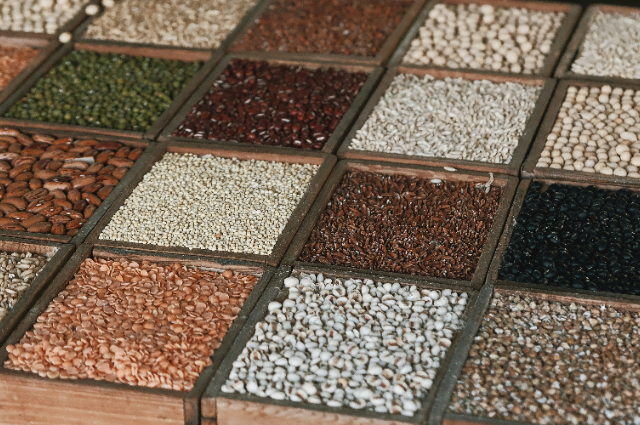
For both nations, pulses represent far more than just another agricultural commodity. India stands as the world's largest consumer of pulses, accounting for approximately 27 percent of global consumption. Lentils, chickpeas, dried beans, and peas form essential components of the Indian diet, particularly for lower-income households where they provide affordable protein. This makes pulse prices extraordinarily sensitive politically and price spikes can trigger consumer unrest, while falling prices can devastate small farmers.
The American perspective is equally compelling. For farmers in states like North Dakota and Montana, India represents a massive potential market for peas and lentils. These states have built substantial pulse production capacity with an eye towards export opportunities, and India's enormous consumer base makes it an obvious target market. When India raises tariffs or imposes import restrictions, American producers face significant losses in both current revenue and future market development opportunities.
The Farmer Protection Dilemma
India's agricultural policy has historically faltered between protecting domestic producers and ensuring affordable food for consumers. When domestic production is strong, the government typically raises tariffs to shield farmers from cheap imports that could reduce prices. When shortages loom, duties are reduced to allow imports that can stabilise consumer prices. This dynamic management approach, while responsive to domestic conditions, creates exactly the kind of unpredictability that American exporters find frustrating.
The current tariff can thus be read through multiple lenses simultaneously as a protectionist measure designed to support Indian farmers during a period of adequate domestic supply, as a strategic trade signal responding to American tariffs, and as a politically necessary step to maintain support among India's vast agricultural constituency. For millions of small Indian farmers, pulses represent crucial income and livelihood security, making any trade policy in this sector inherently sensitive.
The Broader Trade Deadlock
This pulse dispute emerges against the backdrop of a comprehensive bilateral trade agreement that remains frustratingly out of reach. Both governments have publicly expressed interest in expanding commercial ties and reducing barriers, yet progress has been slow. The obstacles extend well beyond agriculture to include disagreements over digital trade rules, intellectual property protections, and market access across multiple sectors.
Looking Forward: Difficult Choices Ahead
The path to resolution likely requires creative diplomacy rather than simple concessions. Possible approaches might include improving transparency in India's import policy framework, exploring long-term supply arrangements that provide greater predictability for American exporters, or considering tariff-rate quotas that balance market access with domestic protections.
Yet analysts rightly caution that a quick resolution appears unlikely. With pulses deeply embedded in domestic politics on both sides, tied to farmer welfare in India and export interests in America, negotiators may opt for incremental solutions rather than comprehensive agreements. The issue may persist as what one might call an irritant, which is significant enough to require ongoing attention but not severe enough to derail the broader relationship.
The Larger Pattern
Ultimately, the pulse dispute reveals fundamental differences in how India and the United States approach agricultural trade. America, with its highly productive, export-oriented farming sector, naturally seeks rules-based liberalisation that opens markets to its competitive products. India, with hundreds of millions depending on agriculture for livelihood, prioritises food security, price stability, and the protection of vulnerable farming communities.
These are not easily reconcilable positions, nor should they be dismissed as just protectionism versus free trade. Each reflects genuine national interests and legitimate policy objectives. The challenge for diplomats and trade negotiators is finding frameworks that acknowledge these different priorities while still enabling mutually beneficial commerce.
As both nations continue their attitude towards a trade agreement, pulses will likely remain a test case which is a relatively controlled dispute that nevertheless illuminates the broader tensions and tradeoffs inherent in India-U.S. commercial relations. How this issue is ultimately resolved may provide valuable insights into whether these two democratic powers can craft a trade relationship that respects their different development models while expanding economic ties.
. . .
References: