
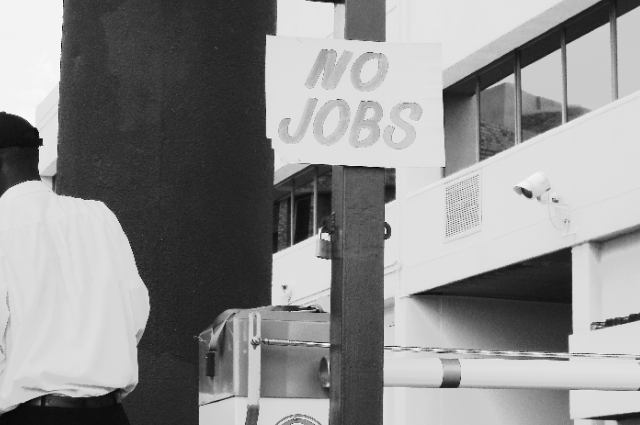
Photo by Hennie Stander on Unsplash/ Representative Image
The image is a reflection and sad as thousands of young aspirants, armed with pens and dreams, seated in neat rows on an airport runway in Sambalpur, Odisha. On December 16, 2025, the Jamadarpali airstrip transformed into an unconventional examination centre, hosting over 8,000 candidates competing for merely 187 home guard positions. This scene, which quickly went viral on social media is more than just an administrative innovation, and it's a mirror reflecting the deep cracks in India's employment landscape.
The Numbers Tell a Troubling Story
When engineers, MBAs, postgraduates, and highly qualified professionals queue up for positions requiring only Class V education and offering Rs 612 daily wages, something has gone fundamentally wrong. The Sambalpur Police Department's recruitment drive attracted applications from nearly 10,000 individuals for jobs that involve driving official vehicles, basic computer work, and supporting police operations. The disparity between qualification and opportunity couldn't be more shocking.
The examination itself was simple as a 30-minute paragraph writing test of 20 marks and a one-hour general knowledge paper of 30 marks. Yet, the response was anything but uncertain. From November 13 to 22, 2025, when applications were accepted, the interest was necessitated as extraordinary security arrangements where three additional Superintendents of Police, 24 inspectors, 86 sub-inspectors and over 100 home guards, and even surveillance drones to maintain law and order.
Behind Every Application: A Human Story
The human dimension of this crisis deserves attention. Consider the postgraduate who told reporters, "I've cleared several competitive exams but found no openings; this is my best shot to support my family." Or the engineer who abandoned his field after years of fruitless searches. These aren't isolated cases as they represent a generation trapped between educational achievement and economic reality.
Candidates began arriving at 6 am, lined up to patiently before entering at 9 am. Many travelled overnight from neighbouring districts, where they were spending precious resources for a one-in-forty-three chance at employment.
Sambalpur's airstrip spectacle isn't an anomaly, it's indicative of Odisha's deeper unemployment crisis. Recent months have witnessed similar patterns as 15,000 applicants competing for 100 posts in Bhubaneswar and massive turnouts for entry-level government positions across the state. According to National Sample Survey Office data, Odisha's overall unemployment is at around 13.7 percent with rural youth facing even grimmer prospects.
The paradox is stark. Odisha's economy has been growing, yet this growth hasn't translated into adequate job creation for its educated youth. The state's reliance on mining and agriculture, combined with sluggish industrial expansion, creates a bottleneck. National initiatives like Skill India and MUDRA loans haven't sufficiently addressed the fundamental mismatch between educational outputs and market demands.
Why Are We Here?
Several interconnected factors have created this perfect storm. First, agricultural distress in rural areas has pushed youth toward any available employment, regardless of how it matches their qualifications. Second, our educational system continues producing graduates without ensuring they possess skills the market actively needs. An MBA or engineering degree, once considered golden tickets to prosperity, now often leads to unemployment lines.
Third, the private sector hasn't expanded rapidly enough to absorb the ranks of job seekers. Government positions, despite lower pay and limited growth prospects, remain attractive for their perceived stability and social prestige. When a home guard position attracts engineers and postgraduates, it signals that private sector opportunities have either dried up or failed to inspire confidence.
The Administrative Response: Necessary but insufficient
Credit belongs to the Sambalpur administration for choosing the airstrip venue to safely accommodate the massive crowd. SP Mukesh Bhamoo's personal supervision and extensive security infrastructure, including drone monitoring, has prevented potential chaos. However, smooth logistics cannot cover the underlying crisis. Physical tests and document verification will follow, with results expected by late December. But what happens to the 8,000-plus candidates facing rejection? Where do they turn next?
Beyond Sympathy: What Needs to Change
This situation demands more than empathy; it requires systemic reform. Odisha, and indeed India, must urgently address several critical areas:
- Industrial diversification: The state cannot rely solely on mining and agriculture. Agro-based industries, food processing, and light manufacturing could create thousands of jobs aligned with local resources and skills.
- Meaningful skill development: Vocational training programs must move beyond token gestures. They need industry partnerships ensuring that skills taught match skills demanded. When MBAs apply for home guard positions, our vocational training ecosystem has clearly failed.
- Private sector incentives: Creating an enabling environment for small and medium enterprises, particularly in tier-two and tier-three cities, can distribute economic opportunities more equitably. Tax incentives, easier regulatory compliance, and infrastructure development in smaller towns could stem migration to overcrowded urban centres.
- Educational reform: Universities and colleges must align curriculum with evolving job markets. The era of producing generic graduates without specialised, market-relevant skills must end.
A Wake-Up Call
The Jamadarpali airstrip scene should serve as a national wake-up call. When qualified youth accept underemployment as their best option, we're not just wasting human potential but, but we're also creating conditions for social unrest and economic stagnation. These young people possess energy, education, and ambition. What they lack are opportunities matching their capabilities.
The home guard positions in Sambalpur listed clear physical requirements and a 1,000-meter run in six minutes for males, long jump standards, and specific physical measurements. Yet, applicants included individuals whose qualifications far exceeded these basic demands. This overqualification epidemic reveals that our problem isn't producing educated youth, it's creating dignified and sustainable livelihoods for them.
The Path Forward
Government promises of more recruitments, while welcome, address the results of no employment rather than causes. What's needed is a comprehensive strategy encompassing industrial policy, educational reform, and entrepreneurship support. Each rejected applicant from Sambalpur represents not just an individual setback but a collective failure of policy and planning.
As we witness these scenes of whether on airstrips in Odisha or railway platforms elsewhere, we must recognise them as urgent distress signals from a generation. They're asking not for charity but opportunity, not for sympathy but systems that work. The question isn't whether we can respond effectively. It's whether we will, before the cost of inaction becomes too high to bear.
The Sambalpur airstrip examination will conclude, results will be announced and 187 fortunate individuals will receive appointment letters. But for the thousands left behind, the search continues. Their resilience deserves more than admiration and it deserves action, policy reform, and an economic framework that honours their potential rather than wastes it on queues for jobs they're overqualified to perform.
. . .
References: