
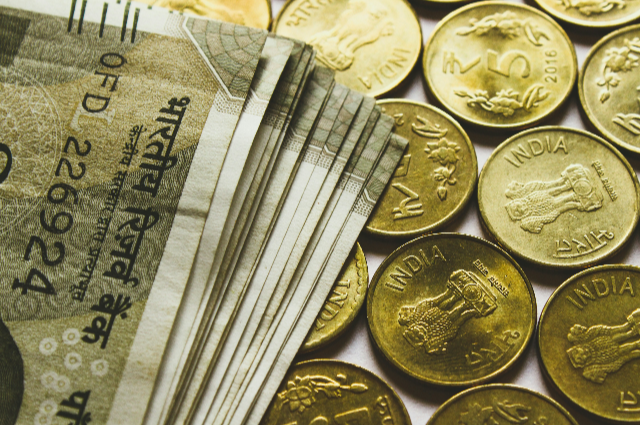
For the first time in India's history, the rupee has crossed the 94-per-dollar mark. To be more precise, it hit an all-time low of 94.70 against the US dollar during trading on 28th March, falling 74 paise in a single session. By some reports from the other linked articles, it later pushed even further to 94.81 before the day was out.
To put this simply, where a year ago, you needed roughly 83–84 rupees to buy one US dollar. Today, you need almost 95. That gap is about 10 to 11 rupees, and it represents a massive loss in the value of Indian money. And this is happening at the worst possible time.
What Is Actually Driving This Fall?
There are three things pushing the rupee down right now, and they are all happening at once.
First, there is war in West Asia. The ongoing conflict between the United States and Iran has sent oil prices sharply higher. Brent crude, the global benchmark for oil, rose sharply overnight to trade around $107.4 per barrel. India imports about 85% of its oil. When oil gets expensive, India needs to buy far more dollars to pay for it. That increased demand for dollars automatically makes the dollar stronger and the rupee weaker. Oil companies buying dollars consistently have been one of the key forces pushing the rupee past the 94.50 level.
Second, foreign investors are pulling money out. When global uncertainty rises war, rising oil prices, fear and large investors tend to move their money into what they consider safe assets, usually the US dollar. Foreign institutional investors sold Indian equities worth over Rs 1,805 crore on a net basis in just one session. When these investors sell their Indian stocks and take the money out of India, they are converting rupees into dollars to do so. Again, more dollars being demanded means the rupee falls.
Third, the dollar itself is getting stronger. The dollar index, which measures the dollar's strength against a range of other major currencies, was trading higher at 99.67. A stronger dollar makes every other currency, including the rupee and look weaker by comparison.
The Worst Fiscal Year in Over a Decade
This is not just a bad day for the rupee. All four articles referenced here are pointing to the same alarming conclusion that this financial year, by ending March 31, 2026 is shaping up to be the worst year for the rupee in more than ten years. Think about what that means. The last time the rupee fell this badly in a single year was during a period of deep economic stress. We are now in similar territory, and this time it is being driven by a military conflict far from India's borders. The irony is painful where a war between two countries the US and Iran and that India is not even a party to, is squeezing Indian wallets every single day.
What Happens on the Ground?
This is the part that tends to get lost in financial reporting. The rupee's fall does not just show up on a currency chart. It shows up in your daily life.
Petrol and diesel prices are tied to global oil prices. When crude oil costs more and the rupee also buys fewer dollars, the actual cost of importing oil goes up significantly. That cost, at some point, gets passed on to consumers. Everything that moves by road, food, medicines, raw materials, and electronics has to become more expensive.
For businesses that import goods or raw materials from abroad, their costs go up immediately. For students paying tuition in dollars or pounds, the fees have effectively become more expensive. For families sending children abroad, every wire transfer now costs more in rupees than it did six months ago.
The Market Is Feeling It Too
Indian stock markets took a significant hit on the same day, with the Sensex falling over 1,190 points and the Nifty dropping over 352 points. A falling rupee and falling stock markets together are a sign that confidence is shaky. Investors, both domestic and foreign are nervous. The rupee had already hit a record low of 93.96 two days earlier, and it has continued falling since. There was no recovery, no pause, no reversal. Just a steady slide.
What Can Be Done?
The Reserve Bank of India can intervene in currency markets, and it sells dollars from its reserves to increase the dollar supply and reduce the pressure on the rupee. But this has limits. Reserves are not infinite, and using them up has its own long-term risks. Ultimately, the rupee will stabilise when some of these external pressures ease, if oil prices come down, if the conflict in West Asia de-escalates, or if foreign investors return to Indian markets. None of those things is in India's control right now.
The Bigger Picture
What this episode really reveals is how exposed India remains to events it cannot control. A conflict thousands of kilometres away, driven by geopolitical decisions made in Washington and Tehran, is directly hitting the savings, spending power, and economic confidence of 1.4 billion Indians. The rupee at 94 is not just a number. It is a reminder that in today's connected world, no economy is an island. And for a country that imports most of its energy, the price of peace or the cost of someone else's war will fall heavily on ordinary people.
. . .
References: