
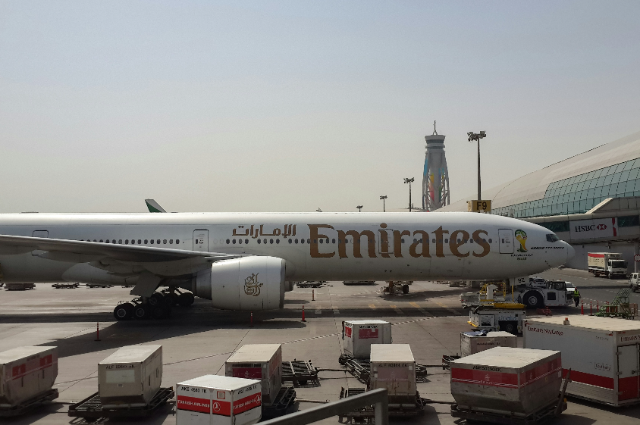
The sudden disruption at Dubai International Airport on 7 March 2026 is more than just an isolated security scare. It is a clear reminder that the ongoing conflict between Iran, Israel, and their allies is spreading beyond battlefields and into places used by ordinary people. Airports, cities, and shipping routes, spaces that normally connect the world, are increasingly caught in the middle of a dangerous regional confrontation.
The incident began when an Iranian drone was launched toward Dubai. According to authorities in the United Arab Emirates, the country’s air defence systems intercepted the drone before it could directly strike the airport. Witnesses described hearing a loud explosion and seeing thick smoke rise into the air as pieces of the destroyed drone fell near the runway. Fortunately, the damage was limited, and no injuries were reported.
Even so, the effect was immediate. Dubai International Airport, one of the busiest aviation hubs in the world, has temporarily halted all operations to ensure passenger safety. Flights were delayed or diverted, and airlines urged travellers not to come to the airport unless their bookings were confirmed. For a city that functions as a global travel gateway, even a short shutdown created significant disruption. Yet the real significance of the event lies in what caused it.
A War That Escalated Quickly
The drone incident in Dubai cannot be understood without looking at the wider conflict that has unfolded over the past week. On 28 February 2026, Israel and the United States launched a co-ordinated military operation against Iran, targeting military infrastructure and strategic facilities across the country. Explosions were reported in Tehran and other cities as airstrikes hit command centres, missile sites, and government buildings.
The strikes were part of a larger campaign meant to weaken Iran’s military capabilities and limit what Israel describes as an existential threat. Israeli officials argued that the operation was necessary to stop Iran’s missile programs and its broader influence in the region.
The attack quickly reshaped the regional balance. Iran responded by launching missiles and drones toward Israel and toward American military positions in the Middle East. Some of those retaliatory strikes also reached neighbouring countries in the Gulf. This widening retaliation is the key reason why places like Dubai, which are far from the initial targets, have become vulnerable.
Civilian Infrastructure in the Crossfire
Dubai International Airport represents a symbol of global connectivity. Every day, thousands of flights and hundreds of thousands of travellers pass through its terminals. When a drone or missile falls near such a facility, it reveals how modern warfare can spill into civilian infrastructure.
The UAE said that the debris seen near the runway came from an intercepted drone rather than a direct hit. That distinction is important. It means the defence systems worked as intended, stopping the weapon before it could cause major damage.
However, interception itself still creates risk. Destroyed drones can break apart in the air, and falling fragments can damage buildings, runways, or vehicles below.
This is why airport authorities immediately suspended operations. Aviation relies on extremely strict safety procedures. Even small pieces of debris on a runway can threaten aircraft during takeoff or landing. The shutdown allowed officials to inspect the area and remove any hazards.
Within hours, limited operations resumed, but the disruption continued. Airlines such as Emirates and Air India warned passengers that schedules would remain unpredictable as airports dealt with delayed and diverted flights. For travellers, the result was confusion and long waiting times. For governments, the incident served as a warning.
A Region on Edge
The wider war has already caused significant destruction. In Iran, repeated airstrikes have hit military and government facilities across the country, causing heavy damage and large numbers of casualties. At the same time, Iranian missile attacks have targeted Israel and American bases in the region. Several Gulf states have intercepted incoming missiles as the fighting continues to escalate.
This cycle of attack and retaliation has made the entire Middle East increasingly unstable. Shipping routes, airports, and energy infrastructure are all at risk of disruption. One particularly sensitive location is the Strait of Hormuz, a narrow waterway through which a large portion of the world’s oil supply passes. Any threat to shipping in this area could affect global energy markets and raise fuel prices worldwide.
The Vulnerability of Global Corridors
Perhaps the most striking lesson from the Dubai incident is how fragile global travel routes can be during wartime. Airports, ports, and shipping lanes are designed to connect people and economies. But when missiles and drones begin crossing borders, those same routes become potential targets or accidental danger zones.
The UAE reportedly intercepted hundreds of drones in just a few days, showing the scale of the threat. Even with advanced defence systems, a single falling fragment can disrupt operations at one of the world’s busiest airports. In that sense, the smoke rising near Dubai’s runway symbolised something larger than one intercepted drone. It showed how a regional war can quickly disrupt international life by affecting travellers, workers, and economies far beyond the original battlefield.
A Moment That Reflects a Larger Crisis
The shutdown of Dubai International Airport lasted only a few hours. Flights resumed, passengers eventually continued their journeys, and the airport returned to its usual rhythm. But the moment still matters.
It illustrates how the Iran–Israel conflict is no longer confined to military installations or distant battlefields. Instead, it has begun to intersect with civilian spaces where everyday life takes place. As long as the war continues, similar incidents may happen again, not only in Dubai but anywhere within range of missiles, drones, or falling debris. For now, the runway has reopened. But the larger conflict remains unresolved, and the region continues to stand on uncertain ground.
. . .
References: