
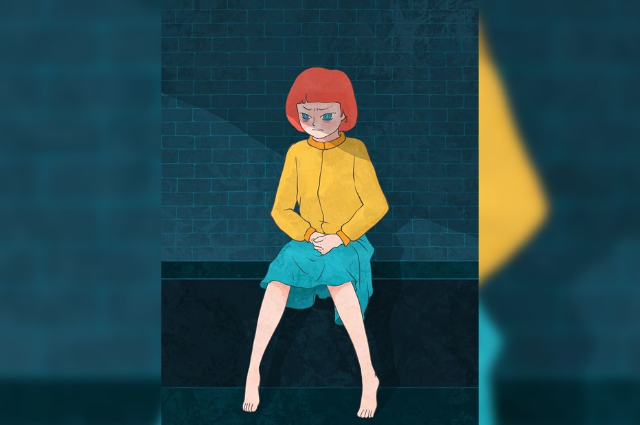
Image by Hello Cdd20 from Pixabay
"Periods... Haww! How could I say it so loudly? Ssshhh, keep quiet!!"
That is what we girls are usually asked to do, right?
My name is Nidhi. I was raised to be an obedient girl, the kind who never disobeys her elders. "Good girls don't talk about periods." When I first heard this, it felt weird, but I assumed it had to be true. After all, I went to an all-girls school where the topic was treated like a state secret. I still remember how, in the fifth period, we were herded into a closed auditorium. There was no microphone, no male teachers. Our math teacher, who was male, took one look at the entrance and immediately turned away. When the very institution meant to educate us treated menstruation like a taboo, it became obvious: we were not supposed to talk about this openly.
As I grew up, my confusion about the whole process of menstruation only deepened, drowned out by a chorus of superstitious voices. At my Masi’s house, the rules were absolute. I remember sitting on the cool stone floor of the inner courtyard, isolated and invisible, watching my cousins run in and out of the kitchen. The rich aroma of roasted spices would waft out, but I wasn't allowed to cross the threshold.
"Don't water the plants," Mom would say. Going out with open hair after 7 PM was strictly prohibited, and stepping into the temple was the ultimate sin. "Don't touch anything offered to God. Don't tell anyone at family functions." I understood the instructions, but as time passed, I began to hate them. I began to hate the fact that my body, simply doing what it was meant to do, was treated as a crime.
The true weight of this shame hit me during our school's inter-house competition. Boys from another school had been invited, but I wasn't focused on them; I was busy hosting. I was standing backstage, the heat of the stage lights prickling my skin, when I suddenly felt a dampness. I looked down, and my heart dropped; a bright red blood stain had bloomed on my skirt.
"Hide it with your hand," my English teacher hissed, her eyes wide with panic and anger. "Quickly rush towards the washroom and change. Go quickly, Nidhi!"
I rushed to the washroom, only to find a long queue. I was so embarrassed and out of my mind that I didn't know where to hide. The presence of boys in the corridors made my anxiety spike. I was about to turn away when my History teacher spotted me. Instead of offering comfort, she grabbed my arm, her grip tight and bruising, and dragged me into the empty staff room. She locked the door behind us, trapping me in the claustrophobic space.
"You shameless girl!" she yelled, her voice a harsh, venomous whisper. "With this stain, you are roaming the whole school! Have you gone mad or what? What if a boy had seen it?"
She humiliated me for a natural biological process. I was bleeding, in pain, and terrified, needing comfort more than anything. Instead, I was treated like a criminal. That day, I realized something vital: the beliefs surrounding menstruation were entirely illogical. Historically, women were told not to visit temples during their periods simply so they could rest. Yet, society twisted this into a narrative of impurity.
I devised my own set of rules. I never forced my opinions on my elders; sometimes, just for the sake of their happiness, I played along. I wouldn't water the plants or enter the temple, not because I believed I was impure, but to respect the faith they held so tightly.
But everything has a breaking point.
On one fine day, a grand pooja was held at our house. Because I was on my period, I was given strict instructions to remain outside the room and just watch. I stood near the doorway, watching the thick smoke from the loban curl into the air, mixing with the heavy scent of fresh marigold garlands. The room vibrated with the ringing of brass bells, filled with about thirty people, including relatives, neighbors, and friends, draped in heavy traditional attire.
Suddenly, my uncle spotted me. Not knowing about my condition, he asked me to come inside. I refused, shaking my head frantically, but he grabbed my hand and pulled me into the center of the room, right in front of the idol. Before I could protest, one of my aunts shoved the heavy brass thali into my hands.
Panic seized my throat. As I took the thali, the flicker of the diya illuminated my face. In the sudden hush of the room, the only sound was the quiet clinking of my bangles. I knew the rule: good girls don't talk about periods. Returning the thali now would be seen as a grave disrespect to God in front of thirty guests. Trapped by their silence, I performed the aarti and quietly stepped back.
My aunt, who knew I was menstruating, immediately followed me into the corridor. "You shameless girl!" she yelled, her voice dripping with disgust. "What have you done? Don't you know that because of this, there can be a curse on our house? Your house can be destroyed!"
I stared at her, the heavy brass of the thali still burning a memory in my palms. "Wait a second, Aunty. In which century are you living?" I asked, my voice trembling but clear. "If God was going to destroy a house over this, why would He have created the process of menstruation in the first place?"
"Firstly, you make a mistake, and then you argue with me? Such a bad girl," she shot back, her illogical arguments growing louder and louder.
People inside were starting to turn their heads. My aunt hadn't realised the commotion she was causing, but I saw the eyes of twenty people landing on us. I looked at her, feeling the sharp sting of humiliation. Was a house really supposed to be ruined just because of a biological cycle?
I straightened my back. "You were right, Aunty," I said quietly, ensuring the onlookers could hear. "Good girls don't talk about periods in front of everyone." I turned and walked away. I didn't stop in the corridor. I stepped completely out of the heavy, smoke-filled courtyard and into the cool evening air. I took a deep breath, looking up at the sky. The roof hadn't caved in. The house hadn't been cursed. The world kept spinning exactly as it always had.
And for the first time in my life, I finally felt free from the suffocating weight of their silence.