
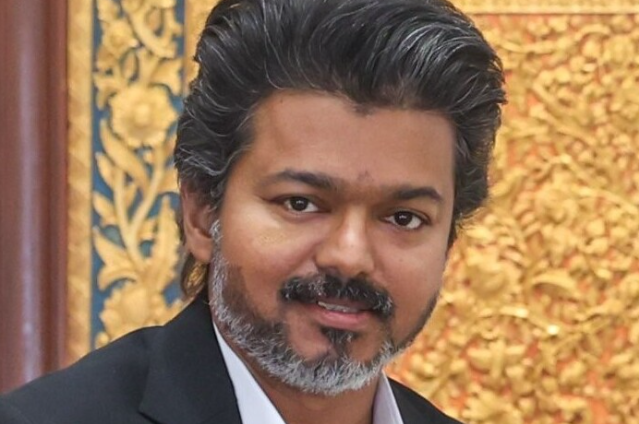
The victory of the Tamilaga Vettri Kazhagam (TVK) marked a significant moment in Tamil Nadu politics, with its founder, actor-turned-politician Vijay, successfully transforming his immense public popularity into political support. Through a combination of strong grassroots outreach, a youth-focused vision, effective use of his fan base, and a campaign centered on change and clean governance, Vijay connected by a broad section of voters. His ability to mobilise first-time voters and present TVK as a credible alternative to established political parties played a crucial role in the party's electoral success.
The RISE of TVK Party: The TVK party's popular slogan is “Pirappokkum Ellaa Uyirkkum," which means “All are equal by birth." It is a regional political party founded on February 2, 2024, in Tamil Nadu and Pondicherry by popular actor-turned politician Mr Vijay. The slogan is self-explanatory, focusing on social justice and equality.
The TVK party has surprisingly garnered attention across Tamil Nadu, particularly among young voters and women. After forming the party, it has organised massive rallies and conferences that have drawn lakhs of supporters from across the state.
History: Before the formation of the party (TVK) in the year 2009, Vijay’s fan club was brought together under one umbrella with a structured organisation called “Narpani Iyakkam," which focused on community services. The community services movement was formerly launched in Pudukkottai, and it has been supported by the AIADMK alliance in the 2011 elections.
The TVK party’s formation marked a major shift from social work to active politics. The fan club, with a membership of approximately 85,000 across Tamil Nadu, transformed into a new political party and has become the TVK fans' cadre, the backbone of the grassroots structure. The party made it clear that it will not participate in the 2024 elections, and certainly it will contest the 2026 assembly elections. The TVK has organised massive rallies and conferences, and it has drawn the support of millions of people from across the state.
The notable events it launched follow the chronological order provided below. Below, we outline the major milestones and events in the journey of TVK (Tamilaga Vettri Kazhagam).
February 2, 2024: The major milestone is the formation of TVK (Tamilaga Vettri Kazhagam) and the declaration of its intention to contest the 2026 elections.
March 8, 2004: TVK officially launched its membership drive to enrol 2 crore members; to its surprise, within the first hour, it reached 2 million interactions.
July 2024: Vijay opposed the NEET examination, arguing that it was biased against rural and poor aspirants, and he publicly called for a ban on it. The 2026 NEET examination was conducted, but the paper was leaked to individuals with vested interests, resulting in the NTA's failure and the eventual cancellation of the exam. The hopes of genuine aspirants were not acknowledged, as their merit was at stake, similar to previous occurrences. The southern students are suffering from discrimination, and it should be decentralised and conducted with strict confidence and efficiency; any mistake will be a grave loss to the students.
September 2024: The party declared political opposition to DMK and BJP at the national level. TVK's ideological alignment embraces left-of-centre values, including Ambedkarism, Periyarism, and Marxism.
On October 27, 2024, over 8 lakh people attended TVK's inaugural political conference in Vikravandi. The party president, Mr Vijay, unveiled the party’s ideology as "secular social justice" and displayed the large cutouts of Periyar, Ambedkar, Velu Nachiyar, and Kamraj.
December 6, 2024: Vijay attended as the chief guest for a book launch event on Dr B.R. Ambedkar held in Chennai, and he emphasised the relevance of Ambedkar as a guiding ideology for TVK’s principles.
January 31, 2025: Aadhav Arjuna, former deputy general secretary of Viduthalai Chiruthaigal Katchi (VCK), and CTR Nirmal Kumar, AIADMK The wing joint secretary, joined TVK to strengthen the party’s leadership team ahead of the 2026 assembly elections.
February 13, 2025: TVK announced a large-scale organisational expansion to appoint over 70,000 booth agents across Tamil Nadu.
April 26, 2025: Vijay addressed booth agents (70,000) and other important functionaries meeting in Coimbatore for the 2026 election preparation.
August 21, 2025: TVK organised its second major conference at Madurai under the banner of “History of Victory Returns, Tamil Nadu in a March of Triumph." He further announced that he would contest the 2026 elections and called the fascist BJP TVK’s only ideological enemy and the corrupt DMK its political enemy.
September 27, 2025: Tragedy struck during a TVK rally in Karur when a stampede claimed 41 lives and injured more than 50 people. It drew the attention of the entire nation, and at one stage, everyone thought that the TVK would not be in active politics. The stampede occurred during an unexpected gathering, resulting in a tragedy that claimed many lives. In their desire to see their favourite actor, many people lost their lives through no fault of their own, and there was insufficient police presence to control the mob.
On November 4, 2025, TVK launched ‘Thondar Ani', a new wing of volunteers dedicated to crowd management tasks. The party recognised the importance of fan safety following the tragic incidents and subsequently trained its volunteers through a comprehensive training programme. It’s important to strengthen the party in future meetings, and they were clear that similar incidents should not be repeated, as the safety of the public is the paramount objective of the TVK party.
On November 5, 2025, TVK organised a special general committee meeting in Mahabalipuram, which was attended by important party cadres and hundreds of general committee members.
November 14, 2025: TVK organises protests across Tamil Nadu against the Special Intensive Revision (SIR) of electoral rolls, with demonstrations in Chennai, Madurai, and Coimbatore.
The TVK party organised these sequences of events to facilitate its rapid growth and prepare for the 2026 Assembly elections. The party continues to expand its organisation, and it reaches across Tamil Nadu with regular meetings and public programmes. TVK’s focus on social justice and equality resonated with many voters across the state. The party’s leadership team is working tirelessly to build a strong foundation for the 2026 Assembly elections. Youth and women in Tamil Nadu have particularly embraced the party's ideology.
Election Promises: The election promises led to the victory of the TVK party in the 2026 assembly elections. The main election promises are furnished below:
- Financial support of women below 60 years with a monthly aid of Rs 2500 to help with their household expenses.
- 8-gram gold silk saree support for poor brides during their marriages
- Free 6 LPG cylinders per year for eligible families to reduce living expenses.
- 5 lakh government jobs for youth employment—assurance of large-scale recruitments in government departments.
- Monthly assistance of Rs 4000 for unemployed graduates.
- 5 lakh paid internship opportunities for students and fresh graduates with stipend support.
- A full crop loan waiver for the small farmers and a partial waiver for the bigger landlords.
- Assured higher MSP prices to improve farmer income – paddy and sugarcane
- Free power up to 200 units for domestic households, as it is in operation in the Telangana State.
- Free bus travel for women in government-operated buses, as this scheme is also operational in Telangana State.
- Assurance of a drug-free Tamil Nadu by special anti-drug units in every district.
- A dedicated women's safety force will be established to ensure the safety of women in Tamil Nadu.
- Interest-free loans up to 5 lakhs for women's self-help groups (SHGs)
- Collateral-free student education loans without property guarantee
- Financial support loans for startups aimed at young entrepreneurs to promote youth empowerment
- Separate the AI ministry to focus on artificial intelligence for the future generation of technological jobs.
- New business license within 21 days to encourage and enable entrepreneurs to do business.
- Promises of corruption-free and technology-driven administration—transference of governance.
- White paper on the state finances of Tamil Nadu's financial condition and debt;
- Student monthly finance; assistance for poor families.
The traditional duopoly of Tamil Nadu's parties, "DMK-AIADMK," could not replicate their previous success in the 2026 assembly elections, as actor Vijay's Thamizhaga Vetri Kazhagam (TVK) emerged victorious, surprising everyone, including political analysts, despite all surveys indicating that the DMK would retain its power. The victory was driven by massive youth and female turnout, strong anti-incumbency sentiment against the ruling party, and the innovative political strategy of the TVK party at the grassroots level.
Here are the 10 key factors that led to TVK's historic win:
- Massive Youth and First-Time Vijay made it clear that he needed to connect with youth and Gen Z voters who had become disconnected from traditional binary politics. Vijay is assured of offering promises for around 5 lakh job creations, digital transparency, and educational reforms.
- Aggressive Outreach to Women Voters: The TVK party’s manifesto aimed at women-centric welfare measures, including monthly financial assistance, free cooking gas, and dedicated women's safety teams. This impact was significant, as women turned out in large numbers to vote for TVK, and their participation encouraged their families to follow suit.
- Converting the fan club into a political cadre: TVK could make it possible to convert the fan club into a political cadre, as they have no time to build the party from scratch, and it is very difficult for any party to convert the same. TVK Vijay could make this transformation from an impossible task to possible. The 85,000 dedicated fan club members helped the TVK party reach booth-level reach.
- Solo Strategy No Alliance: The next important decision of the TVK party was to contest 234 seats independently by projecting themselves as a true and uncompromised alternative to the traditional parties of Tamil Nadu. This bold move added an advantage to the party to consolidate the anti-incumbency votes without being weighed down by the coalition parties.
- Capitalising on Anti-Incumbency: TVK party closely observed the governance gaps on allegations of corruption, rising unemployment, and women's safety by positioning itself as the only visible alternative and its symbol whistle of change to the voters. The party effectively channelled widespread public dissatisfaction with the ruling DMK government.
- Digital Mobilisation: TVK effectively utilised the 1 lakh trained digital volunteers, and they were assigned just two to three streets each. They bypassed the traditional media to deliver hyper-local content and effectively engaged the voters through common platforms of social media like WhatsApp, YouTube, and Instagram.
- Alternatives to the Traditional Parties: Voters across the state exhibited a notable distrust towards traditional regional and national parties, creating an opportunity for a new entrant. Polls suggested a large section of the electorate wanted a “fresh batter” rather than the usual political options.
- Turning Star Power into Political Capital Vijay’s immense popularity as a cinema icon over the decades provided TVK with an unparalleled advantage in statewide name recognition. He took advantage of this trust and squeaky-clean image to collect enormous crowds from the beginning of his campaign.
- Children’s Direct Appeals. In a very unique and effective campaign tactic, Vijay used his last speeches to appeal directly to the children, urging them to pester their parents to vote for TVK. This creative outreach was able to reach family members and influence voting decisions within households.
- Change in Tamil Identity Politics TVK capitalised on a change in ideological mood, moving slightly away from the traditional Dravidian model that has dominated the state since 1967. In shifting to the “Tamil state over Dravidian state” position, the party was appealing to voters who wanted a new, more inclusive narrative of culture and development.
Most political analysts had predicted TVK could become a "vote splitter" or win a handful of seats, like past actor-led parties. But TVK surprised everyone by coming out as the single largest party in its very first election.
Analysts were floored. TVK fought almost alone and yet won massive support. The party got around 21%+ vote share on its own, which is very rare for a debutant party in Tamil Nadu politics. VK won 108 seats, just short of a majority, ending nearly 60 years of DMK-AIADMK dominance. Many experts, previously, had compared TVK to the fleeting celebrity parties of the past, but Vijay turned his fan clubs into a formidable booth-level political network. Why the surprise success?
The 2026 Tamil Nadu Assembly election delivered a fragmented but decisive mandate, with TVK emerging as the single largest party by winning 108 of the 234 seats (46.2% of the Assembly), while DMK secured 59 seats (25.2%) and AIADMK won 47 seats (20.1%). Congress (INC) captured 5 seats (2.1%), PMK 4 seats (1.7%), and IUML, CPI, VCK, and CPI(M) won 2 seats each (0.9% each). BJP, DMDK, and AMMK secured 1 seat apiece (0.4% each). Based on the seat tally, TVK fell short of the 118-seat majority mark by 10 seats, making post-election discussions and alliance negotiations crucial to government formation. If the seat distribution broadly reflected voter preferences, the election signalled a major political realignment, with voters seeking an alternative to the long-standing DMK–AIADMK dominance.
Following the declaration of results, political attention shifted to government formation and the swearing-in ceremony. Congress, CPI, CPI(M), VCK, IUML and other opposition and alliance parties reportedly engaged in consultations regarding support arrangements, legislative priorities, and coordination in the new Assembly. Such negotiations are common in a hung or near-majority legislature, where parties seek clarity on cabinet representation, common policy commitments, and the stability of the incoming government. These discussions can sometimes contribute to a delay between the election results and the oath-taking ceremony, although the precise reasons often remain known only to the parties involved.
Regarding the Governor's role, the constitutional convention requires the Governor to satisfy himself or herself that a prospective Chief Minister is capable of commanding the confidence of the Assembly. In situations where no party has secured a clear majority, the Governor may seek letters of support, meet party leaders, or allow time for alliances to demonstrate their numbers before inviting a leader to form the government. Therefore, a delay in the oath ceremony does not automatically indicate controversy; it may reflect routine constitutional verification and political consultations. Unless official records, statements, or court proceedings reveal specific causes, the exact reasons behind any delay remain matters of political interpretation rather than fact. Consequently, it would be reasonable to state that the Governor acted within constitutional norms while the full details of behind-the-scenes negotiations remain uncertain.
- Massive youth support—Vijay supports first-time voters and unemployed youth.
- Anti-incumbency against DMK and AIADMK – people wanted a new alternative.
- Vijay’s own popularity in urban and rural Tamil Nadu.
- Strong social guarantees for women, students, farmers, and middle-class families.
- Not just cinema fame, but careful planning from the grassroots.
Political relevance: Analysts called it one of the biggest political upsets in Tamil Nadu history as A new party took on two major Dravidian giants directly. Shortly after coalition support, Vijay became the chief minister. TVK changed the political landscape of Tamil Nadu from two-party to three-party politics.
Compared to NTR (strongest comparison): That’s the comparison most frequently made today. NTR started the Telugu Desam Party in 1982 and became CM of undivided Andhra Pradesh in about 9 months, breaking the Congress dominance. Vijay formed Tamilaga Vettri Kazhagam and tasted massive success in his first major election in two years. Leveraged the immense popularity of cinema and emotional connection with the common man. Appealed to the young and first-time voters. Both presented themselves as ‘outsiders’ battling an old political order.
Comparison with MGR: Many analysts say Vijay’s rise is the biggest disruption in Tamil Nadu since MGR.
Similarities: Massive fan club network turns into political machinery. Strong emotional appeal among women and poorer voters. Welfare promises and “people’s hero” image. Politics fused with the cinematic image.
But there’s one big difference: MGR emerged from the Dravidian movement and split from DMK to form AIADMK. Vijay created TVK as an alternative from outside, not as a veteran of Dravidian politics.
Compared with Jayalalithaa, it’s more about charisma and mass appeal. Jayalalithaa took over and strengthened MGR’s AIADMK structure. Vijay started a new party from scratch. Centralised leadership and welfare politics were characteristic of Jayalalithaa. Vijay is considered more of a “change candidate” and a youth icon in the current scenario.
Compared with Karunanidhi: M. Karunanidhi was quite another. For decades, Karunanidhi was an ideological leader, scriptwriter, strategist, and party organiser. He rose through the Dravidian movement, speeches, writing, and cadre politics. Vijay’s rise is more personality-driven and media-driven than ideological.
Key Historical Point One
Analysts say: NTR revolutionised Andhra politics in 1983. MGR changed the politics of Tamil Nadu in 1977. Vijay is now perhaps attempting a similar political reset in Tamil Nadu after decades of DMK-AIADMK dominance.
Some commentators have even named Vijay as
"The first major external disruption since MGR.
Others warn that long-term viability will depend on questions of governance, party organisation, and surviving the initial wave of popularity”.
Challenges Before Vijay
While Vijay's electoral victory marks a historic political breakthrough, the real challenge lies in governance. Expectations among voters, particularly young people and women, are exceptionally high, and translating campaign promises into practical policies will require strong administrative capability and financial discipline. Managing coalition partners and maintaining political stability will be equally important, especially if legislative support depends on alliances with other parties. Above all, Vijay will be judged on his ability to deliver key promises related to employment, women's welfare, education, and economic development. Success in governance could establish him as a transformative leader in Tamil Nadu politics, while failure to meet public expectations could quickly erode the goodwill and enthusiasm that propelled TVK to power.
As Vijay steps from electoral success into the realities of governance, the true test of his leadership is only beginning. The questions that now dominate public discourse are whether he can deliver on the promises that fuelled his rise, complete a full term in office, and meet the high expectations of young people and women who formed a significant part of his support base. His ability to translate aspirations into tangible results, maintain public trust, and provide effective governance will ultimately determine whether his political journey becomes a lasting success or merely a moment of electoral enthusiasm. The coming years will reveal whether Vijay can truly fulfil the hopes and ambitions that millions of voters have placed in him.
Source:
- https://dailypioneer.com
- https://thenewsmedium.com
- https://timesofindia.indiatimes.com
- https://www.ndtvprofit.com
- https://timesofindia.indiatimes.com
- https://scroll.in
- https://indianexpress.com
- https://www.youtube.com
- https://www.youtube.com
- https://frontline.thehindu.com
- https://www.facebook.com
- https://frontline.thehindu.com
- https://variety.com
- https://www.bbc.com