
Temples in India are meant to be sanctuaries of faith, devotion, and equality before the divine. But what happens when the doors of these sacred spaces remain closed to certain devotees—because of their gender, caste, age, or bodily functions? Can a centuries-old tradition truly justify the denial of worship?
If the divine is meant to be universal, why do some hands never touch the holy sanctum, and some voices are silenced at the threshold? When social norms, customs, and unwritten rules dictate who may enter, who truly owns the enforcement of devotion? And when law, faith, and society collide, who bears the responsibility for protecting the rights of those excluded?
This article explores the uncomfortable reality lurking behind sacred walls—where devotion meets discrimination, and where enforced traditions remain unowned—asking hard questions about faith, justice, and equality in India’s temples.
BLOCKED AT THE GATES: WOMEN DENIED THE DIVINE
Faith is meant to transcend caste, gender, and age, offering every devotee a sanctuary to connect with the divine. Yet at Sabarimala, this sanctuary has long been denied to women of menstruating age, reducing devotion to a site of fear, social policing, and systemic exclusion. For decades, women between 10 and 50 years were barred from entering the temple, under the justification that the celibate deity, Lord Ayyappa, could not be in the presence of women in that age group. This was never formalized in legislation, yet it was enforced socially, violently, and psychologically, leaving thousands of women devotees to negotiate faith and fear simultaneously.
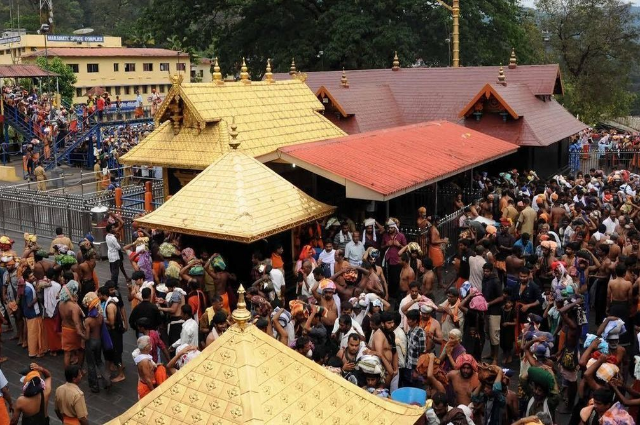
“YOU ARE NOT WELCOME HERE”: WOMEN OF MENSTRUAL AGE DENIED ENTRY
Until 2018, the path to the sanctum at Sabarimala was literally closed to women of menstruating age. Many were stopped at the base of the hill or at checkpoints along the pilgrimage route. The ban was justified on religious grounds: women were considered “impure” due to biological cycles, and their presence was believed to violate the deity’s celibacy.
The Supreme Court’s landmark verdict in Indian Young Lawyers Association vs. State of Kerala (2018) overturned this practice, affirming women’s constitutional rights under Articles 14, 15, and 25. Yet even after the ruling, women like B. Dhanya and Kanakadurga faced stone-pelting, verbal abuse, and death threats when attempting to enter. Social hostility, including from volunteer groups and devotees, forced many women to retreat, sometimes multiple times, demonstrating that legal victories do not automatically translate into lived rights.
THE INVISIBLE WALL: SOCIAL ENFORCEMENT BY PRIESTS AND VOLUNTEERS
The exclusion was rarely just a personal opinion—it was structurally enforced. Priests, temple volunteers, and local committees acted as gatekeepers, often coordinating to prevent women from climbing the hill. Even in the presence of police, volunteers formed human barricades, shouting threats, throwing stones, or creating a hostile environment to ensure compliance.
The “invisible wall” was reinforced through community pressure, fear of social ostracism, and the belief that divine wrath would follow transgression. For many women, this created a psychologically impossible choice: give up a deeply personal act of devotion, or risk harassment, humiliation, and even physical harm.
FEAR AT THE THRESHOLD: HARASSMENT AND INTIMIDATION OF WOMEN DEVOTEES
Reports from 2019 to 2023 documented women who reached near the sanctum only to be forced back by angry mobs. Some faced stone-pelting, slurs, and threats of sexual violence. Media outlets such as The Hindu, BBC, and NDTV reported that even with police escort, women were surrounded by aggressive crowds, making access effectively impossible.
This repeated harassment had long-term psychological effects: anxiety, fear, and a sense of shame, even though the women had done nothing illegal. Devotion, which should be empowering and sacred, became a site of trauma, making these women question whether they could exercise their constitutional rights safely.
LAW ON PAPER, THREATS IN REALITY: POLICE AND STATE RELUCTANCE
Despite the Supreme Court verdict, law enforcement often hesitated to actively protect women devotees. Police cited fear of violent mobs, political sensitivities, and lack of clear instructions on enforcement. Volunteers enforcing exclusion acted without fear of consequences, knowing that legal authority was reluctant to intervene decisively.
This reveals a stark paradox: the law guarantees rights, but the ground reality subordinates them to social enforcement, leaving women vulnerable at the gates of the temple. The inability of the state to ensure compliance exposed the weak link between constitutional rights and actual safety in religious spaces.
SACRED EXCLUSION: CONSTITUTIONAL RIGHTS CLASH WITH TRADITION
The Sabarimala case exposes the deep tension between religious tradition and constitutional guarantees. Articles 14, 15, and 25 ensure equality, non-discrimination, and freedom of religion—but social and religious practices weaponise faith to exclude women, undermining these protections.
For decades, devotion itself became a mechanism of control, where women were monitored, policed, and excluded under the guise of sacredness. The central question remains: who truly owns the enforcement of law and faith? When religious sentiment overrides constitutional rights, women’s access to the divine is blocked, regulated, and punished, demonstrating the chilling consequences of enforced but unowned traditions.
TRADITION OR TYRANNY? THE HISTORICAL ROOTS OF EXCLUSION
The story of Sabarimala is not merely about a temple or a deity—it is about how centuries-old customs become tools of exclusion, and how social enforcement often overrides constitutional rights. Women were denied access not because of the law, but because tradition, social pressure, and fear became invisible instruments of control. To understand why, we must explore the historical, cultural, and societal mechanisms that sustained this practice.
CELIBATE GODS, EXCLUDED WOMEN: TRADITION AS JUSTIFICATION
At the heart of the exclusion is the belief in Lord Ayyappa’s celibacy. According to centuries-old traditions:
- Women between 10 and 50 years are considered in their reproductive phase, which is viewed as a state of impurity for the deity’s spiritual environment.
- Texts, local lore, and oral traditions reinforced that any violation would bring divine wrath, misfortune, or spiritual contamination.
These beliefs were never formalised in law, but became de facto rules enforced by the community, priests, and volunteers. The exclusion was framed as protecting religious sanctity, but in practice, it denied women their most basic right to worship. Devotees internalised it as sacred, creating a moral imperative that made questioning the ban socially unacceptable.
ANCIENT CUSTOMS VS. MODERN EQUALITY: WHO DECIDES PURITY?
Purity codes have historically controlled access to sacred spaces across India, but at Sabarimala, these codes intersected with gender in a uniquely restrictive way:
- Ritual purity was defined entirely by bodily states, not devotion or intent.
- Modern legal frameworks, especially Articles 14 (equality), 15 (prohibition of discrimination), and 25 (freedom of religion), directly contradict these practices.
This clash raises critical questions:
- Who defines what is “pure” or “impure”?
- Should ancient beliefs supersede the law of the land?
The result: women’s access to the temple was regulated by social and ritual norms, not legal rights, leaving them powerless even when the law was on their side.
PROTESTS AND PETITIONS THAT SHOOK THE HILL: EARLY RESISTANCE
Resistance to the ban is not new—it has a long history of courage, persistence, and legal activism:
- In the 1980s and 1990s, women devotees and activists filed petitions with local courts challenging the restriction.
- Small-scale protests, sometimes limited to symbolic climbs, drew attention to the injustice and challenged local priests and committees.
- The 2006–2010 campaigns highlighted that women were silenced socially, and that asserting the right to worship could lead to public shaming, threats, or harassment.
These movements, though often marginalised in mainstream discourse, were the foundation for the 2018 Supreme Court case, showing that change is built on decades of courage, not sudden judicial intervention.
COMMUNITY NARRATIVES MAINTAINING EXCLUSION: FEAR OF BREAKING TRADITION
Even as legal challenges arose, the social narrative remained strongly in favor of exclusion:
- Devotees propagated the belief that violating tradition would anger Lord Ayyappa, bringing misfortune to individuals and communities.
- Priests reinforced these beliefs through sermons, ritual authority, and social expectation.
- Volunteers and devotees created social barriers, from verbal warnings to physical intimidation, ensuring compliance.
The fear of divine punishment and social ostracism became a mechanism of enforcement, making it nearly impossible for women to assert their rights without risking personal safety, family honour, and community backlash.
MYTH OVER LAW: HOW SOCIAL BELIEF SILENCES CONSTITUTIONAL RIGHTS
Sabarimala demonstrates a disturbing paradox: even when the law clearly affirms rights, social belief can effectively override legal mandates:
- The Supreme Court’s 2018 verdict allowed women of all ages to enter, yet many were still blocked physically and socially.
- The persistence of myth and tradition silences constitutional rights, creating a scenario where legality exists only on paper.
- Devotees internalise exclusion as a divine mandate, making legal enforcement extremely challenging without confronting deep-seated social and cultural narratives.
The social and psychological impact is profound: women face fear, intimidation, and emotional trauma, and devotion itself becomes a site of conflict, where exercising the right to worship can risk humiliation or harm.
THE GENDERED AND SOCIAL IMPLICATIONS OF EXCLUSION
To fully understand the historical roots, we must see the intersection of gender, tradition, and social control:
- Women’s bodies were politicised—their natural biology became grounds for exclusion.
- Community enforcement created a culture of fear, where even well-intentioned women avoided pilgrimage.
- Long-standing social hierarchies were reinforced through ritual exclusion, making the temple a microcosm of broader gender inequality in society.
These historical mechanisms are sensitive and deeply embedded, showing that exclusion is not just about religion—it is a complex interplay of culture, gender, law, and fear.
THE SUPREME COURT STRIKES: A VERDICT CHALLENGING CENTURIES OF BIAS
The year 2018 marked a historic moment in India’s legal and social landscape. After decades of petitions, protests, and social debate, the Supreme Court of India delivered a verdict that allowed women of all ages to enter Sabarimala, directly challenging centuries of tradition. This was not merely a legal decision; it was a confrontation between faith, law, and gender equality, shaking the very foundation of religious practices that had long excluded half the population.
BREAKING THE BARRIER: SUPREME COURT ALLOWS WOMEN OF ALL AGES
The Supreme Court, in the landmark case Indian Young Lawyers Association vs. State of Kerala (2018), held that:
- The restriction on women aged 10–50 violated Articles 14 (Equality), 15 (Non-Discrimination), and 25 (Freedom of Religion).
- Religious practices cannot override fundamental rights, even if they are centuries old.
- Devotion is personal; access to worship is a constitutional right, not contingent on gender or biological state.
The verdict was celebrated as a victory for gender equality, but it immediately sparked outrage among conservative devotees, who perceived the ruling as an attack on sacred tradition.
ARTICLES 14, 15, 25 IN CONFLICT WITH TRADITION
The judgment highlighted the constitutional clash:
- Article 14: Ensures equality before the law—blocking women violates this principle.
- Article 15: Prohibits discrimination based on sex—gender-based temple bans were unconstitutional.
- Article 25: Guarantees freedom of religion—but the Court clarified that freedom of religion does not justify violation of equality or non-discrimination.
This ruling was bold and unprecedented, asserting that personal faith cannot justify systemic exclusion of women, even in sacred spaces.
BALANCING FAITH AND RIGHTS: COURT’S BOLD RATIONALE
The Court carefully distinguished between religion as personal belief and religion as social practice enforced to exclude. It acknowledged that:
- Devotees’ beliefs are valid, but the law cannot allow them to infringe on the fundamental rights of others.
- Tradition cannot become a tool to suppress half of humanity from exercising devotion.
- The judgment emphasised that gender equality is non-negotiable, even in spaces where faith is deeply intertwined with social hierarchy.
IMMEDIATE BACKLASH: PROTESTS, THREATS, AND SOCIAL OUTRAGE
The verdict triggered violent protests and social unrest across Kerala:
- Volunteers and conservative groups blocked entry to women, citing “divine wrath.”
- Women devotees faced harassment, verbal abuse, and physical intimidation while attempting pilgrimage.
- Social media and local communities became battlefields of opinion, with polarised narratives pitting law and equality against tradition and faith.
Incidents reported in The Hindu and BBC document stone-pelting, mob threats, and police withdrawal, showing that even a Supreme Court ruling could not immediately dismantle centuries of social enforcement.
MEDIA SPOTLIGHT: SABARIMALA BECOMES A NATIONAL DEBATE
The case quickly became a national conversation on gender, law, and religion:
- Newspapers, television, and online media highlighted the courage of women devotees attempting the pilgrimage despite threats.
- The narrative was not just legal; it was human and deeply emotional, portraying women who risked harassment to assert their constitutional rights.
- International media attention drew focus on India’s struggle with gender discrimination in sacred spaces, showing that Sabarimala was no longer a local issue—it had become a symbol of broader social inequality.
HUMAN IMPACT: COURAGE AMIDST THREATS
The judgment empowered women legally, but the lived reality remained dangerous:
- Women such as B. Dhanya, Kanakadurga, and others climbed the hill under police protection, facing stone-pelting and death threats.
- Devotees reported emotional trauma, fear, and social stigma for challenging centuries-old practices.
- For many, devotion became an act of resistance, a statement that faith cannot be weaponised to exclude or humiliate.
LAW ON PAPER, EXCLUSION IN PRACTICE: REALITY AFTER THE VERDICT
The Supreme Court’s 2018 verdict legally opened Sabarimala to women of all ages, yet reality on the ground painted a starkly different picture. Legal recognition did not automatically translate into safe, inclusive access. Women continued to face barriers, threats, and social ostracism, exposing the limits of judicial intervention when centuries-old social norms are entrenched.
BARRED AGAIN: WOMEN STILL BLOCKED DESPITE SUPREME COURT ORDERS
Even after 2018, reports documented women being stopped at various points along the pilgrimage route:
- In 2019, women devotees faced stone-pelting and aggressive protests at the Pamba base.
- Police escorts could not guarantee full safety, as volunteer groups and local communities created impromptu barricades.
- Some women retreated mid-pilgrimage, fearing for their lives, demonstrating that legal rights alone were insufficient when social enforcement opposed them.
These incidents highlight a continuing conflict between constitutional mandates and local practices.
VIOLENCE AT THE GATES: THREATS, HARASSMENT, AND MOB ACTIONS
Violence and intimidation became a routine obstacle for women:
- Devotees reported verbal abuse, slurs, and intimidation, creating a hostile environment.
- Media coverage (The Hindu, NDTV, 2019–2022) documented instances of stones thrown at women, police forced to step back, and organised blockades by conservative groups.
- Fear of physical harm and social shaming discouraged many women from attempting the pilgrimage, illustrating the psychological cost of exclusion.
This demonstrates that the law could not immediately protect constitutional rights when enforcement faced mass social resistance.
ENFORCERS OF EXCLUSION: VOLUNTEERS AND TEMPLE COMMITTEES
Despite the Supreme Court verdict, enforcement was often subverted by community actors:
- Volunteers, priests, and local committees acted as de facto gatekeepers, interpreting tradition as justification to block women.
- Women faced harassment and intimidation even with police presence, as volunteers coordinated actions to maintain exclusion.
- This social enforcement created a chilling effect, deterring women from challenging the status quo.
The “invisible enforcement” of tradition proved more powerful than the law, showing that social structures can override constitutional guarantees.
THE STATE STEPS BACK: POLICE RELUCTANCE AND ADMINISTRATIVE GAPS
Law enforcement, while legally obligated, frequently avoided direct confrontation with mobs:
- Police cited fear of escalation, political sensitivity, and insufficient guidance.
- HR&CE officials provided procedural instructions, but implementation on the ground remained weak, leaving women vulnerable.
- The diffusion of responsibility—between police, volunteers, and state authorities—meant no one took full accountability, allowing exclusion to continue despite legal mandates.
The failure of administrative machinery exposed a glaring gap between constitutional rights and practical enforcement.
TRAUMA IN THE DEVOTEES’ LIVES: EMOTIONAL, PSYCHOLOGICAL, AND SOCIAL IMPACT
The human cost of this continued exclusion is profound:
- Women who attempted the pilgrimage often experienced psychological trauma, fear, and public humiliation.
- Many retreated before reaching the sanctum, feeling shame and helplessness, despite legally guaranteed rights.
- Social narratives framed women as “disruptive” or “impure”, reinforcing internalized oppression and gendered stigma.
- Media stories and first-hand accounts reveal long-term emotional impact, with devotion itself becoming a source of conflict rather than solace.
Sabarimala demonstrates that even after a Supreme Court verdict, law on paper cannot override centuries of social enforcement, deeply ingrained beliefs, and systemic intimidation.
WHO ENFORCES JUSTICE? LEGAL AND ADMINISTRATIVE GAPS
The Supreme Court verdict of 2018 was historic, yet it exposed a critical question: who actually ensures that constitutional rights are respected when centuries of tradition and social enforcement oppose them? At Sabarimala, law exists on paper, but the mechanisms to enforce it remain fractured and insufficient, leaving women devotees vulnerable to harassment and exclusion.
NO DEDICATED MECHANISM TO IMPLEMENT COURT ORDERS
Despite clear judicial directives:
- There is no permanent, dedicated authority tasked with ensuring women’s access to Sabarimala.
- HR&CE Department guidelines exist, but they are procedural and advisory, lacking teeth for enforcement.
- Without a specialised mechanism, compliance relies on individual police officers or local volunteers, leaving implementation inconsistent and fragile.
The absence of structured enforcement means that constitutional rights are effectively unenforceable, despite being legally recognised.
DIFFUSION OF RESPONSIBILITY: WHO IS ACCOUNTABLE?
Multiple agencies share responsibility, yet:
- Police are tasked with security and crowd control, but often avoid direct confrontation with violent mobs.
- Temple boards and committees are custodians of tradition, yet fail to enforce legal rights.
- Volunteers act as de facto enforcers of exclusion, knowing that authorities are reluctant to challenge them.
This diffusion of responsibility creates a loophole where no one takes ownership, allowing socially enforced exclusion to continue unchecked.
SOCIAL NORMS OVERRIDE LAW
Even with legal mandates, social pressure remains the most powerful enforcement tool:
- Devotees internalise exclusion as a sacred duty, making them resist legal directives.
- Women attempting entry face public shaming, verbal threats, and physical harassment, making the law secondary to tradition.
- Fear of community backlash ensures that even those tasked with enforcement often step aside, preserving exclusion as a social norm rather than a legal violation.
This demonstrates that social belief can silence law, leaving victims unprotected despite judicial intervention.
ABSENCE OF PENALTIES FOR VIOLATING FUNDAMENTAL RIGHTS
Currently, no strict penalties exist for individuals or groups who deny women access:
- Volunteers, priests, and even committees face no legal consequences for obstructing constitutional rights.
- The Supreme Court verdict is binding, but the lack of punitive measures makes non-compliance low-risk.
- Without consequences, tradition continues to shield violators, reinforcing systemic exclusion.
This lack of accountability underscores why enforced exclusion persists despite clear legal frameworks.
FEAR, INTIMIDATION, AND SILENT COMPLIANCE
Women’s devotion becomes a site of personal risk:
- Many choose silent retreat, abandoning their constitutional right to worship to avoid harassment or violence.
- Even well-intentioned law enforcement hesitates to act due to fear of community retaliation or political repercussions.
- Social and psychological pressures ensure that exclusion continues quietly, as women internalise fear and conformity becomes survival.
The law may exist, but without human and administrative courage, accountability, and social reform, constitutional rights remain theoretical rather than lived realities.
THE HUMAN COST: TRAUMA, FEAR, AND SOCIAL DIVISION
The exclusion of women from Sabarimala is not just a legal or religious issue—it is profoundly human, affecting the lives, minds, and communities of devotees. Women who attempt the pilgrimage face psychological trauma, social stigma, and physical danger, while society bears the cost of entrenched gender bias and fractured faith communities. The law may exist, but the human consequences of centuries of exclusion persist.
EMOTIONAL AND PHYSICAL IMPACT ON WOMEN DEVOTEES
The journey to Sabarimala is arduous even under normal circumstances. For women of menstruating age:
- Pilgrimage becomes a battleground of fear, endurance, and courage.
- Many experience physical assault, stone-pelting, or verbal abuse, leaving lasting trauma.
- The anticipation of harassment can cause stress, anxiety, and withdrawal from religious life, making faith a source of suffering instead of solace.
Devotees like Kanakadurga and B. Dhanya have publicly spoken about the fear and humiliation they faced, highlighting how exclusion transforms a sacred act into a psychological ordeal.
PSYCHOLOGICAL TRAUMA FROM RELIGIOUS EXCLUSION
The act of being barred from worship has deep emotional consequences:
- Women face internalised shame, questioning their spiritual worth and societal acceptance.
- Constant fear of community backlash, social media trolling, and physical harm adds layers of psychological stress.
- Some women avoid pilgrimage entirely, demonstrating how exclusion can silence devotion and assert control over personal faith.
This trauma is compounded by the normalisation of exclusion, making women feel that their rights exist only in theory.
COMMUNITY AND SOCIETAL DIVISION: CASTE, GENDER, AND AGE TENSIONS
Exclusion at Sabarimala is not just gendered—it intersects with broader social hierarchies:
- Caste and class influence who enforces exclusion and who is most affected.
- Community narratives reinforce hierarchies, creating friction between progressive legal mandates and entrenched social beliefs.
- Families and communities often police behaviour, enforcing exclusion and creating divisions between those who comply and those who challenge tradition.
This systemic enforcement perpetuates intergenerational inequality and social tension, reinforcing exclusion beyond the temple gates.
WITHDRAWAL OF DEVOTEES: LOSS OF FAITH AND PARTICIPATION
The human cost extends beyond immediate trauma:
- Many women and men avoid the temple entirely, unwilling to risk confrontation or humiliation.
- Devotees report loss of spiritual fulfilment and faith in institutional religion, as sacred spaces become sites of fear.
- Pilgrimage, which should be empowering and inclusive, becomes a symbol of oppression and gendered control.
The withdrawal of devotees demonstrates that social enforcement of tradition can overpower constitutional protections, eroding trust in both religion and law.
MEDIA AND PUBLIC NARRATIVES OF HARRASSMENT AND ABUSE
Media coverage exposes the human cost of exclusion:
- Publications like The Hindu, NDTV, BBC, and Times of India documented harassment, stone-pelting, and intimidation faced by women attempting to visit Sabarimala.
- These stories reveal not only physical violence, but also psychological suffering, social shaming, and the courage required to assert rights.
- Public narratives often polarise opinion, framing women as disruptors of tradition, further intensifying emotional distress.
The media documentation underscores the urgent need for systemic enforcement, social reform, and cultural awareness, showing that exclusion has deep, measurable human consequences.
RECENT ACTS AND LEGAL FRAMEWORK: LAW STRUGGLING TO PROTECT RIGHTS
While the Supreme Court’s 2018 verdict was a landmark in asserting women’s constitutional rights, the reality on the ground reflects a significant gap between law and lived experience. Multiple legal instruments, acts, and administrative guidelines exist to protect devotees, yet centuries-old social enforcement and tradition continue to prevent women from exercising these rights. Sabarimala provides a stark example of how law without enforcement can be powerless, leaving women exposed to harassment, intimidation, and social ostracism.
PROTECTION OF CIVIL RIGHTS ACT, 1955: CASTE AND GENDER INCLUSION
- The Protection of Civil Rights Act (PCR), 1955, was enacted primarily to combat caste-based discrimination and to uphold the rights of marginalised communities.
- Its provisions extend to places of worship, meaning that denying entry on the basis of caste or gender constitutes a legal violation.
- Despite its clear mandate, implementation is weak, because violations at Sabarimala often occur in contexts where social enforcement and religious beliefs shield perpetrators.
Example: Even after legal recognition, women faced stone-pelting, threats, and blocked access at the Pamba base, showing that social sanctions can effectively nullify statutory rights.
TAMIL NADU TEMPLE ENTRY AUTHORIZATION ACT, 1947: HISTORICAL LESSONS
- This act authorised previously excluded castes and communities to enter temples in Tamil Nadu, setting a precedent for legal intervention in religious exclusion.
- It illustrates that law can successfully challenge entrenched social norms, but also shows that implementation is fraught with resistance.
- Sabarimala mirrors this historical pattern: legal rights exist, but fear of community backlash and ritual enforcement continue to obstruct access.
Observation: Social compliance often outweighs legal mandates, making legislative frameworks insufficient without active enforcement and public awareness campaigns.
SUPREME COURT VERDICT ON SABARIMALA (2018)
The Supreme Court, in Indian Young Lawyers Association vs. State of Kerala, ruled that:
- Women of all ages have the right to enter Sabarimala
- Articles 14, 15, and 25 safeguard equality and freedom of religion
- Tradition cannot override constitutional rights
Despite this verdict:
- Women were blocked by mobs, threatened, and harassed even under police escort
- Media documented stone-pelting, verbal abuse, and social shaming, showing that legal recognition alone did not dismantle centuries of gendered exclusion
Example: In January 2019, a group of women attempting the pilgrimage faced violent protests at the base of the hill, forcing some to retreat mid-journey, highlighting that social enforcement can overpower the law.
HR&CE DEPARTMENT GUIDELINES: PROCEDURAL BUT WEAK
The Hindu Religious and Charitable Endowments Department issued guidelines to implement the Supreme Court verdict:
- Coordinating with the police for women’s protection
- Managing volunteers and devotees to prevent harassment
- Monitoring temple access
Weaknesses:
- No dedicated enforcement cells
- Lack of penalties for non-compliance
- Inconsistent implementation across districts, years, and political contexts
Consequence: Women still face harassment, intimidation, and social policing because guidelines are advisory, not enforceable by law, leaving enforcement dependent on individual discretion and courage.
ANALYSIS OF LAW VS. SOCIAL PRACTICE
Despite multiple legal frameworks—the PCR Act, Supreme Court verdict, and HR&CE guidelines—centuries-old social enforcement mechanisms dominate:
- Volunteers, priests, and local communities act as informal enforcers of exclusion
- Women face psychological trauma, verbal abuse, and physical threats
- Pilgrimage becomes a risk-laden journey rather than an act of devotion
This is the essence of “enforced, but unowned”: the law exists, but no one fully assumes responsibility for its practical implementation, leaving rights unprotected in the social sphere.
ENFORCEMENT GAP: DIFFUSION OF RESPONSIBILITY
Police, temple committees, and volunteers often evade accountability:
- Police cite fear of escalation or political sensitivity
- Temple committees claim tradition supersedes enforcement
- Volunteers coordinate informal barriers to prevent women’s access
Consequence: women retreat silently, social compliance becomes normalised, and the law remains theoretical.
INTERNATIONAL AND HUMAN RIGHTS PERSPECTIVE
- Sabarimala has drawn attention from international human rights organisations, highlighting it as a gender discrimination issue.
- Reports emphasise that legal rights alone cannot protect marginalised groups when social norms enforce exclusion.
- The international perspective strengthens the case for dedicated legal reforms, accountability mechanisms, and social awareness campaigns to ensure rights are practically enforceable.
THE HUMAN COST OF LEGAL INACTION
Women attempting the pilgrimage face:
- Physical assault and verbal harassment
- Social shaming and ostracism
- Psychological trauma and fear of reprisal
Legal instruments exist, yet centuries of social enforcement and community compliance with exclusion make the law largely ineffective in practice.
Observation: Without active enforcement, penalties, and cultural education, women’s constitutional rights remain “on paper”, echoing the central theme of “enforced, but unowned”.
PROPOSED LEGAL REFORMS: ENSURING RIGHTS ARE ENFORCED, NOT IGNORED
The exclusion of women from Sabarimala is not merely a question of tradition—it is a systemic failure of law and social accountability. Even after the 2018 Supreme Court verdict, women continue to face stone-pelting, verbal abuse, and threats, proving that constitutional rights alone cannot guarantee inclusion. Legal reforms must therefore go beyond symbolic pronouncements and address both social enforcement and administrative gaps in a manner that leaves no room for ambiguity or selective application.
TEMPLE EQUALITY ACT: A COMPREHENSIVE ANTI-DISCRIMINATION LAW
A dedicated Temple Equality Act must explicitly criminalise gender-based exclusion in all religious spaces, not just at Sabarimala. The law should affirm that ritual purity claims, historical precedent, or community pressure cannot override constitutional rights. Priests, temple committees, or volunteers who deny access must face immediate legal consequences, including fines, prosecution, and removal from administrative positions.
Such legislation must also provide mechanisms for the rapid protection of devotees. For example, women attempting to visit Sabarimala should be guaranteed police escorts, emergency complaint channels, and access to legal aid, ensuring that harassment does not prevent them from completing their pilgrimage. The act would send a clear signal: faith cannot be used as a tool to perpetuate inequality, and exclusion will carry tangible consequences.
8.2 MANDATORY ENFORCEMENT CELLS AND ADMINISTRATIVE OVERSIGHT
Legal reform must be paired with operational mechanisms to ensure compliance. Dedicated enforcement cells, staffed at district and state levels, would actively monitor temple access and respond immediately to reports of obstruction. These teams would coordinate with local police, document incidents, and ensure women can perform the pilgrimage safely without fear of intimidation.
Audits must be systematic and transparent, reviewing patterns of exclusion, incidents of harassment, and the responsiveness of authorities. Currently, enforcement is inconsistent: in some years, police actively escort women, while in others, organised mobs block access with impunity. Enforcement cells would remove this variability, making rights protection continuous, visible, and accountable.
PENALTIES AND ACCOUNTABILITY FOR NON-COMPLIANCE
Without consequences, rights remain theoretical. Penalties must be clear and enforceable for all who obstruct access—priests, volunteers, or committees—and for officials who fail to enforce the law. Fines, criminal liability, and removal from positions of authority would create a credible deterrent, ensuring that discrimination is met with tangible repercussions.
Accountability must extend to all levels of administration. Police officers who refuse to act, temple officials who turn a blind eye, or local volunteers who intimidate devotees should face consequences proportionate to their role in perpetuating exclusion. Legal rights must therefore be coupled with credible, enforceable accountability mechanisms to prevent systemic evasion.
SOCIAL AWARENESS AND CULTURAL TRANSFORMATION
Legal reforms alone cannot dismantle centuries of social enforcement. Public awareness campaigns are essential to educate devotees, priests, and volunteers that gender-based exclusion violates constitutional rights. These campaigns should highlight stories of women successfully exercising their rights, and explain that faith and law are compatible.
Civil society organisations, human rights NGOs, and media must play an active role in documenting violations, advocating for victims, and maintaining societal pressure. Cultural change is not optional—it is essential. Even with strong laws, without social awareness, women continue to face stone-throwing, verbal harassment, and ostracism. Awareness campaigns must target both urban and rural communities, ensuring that exclusion loses social legitimacy across all levels of society.
TECHNOLOGY AND MONITORING FOR REAL-TIME ENFORCEMENT
Technology can bridge the gap between law and practice. Digital monitoring systems could track the entry of devotees, record incidents of obstruction, and provide immediate reporting channels for harassment or threats. Anonymous complaint mechanisms would empower women to report violations without fear of retaliation.
Technology, combined with enforcement cells and audits, ensures that violations are visible, actionable, and cannot be ignored. This approach moves rights from paper to reality, where women’s access is not contingent on social compliance or local discretion but is systematically protected and enforced.
A VISION FOR INCLUSIVE WORSHIP ACROSS INDIA
The ultimate goal is a transformation of sacred spaces, making inclusion a lived reality, not a legal abstraction. Women should be able to perform pilgrimages without fear of harassment or intimidation. Temples must be spaces where devotion, equality, and dignity coexist, and where social enforcement no longer supersedes constitutional law.
By combining legislation, enforcement, audits, social awareness, and technological oversight, India can move from a state where rights are “enforced but unowned” to one where equality and faith are inseparably intertwined in practice. The vision extends beyond Sabarimala, providing a model for all temples and religious institutions in India, where legal protection, human dignity, and cultural transformation reinforce each other.
ENSURING ACCOUNTABILITY: MAKING RIGHTS REAL
Despite the Supreme Court verdict of 2018 allowing women of all ages to enter Sabarimala, enforcement has consistently failed, leaving devotees vulnerable to harassment, intimidation, and social policing. Rights exist on paper, but no single authority has assumed ownership of implementing them, and centuries of tradition-driven exclusion continue to dominate the pilgrimage experience. Accountability must be practical, legally binding, and socially enforced to ensure that women’s constitutional rights are not symbolic but actively realised.
CLEAR CHAIN OF RESPONSIBILITY IN ENFORCEMENT
At present, there is no clear chain of responsibility. When women attempt the pilgrimage, police cite fear of mob violence, temple committees claim adherence to tradition, and volunteers block entry, citing “customs.” This diffusion of responsibility allows exclusion to persist. A defined chain of accountability is critical: HR&CE officers, district police, and temple administrators must have specific, documented responsibilities. For example, each woman attempting entry should be assigned a protective officer accountable for her safety from the base at Pamba to the temple steps, with clear legal consequences if she is obstructed.
LEGAL OWNERSHIP OF CONSTITUTIONAL RIGHTS IN TEMPLES
Constitutional rights must have assigned legal guardians within every temple, particularly at Sabarimala. Currently, women are legally allowed entry, but there is no individual tasked with ensuring compliance in real time. Appointing officers empowered to monitor entry, document harassment, and report violations ensures that rights are actively defended. Without such ownership, volunteers and priests continue to enforce exclusion with impunity, leaving women to face stone-pelting, verbal abuse, and public shaming without recourse.
MONITORING AND REPORTING MECHANISMS
Women attempting to enter Sabarimala face threats from mobs, with incidents of stone-pelting and abuse captured on camera yet often ignored in police records. Effective monitoring must include digital tracking of pilgrim entry, real-time reporting channels, and independent verification teams. Each reported obstruction or harassment should trigger automatic investigation and protective measures, rather than relying on victims to lodge complaints, which exposes them to retaliation or intimidation. Transparency in reporting ensures that every violation is documented, accountable, and actionable.
ROLE OF MEDIA AND CIVIL SOCIETY IN ENFORCEMENT
Media coverage has played a critical role in highlighting abuses against women at Sabarimala. Reports from January 2019 showed women being forced to retreat mid-pilgrimage due to organised mobs, verbal abuse, and threats, despite police presence. Civil society organisations have also documented incidents where volunteers physically blocked entry. A sustained partnership between media, NGOs, and enforcement authorities ensures that violations cannot remain hidden, creating pressure on authorities to act and preventing local social norms from nullifying legal protections.
DIRECT HUMAN CONSEQUENCES OF LACK OF ACCOUNTABILITY
The consequences of weak accountability are tangible and severe. Women face physical danger, psychological trauma, and social ostracism, with some abandoning their pilgrimage altogether. Families accompanying women are also intimidated, and the pilgrimage experience becomes fraught with fear instead of devotion. Each failure to enforce rights reinforces the perception that tradition supersedes law, undermining faith in both legal and social institutions. True accountability would allow women to exercise their rights without fear of violence, harassment, or social censure, transforming the pilgrimage into a safe and dignified spiritual experience.
ENSURING ENFORCEMENT IS NOT OPTIONAL
Accountability measures must leave no room for discretion or evasion. Every temple authority, police officer, and HR&CE official involved in Sabarimala must know their legal responsibility, with violations resulting in immediate action and penalties. Digital monitoring, assigned protective officers, and mandatory incident reporting ensure that enforcement is systematic and unavoidable. Social resistance alone cannot be used to justify the continued exclusion of women, and every layer of administration must be legally bound to uphold constitutional rights.
CONCLUSION: WHEN FAITH IS GUARDED, BUT RIGHTS ARE ABANDONED
Sabarimala exposes a truth India is uncomfortable admitting: discrimination does not survive because the law is absent, but because responsibility is refused. The Constitution spoke in 2018. The courts were clear. The rights of women were not ambiguous. And yet, on the stone steps of the temple, law dissolved into silence while social enforcement stood firm.
No written order stopped the women. No official notice denied entry. What stopped them were human hands, human voices, and human choices—priests who invoked tradition, volunteers who claimed guardianship, police who chose restraint over duty, and administrations that hid behind ambiguity. Discrimination here was not accidental. It was carefully sustained by people who enforced it, but never owned it.
Faith was never the aggressor. Women did not walk to Sabarimala to provoke belief; they walked to practice it. The violence, intimidation, and exclusion they faced were not acts of devotion but acts of control. When fear replaces prayer, and threats replace ritual, the sacred space loses moral authority—no matter how ancient the tradition.
This is the unresolved question Sabarimala leaves behind:
If the law grants a right, but no institution protects it, does the right truly exist?
Until accountability is assigned, until enforcement has names, consequences, and permanence, constitutional equality will remain symbolic—powerful in text, powerless on the ground. Sabarimala is not an exception; it is a warning. A reminder that rights die not only when they are denied, but when they are nobody’s responsibility.
If faith is meant to elevate human dignity, it cannot survive by excluding it. And if the law is meant to protect the vulnerable, it cannot retreat when belief becomes inconvenient.
The choice before us is stark and unavoidable:
Either rights are owned, or discrimination will continue to be enforced.
There is no sacred justification left for silence.