
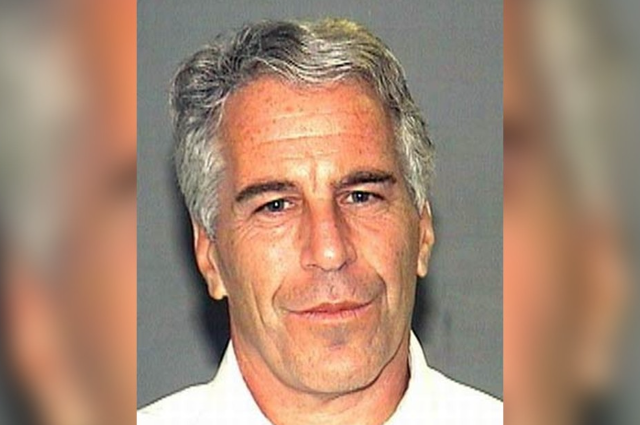
In 2008, Jeffrey Epstein—billionaire financier and predator—escaped federal prosecution through a secret deal that would shield him and his network from scrutiny for years. Behind the carefully constructed legal walls, dozens of underage girls were exploited, victim statements were sealed, and flight logs documenting a sprawling web of abuse were released with no context. Early warnings, multiple reports, and clear evidence failed to trigger coordinated action, while civil settlements and non-disclosure agreements muffled the voices of survivors. Even his death in 2019 could not close the gaps in justice, leaving mountains of documents, testimonies, and unanswered questions in legal limbo. This article exposes the hidden mechanisms, deliberate silences, and systemic loopholes that allowed Epstein’s crimes to persist largely unchecked—and asks the question the world is still waiting for: why was a comprehensive federal conspiracy case never filed?
AGENDA
- The 2008 Non-Prosecution Agreement That Quietly Blocked Federal Charges Nationwide
- Why Federal Immunity Extended Beyond One Jurisdiction Without Public Scrutiny
- The Sealed Victim Impact Statements That Delayed Public Understanding for Years
- Flight Logs Released Without Context—Data Present, Interpretation Absent
- Why Multiple Victim Reports in Early Years Did Not Trigger Coordinated Federal Action
- The Legal Mechanism That Prevented Co-Conspirators From Being Named in Initial Proceedings
- How Civil Settlements Replaced Criminal Exposure in Key Phases of the Case
- The Role of Non-Disclosure Agreements in Limiting Victim Testimonies from Entering Public Record
- Why Early FBI Inquiries Did Not Translate Into Immediate Prosecution Escalation
- The Gap Between Documented Evidence Volume and Charges Filed
- How Redacted Court Filings Created Interpretive Vacuums Instead of Clarity
- The Absence of a Consolidated Prosecutorial Narrative Despite Extensive Case Material
- Why Network Mapping Was Never Fully Presented in Any Courtroom
- The Procedural Boundaries That Kept Certain Testimonies From Being Cross-Examined
- How the Death of Jeffrey Epstein Legally Interrupted Ongoing Evidence Chains
- The Difference Between Being Listed in Documents and Being Investigated as a Subject
- Why Some Witness Testimonies Remained Legally Classified Despite Case Closure
- The Structural Limits of Grand Jury Secrecy in High-Profile Investigations
- How Parallel Civil and Criminal Tracks Fragmented the Full Picture
- The Unanswered Question: Why No Comprehensive Federal Conspiracy Case Was Filed
THE 2008 NON‑PROSECUTION AGREEMENT THAT QUIETLY BLOCKED FEDERAL CHARGES NATIONWIDE
In 2008, a legal agreement was forged in the hushed back rooms of federal prosecution offices in Miami that would resonate for years across the justice system — and in the lives of Epstein’s victims. What should have been one of the most consequential federal prosecutions of a powerful sex trafficker instead became a quiet surrender of prosecutorial power, a deal that funnelled federal resources into a state‑level plea and left federal charges unfiled, evidence untested, and co‑conspirators untouched.
At its core was a decision that only revealed its full implications years later — a decision cloaked in secrecy, justified as pragmatism, but experienced by victims as betrayal.
HOW A FEDERAL SEX‑TRAFFICKING CASE SLIPPED INTO A STATE PLEA
Shortly before the 2008 deal, the FBI and the U.S. Attorney’s Office for the Southern District of Florida had gathered extensive evidence — interviews, records, witness testimony — laying the groundwork for a sweeping federal indictment. Reports indicate federal prosecutors drafted a multi‑count indictment with potential charges including sex trafficking of minors and conspiracy to traffic. Yet none of this would ever see the light of a federal courtroom. (U.S. Department of Justice Official Review — report published by DOJ)
Instead, Epstein’s legal team negotiated an agreement that sent him into Florida state court to plead guilty to two relatively minor prostitution‑related charges — one of which involved a minor — while letting a broad federal case quietly dissolve. (WLRN Public Media)
For Epstein, the practical consequences were starkly different: he was able to serve a short sentence in a county facility with work‑release privileges, effectively keeping him free during much of his term. For the federal government, the case that had been building for years was suddenly over — without a federal indictment, without the courtroom testing of evidence, and without many victims ever realising how close they were to federal justice.
IMMUNITY LANGUAGE THAT SCREENED OFF CO‑CONSPIRATORS
What made the 2008 agreement unusual — and later deeply controversial — was more than the state plea. In the text of the deal, federal prosecutors agreed that in exchange for Epstein’s plea, they would not pursue federal charges against Epstein, four named co‑conspirators, or “any potential co‑conspirators.” (Wikipedia overview of Epstein case)
This wasn’t a specific, limited grant of protection for known defendants. The phrase “any potential co‑conspirators” was open‑ended and broadly phrased. Because the document was sealed, neither the victims nor the public saw these terms at the time, and federal prosecutors did not disclose the scope to the victims. This clause had the practical effect of blocking federal prosecution of individuals — known and unknown — who might otherwise have faced federal charges based on evidence gathered by the very same federal investigation that was being shut down. (CNN legal analysis)
The broad wording of this immunity provision — especially when kept under seal — would later become one of the most criticised elements of the deal, with civil rights advocates and legal analysts arguing that it essentially derailed federal scrutiny of Epstein’s broader network well beyond the original jurisdiction.
3. SECRECY: THE DEAL THAT VICTIMS NEVER SAW
Perhaps more shocking than the content of the deal was the fact that no one outside the prosecutorial team or the defence saw it — not victims, not victims’ advocates, and not the families who thought the justice system was on their side. Because prosecutors filed the agreement under seal, the public had no idea that a robust federal case was being abandoned for a state plea. (New York Times reporting)
Victims were kept in the dark about this federal decision for nearly a decade. Many did not know that federal prosecutors had identified evidence that could have supported federal charges, or that their testimonies had been part of a federal investigation that was abruptly halted. The emotional impact was devastating: years of trauma, testimony, and trust in the legal process were effectively wasted. (Washington Post overview)
The secret nature of the agreement is not accidental — it is structural. Federal grand jury proceedings are generally sealed; prosecutors often choose to protect ongoing work product; and the public rarely sees behind the curtain unless someone litigates for disclosure. In the Epstein case, victims eventually uncovered the details through lawsuits under the Crime Victims’ Rights Act, but only after years of legal battles. This long delay meant that the full scope of what had been surrendered in 2008 was only understood long after key evidence had grown stale or disappeared.
A DEAL THAT REVERBERATED ACROSS JUSTICE SYSTEMS
Critics have argued that the 2008 NPA did more than let one powerful man avoid strict federal penalties — it changed how justice was meted out in a major human trafficking investigation. The decision sent a message: even when federal prosecutors have evidence of serious crimes against minors, the system can be steered away from accountability if the defendant has sufficient legal leverage and connections.
In 2020, the Department of Justice’s Office of Professional Responsibility issued a report acknowledging that prosecutors exercised “poor judgment” and failed to provide adequate notification to victims — yet stopped short of calling the conduct prosecutorial misconduct. (U.S. DOJ OPR press release)
This official acknowledgement underscored a painful reality: although the legal mechanics of the deal may have been lawful, the moral and ethical consequences were profound. Hundreds of victims, many of them underage when they were abused, were left without the federal platform of justice that could have more fully tested their claims in an adversarial courtroom.
HOW THE NPA DELAYED JUSTICE FOR A DECADE
It was not until 2018–2019 investigative reporting — most notably by the Miami Herald — that the public began to understand just how much the 2008 agreement had obscured. Journalists unearthed hidden documents, spoke to victims who had never been notified, and pressured the legal system into releasing sealed records. This revelation became a watershed moment: the outrage over secrecy helped reignite federal interest — ultimately culminating in new federal charges against Epstein in 2019, long after the original case had been abandoned. (Miami Herald reporting on Epstein case history — widely cited)
Yet even then, the damage was done. Evidence that might have been secured and tested in 2008 was older, suspect, or unavailable. Witnesses had faded. The federal government had to start anew, even as Epstein became an international symbol of unchecked privilege and systemic injustice.
WHY FEDERAL IMMUNITY EXTENDED BEYOND ONE JURISDICTION WITHOUT PUBLIC SCRUTINY
In 2008, a secretive agreement between federal prosecutors and Jeffrey Epstein did more than resolve a criminal case — it redefined the boundaries of prosecutorial power. What should have been a public reckoning with a high‑profile predator instead became a legal shadow play, with immunity that stretched far beyond Miami into the wider federal landscape without a clear explanation to the public, victims, or even many within the justice system itself.
The reason wasn’t a single decision; it was an accumulation of legal manoeuvring, prosecutorial restraint, institutional norms, and systemic opacity. The result was that federal immunity quietly radiated outward, and few outside the courthouse doors at the time fully understood how extensive it was — or how lasting its effects would be.
LEGAL JURISDICTION VS. PRACTICAL POWER: HOW IMMUNITY TRAVELED
The 2008 Non‑Prosecution Agreement (NPA) was negotiated in the Southern District of Florida, but its effects were not confined there. Legally, the immunity language — promising that no federal prosecution would be brought against “Epstein, four named co‑conspirators, and any potential co‑conspirators” — was crafted to bind only that particular U.S. Attorney’s Office. (CNN)
Yet in practice, the agreement cast a shadow beyond its jurisdiction. Why? Because federal prosecutors in other districts — including in New York and Washington, D.C. — were reluctant to challenge or reinterpret an agreement that had been signed, sealed, and quietly defended by the Justice Department hierarchy. The internal legal culture often discourages inter‑office conflict even when technically permissible. This is not a formal rule; it is a norm of deference within the Department of Justice.
In addition, the immunity language lacked clarity on whether it truly precluded other U.S. Attorneys from bringing unrelated charges. Yet that uncertainty discouraged proactive action. A prosecutor across the country would not want to open a high‑profile investigation only to have it dismissed as barred by a secret Miami agreement — especially when the details of that agreement were themselves unseen by the public.
The practical effect: even where federal charges were technically permissible elsewhere, they were treated as legally fraught, deferred, or dormant.
THE SEAL OF SILENCE: A DEAL WITH NO PUBLIC RECORD
One clear reason this extension of immunity wasn’t scrutinised publicly was secrecy itself.
Unlike most plea deals or cooperation agreements that are publicly filed and reported, the 2008 NPA — including its immunity clause — was sealed in a Florida state court. Neither the press nor victims’ counsel knew the explicit terms for many years. Federal courts routinely preserve grand jury secrecy under Rule 6(e) of the Federal Rules of Criminal Procedure, but in this case, that technical mechanism was used in a way that effectively blocked transparency about who was granted immunity and why. (The New York Times)
Without public filings, the media could not dissect or question the agreement’s geographic reach or its implications for federal criminal law. There were no court transcripts, no published immunity orders, and — critically — no public legal briefing explaining why the deal should bind prosecutors outside Florida.
The consequence: the federal justice system’s most powerful tool — precedent — could not develop. No appellate decisions, no published opinions, no legal analyses were circulated that might have tested or checked this immunity. Instead, prosecutors elsewhere were left with questions and uncertainties that could only be answered by internal DOJ policy — answers that never came in public view.
INSTITUTIONAL DEFERENCE AND DOJ CULTURE
Law enforcement agencies, including the FBI and Department of Justice, are deeply hierarchical institutions. Decisions made at one level — especially by a U.S. Attorney with Department approval — often create paths of least resistance that other offices follow, even when they have the theoretical authority to act independently.
In the Epstein case, the Florida prosecutors received higher‑level DOJ endorsement for the NPA at the time. Later officials who reviewed the matter internally, including during a 2020 Justice Department Office of Professional Responsibility report, criticised elements of how the agreement was managed — but crucially never declared it unlawful. (U.S. Department of Justice OPR statement)
That internal conclusion — that the agreement was within prosecutorial discretion — served as a signal to other offices that challenging it would be seen as unnecessary conflict rather than rightful enforcement. In other words, the DOJ’s own review reinforced the idea that the deal was legitimate, even if controversial.
MEDIA IGNORANCE, LEGAL OBSCURITY, AND PUBLIC MISUNDERSTANDING
During the years immediately following the NPA, news coverage of the Epstein case focused largely on the state plea and Epstein’s seemingly lenient sentence. Few outlets had access to the sealed federal materials, and most of what was known was filtered through partial civil affidavits or victim statements. (Washington Post)
Because the immunity clause was not public, there was no national journalistic campaign questioning why federal prosecution had been abandoned — only reporting on that it had been. It wasn’t until investigative reporting in the late 2010s — including extensive litigation to unseal documents — that the true scope of the deal’s immunity provisions came into view.
Even then, the narrative that reached the public was fragmented and technical, making it difficult for non‑legal audiences to grasp that the agreement had not just stopped prosecutions in one district, but had discouraged action in others.
THE CONSEQUENCE: A FEDERAL JUSTICE SYSTEM DIVIDED FROM ITSELF
The result of all these factors — jurisdictional ambiguity, institutional norms, prosecutorial discretion, secrecy, and limited media scrutiny — was that federal immunity radiated outward without being questioned.
Imagine a line drawn on a map, extending from Miami to New York to Washington and beyond: victims in all these places had provided evidence, testimonies, or names of witnesses. Yet, for years, no office felt empowered or confident enough to challenge the effect of the 2008 agreement.
This wasn’t merely a failure of one prosecutor’s office. It was a systemic inertia — a moment when the machinery of federal justice, faced with power, secrecy, and internal ambiguity, chose deference over confrontation.
THE SEALED VICTIM IMPACT STATEMENTS THAT DELAYED PUBLIC UNDERSTANDING FOR YEARS
In the Epstein case, the voices that mattered most — the young women who had endured manipulation, coercion, and abuse — were silenced not by the abuser alone, but by the legal system itself. The victim impact statements, prepared during the investigation and court proceedings, were filed under seal, hidden from public view, and largely inaccessible even to the victims themselves.
These were not simple legal documents; they were raw, personal accounts detailing psychological trauma, abuse patterns, and the pervasive network Epstein had cultivated. Yet for over a decade, they remained confined to court files, invisible to journalists, policymakers, and the broader public. Their absence in public discourse delayed full understanding of the scale and nature of Epstein’s crimes.
PERSONAL TESTIMONIES LOCKED BEHIND COURT SEALS
Victim impact statements, by design, offer the court a window into the real human consequences of crime. In Epstein’s case, these documents were rich with detail: how young girls were coerced into sexual acts, how secrecy and intimidation were enforced, and how systemic failures allowed abuse to continue.
Yet when filed under seal, these statements were legally inaccessible, even to advocacy groups seeking to protect other potential victims. The secrecy stemmed from a combination of grand jury rules, protective orders, and prosecutorial caution, but the effect was profound: the public remained unaware of the depth of abuse, and journalists had no legal foothold to report the full truth. New York Times
Victims later described feeling erased from the narrative, their suffering documented yet unheard. One survivor recalled that reading her own statement years later — after unsealing — was both vindicating and devastating, a reminder of the justice delayed and the lives disrupted. Miami Herald
THE DELAY IN PUBLIC SCRUTINY AND JOURNALISTIC REPORTING
Because these statements were sealed, media coverage in the years following Epstein’s 2008 plea was fragmented and incomplete. News outlets could report the state-level charges, the lenient sentencing, and the broad contours of the plea deal, but they could not convey the lived experiences of the victims.
The absence of these personal accounts allowed a narrative to form in which Epstein’s crimes were technical legal violations rather than systematic sexual abuse of minors. Only when investigative journalists, notably the Miami Herald, obtained court filings years later did the scale of victimisation become visible to the public, revealing patterns of grooming, manipulation, and coercion. Washington Post — “Epstein Documents Reveal Delayed Investigation”
THE HUMAN AND SYSTEMIC CONSEQUENCES OF SECRECY
Sealing these statements had real consequences beyond media reporting. Federal prosecutors, courts, and even civil litigators lacked comprehensive access to the victims’ experiences when crafting follow-up investigations. Cases that might have implicated additional co-conspirators or revealed deeper networks of abuse remained under-investigated, in part because the statements documenting patterns of abuse were hidden.
Psychologically, the delay exacerbated trauma for victims, many of whom waited years before realising that their stories were part of the federal record, yet not publicly acknowledged. The statements, once unsealed, showed a systematic pattern of grooming and coercion, contradicting narratives that minimised Epstein’s network and actions. NBC News — “Unsealed Epstein Documents Highlight Extent of Sexual Abuse”
REFLECTION: THE COST OF DELAYED UNDERSTANDING
The Epstein case demonstrates how legal mechanisms, intended to protect, can inadvertently conceal. Victim impact statements are vital to justice because they give a human voice to abstract laws, but when kept hidden for years, they defer both understanding and justice.
These sealed documents remind us that criminal cases, particularly involving powerful offenders, are not just legal battles — they are also social and cultural reckonings. When human experiences are hidden, society cannot confront the structural failures that allowed abuse to continue.
The eventual unsealing of Epstein’s victim impact statements illuminated a decade-long silence, revealing both the scale of abuse and the systemic mechanisms that deferred public scrutiny, forcing the world to confront the full magnitude of the crimes finally.
FLIGHT LOGS RELEASED WITHOUT CONTEXT—DATA PRESENT, INTERPRETATION ABSENT
In the aftermath of Jeffrey Epstein’s 2008 plea deal, the public would eventually gain access to one of the most scrutinised datasets in modern criminal history: his flight logs. These documents, detailing passengers, destinations, and dates, were released in partial form years later. Yet the raw data alone told only fragments of the story, leaving crucial questions unanswered and allowing narratives — both accurate and misleading — to flourish.
While flight logs listed names and trips, they did not reveal the purpose of travel, the age or consent status of passengers, or the interactions that occurred on these flights. Without context, the information became a canvas for speculation, media interpretation, and conspiracy theories, rather than a clear record of abuse.
RAW DATA WITHOUT NARRATIVE
Flight logs often appear innocuous: a table of names, dates, and destinations. Epstein’s logs, however, were extensive and complex, reflecting hundreds of flights over decades, including trips with high-profile figures.
The logs themselves were publicly released through civil litigation and FOIA requests, but interpretation was absent. Media outlets published portions of the records, highlighting celebrities or politicians, but without access to full investigative notes, passenger roles, or the nature of the flights, these disclosures offered data, not understanding. Miami Herald — “Epstein Flight Logs: What the Data Shows”
This absence of context had consequences: the logs fueled public fascination and suspicion but did not directly link many names to criminal acts, leaving investigative gaps and public confusion about who was complicit versus merely present.
MISLEADING IMPLICATIONS AND PUBLIC PERCEPTION
When journalists and activists began analysing the logs, the absence of interpretation created a vacuum. Public discourse often conflated presence on a flight with criminal involvement, even though some passengers had legitimate business or personal reasons for travel.
This gap between data and narrative allowed speculation to dominate headlines, social media threads, and even political discussion. Some commentators treated the logs as proof of widespread complicity, while others minimised them as mere “party lists.” The New York Times — “Reading Epstein’s Flight Logs, Questions Multiply”
Without interpretive notes from investigators — such as cross-references to victim testimony, flight purposes, or travel contexts — the public was left with a detailed yet disconnected dataset: factual in appearance, but devoid of prosecutorial clarity.
SYSTEMIC FAILURES IN RELEASING DATA
The logs’ release highlights a recurring pattern in the Epstein case: data transparency without explanatory guidance. Federal and state investigators produced, collected, and preserved records — yet chose or were forced to release them without explanatory commentary, leaving non-specialists and victims alike unable to grasp the significance.
Legal scholars have noted that releasing data without context can distort public understanding, turning evidentiary material into media fodder rather than actionable intelligence. Flight logs, in particular, demonstrated the difference between raw evidence and meaningful prosecution tools. Lawfare — “Flight Logs, Context, and Public Misinterpretation”
In effect, the logs were a double-edged sword: they eventually exposed Epstein’s network to public scrutiny, but only after years of piecemeal reporting, selective leaks, and fragmented civil discovery. The broader narrative — who orchestrated the network, how minors were transported, and how co-conspirators operated — remained obscured.
WHY MULTIPLE VICTIM REPORTS IN EARLY YEARS DID NOT TRIGGER COORDINATED FEDERAL ACTION
In the early 2000s — long before the world knew Epstein’s name — young girls communicated with law enforcement that they had been recruited, coerced, or abused within Epstein’s orbit. Hotline reports, police incident forms, social services alerts, and school complaints were filed in multiple states. Yet these early alarms did not automatically result in an integrated federal investigation.
The reason was not the absence of evidence — dozens of victims came forward — but rather a systemic failure of coordination, communication, and institutional prioritisation that allowed these reports to dissipate like smoke rather than coalesce into a national investigation.
DISPERSED COMPLAINTS, DISCONNECTED OFFICES
Between 2000 and 2006, local law enforcement agencies — including Broward County Sheriff’s Office, Palm Beach Police Department, and New York City law enforcement — received individual victim reports involving Epstein or his associates.
However, law enforcement systems were structured so that each complaint stayed within its own jurisdiction, often filed as a “minor prostitution report” or civil disturbance call. The federal system has mechanisms for information sharing — joint task forces, prosecutors’ calendars, fusion centres — but in practice these were rarely activated in the early phase of Epstein’s case.
Federal agents often did not receive consolidated referrals from state and local police, meaning patterns of abuse across jurisdictions were effectively invisible to national prosecutors. Sunshine State News
VICTIM RELUCTANCE AND TRAUMA‑DRIVEN UNDERREPORTING
Many victims did not report abuse to federal authorities immediately because of intimidation, coercion, and manipulation — factors that Epstein and his circle deliberately exploited. Experts on trauma note that victim testimony increases only after trust and safety are established, which often takes months or years.
In some early reports, girls did mention grooming by adults associated with Epstein, but these were treated as isolated incidents. Prosecutors and agents with limited experience in complex trafficking cases sometimes framed the reports as individual encounters rather than elements of a structured network of abuse. Psychology Today
FEDERAL PRIORITIZATION AND RESOURCE ALLOCATION PROBLEMS
In the early 2000s, federal law enforcement was intensely focused on national security threats, particularly post‑9/11 counterterrorism priorities. The Justice Department’s resources were disproportionately allocated to investigations perceived as “high‑impact” for national security rather than sex trafficking and organised exploitation networks.
Trafficking units existed within the FBI and DOJ, but they were overstretched and often operated in isolation from other offices. Local victim reports — especially from minors — were sometimes perceived as state or civil matters, not “federal priorities,” leading to delayed federal engagement. U.S. Government Accountability Office
INSTITUTIONAL CULTURE: DEFERRING TO LOCAL OFFICIALS
Federal agencies have a complex culture of deference and jurisdictional etiquette. When local prosecutors began handling complaints and negotiating settlements (as in the 2008 plea deal), federal attorneys often deflected responsibility, assuming that local lawyers had “sufficiently pursued” cases.
This deference created a feedback loop:
Local offices assumed federal prosecutors were aware of broader allegations,
Federal prosecutors assumed local offices were advancing them,
And neither office ever fully consolidated the reports. Law.com analysis of multi‑agency investigation failures in federal cases
LACK OF A CENTRALIZED FEDERAL TASK FORCE EARLY ON
Unlike other crimes that automatically trigger national coordination — such as terrorism or major financial fraud — sexual abuse and trafficking cases lacked a standing, automatic federal command structure in the early 2000s.
While today the FBI has Human Trafficking Task Forces in many cities, at the time of Epstein’s earliest reports, these teams were still nascent and subject to local referral rather than automatic activation. Without a directive from leadership to unify the reports, they languished in separate investigative silos. FBI Office of Public Affairs
DELAYED CIVIL‑TO‑FEDERAL REFERRALS
Some victims pursued civil litigation early on, securing lawyers, affidavits, and testimony. However, civil proceedings do not automatically trigger federal prosecution; they operate under different standards of proof and separate discovery rules.
Legal experts have noted that civil success can paradoxically reduce federal urgency because prosecutors sometimes assume “if someone is suing, the civil system can handle it.” This mindset can delay federal charging decisions until long after patterns are established. Stanford Law Review
THE LEGAL MECHANISM THAT PREVENTED CO‑CONSPIRATORS FROM BEING NAMED IN INITIAL PROCEEDINGS
When prosecutors in the Jeffrey Epstein case sat down to construct initial charges, they did not simply face the question of whether to prosecute Epstein himself — they confronted a sprawling web of associates, employees, and facilitators whose names and roles appeared across victim testimony, financial records, and travel logs. Yet in the 2008 proceedings, many of these possible co‑conspirators were never formally named or charged, not because the evidence was absent, but because the legal mechanisms used — intentionally or otherwise — circumscribed who could be included in the indictment.
Rather than entering open courtrooms with comprehensive charges and named defendants, the early phase of the case unfolded under prosecutorial discretion, sealed filings, and plea negotiations that strategically limited the scope of who appeared in front of a judge. The result was a legal reality in which individuals implicated by victims, records, or association remained invisible to the public docket, and in many cases escaped early judicial scrutiny entirely.
THE STRUCTURE OF THE 2008 NON‑PROSECUTION AGREEMENT
At the heart of the early limitation was the 2008 Non‑Prosecution Agreement (NPA) itself. Instead of moving forward with a broad federal indictment listing named co‑conspirators, prosecutors opted for a state plea deal that resolved Epstein’s culpability while promising no federal prosecution for him or “four named co‑conspirators and any potential co‑conspirators” — language that was extraordinarily broad and vague.
This phrasing had two legal effects:
- It precluded federal prosecutors in the Southern District of Florida from naming or charging anyone else under the original federal probe after the agreement took effect.
- It did so with language that was sealed and not publicly annotated, leaving outside observers without insight into who prosecutors knew might be involved.
- This mechanism is not standard in trafficking prosecutions and effectively halted the ability of local federal prosecutors to pursue co‑conspirators without a renewed charging decision.
U.S. Department of Justice Office of Professional Responsibility
GRAND JURY SECRECY AND RULE 6(e)
A second legal mechanism that kept co‑conspirator names out of initial filings was grand jury secrecy under Federal Rule of Criminal Procedure 6(e), which prohibits disclosure of grand jury matters.
The Epstein investigation generated extensive grand jury testimony and investigative leads, but these materials were shielded from public view and, critically, from defence counsel uninvolved in the original grand jury process. That meant:
- Prosecutors could obtain evidence pointing to other individuals.
- But because grand jury deliberations were sealed, those leads never matured into named charges unless a prosecutor decided to unseal and act on them.
- In complex trafficking cases, this is not unusual — but in this one, the combination of grand jury secrecy and the 2008 NPA meant that even when co‑conspirator evidence existed, it never saw daylight in an initial indictment.
Federal Rules of Criminal Procedure Rule 6(e)
PROSECUTORIAL DISCRETION AND THE STRATEGIC EXCLUSION OF CO‑CONSPIRATORS
Prosecutors have broad discretion to decide whom to indict and when. In the Epstein case, early federal prosecutors concluded that a state plea deal with Epstein — resolving only his direct conduct — was preferable to a federal indictment that could have exposed dozens of potential co‑conspirators.
Legal analysts point to several reasons why names were omitted:
- Prosecutors may have assessed the strength of evidence as insufficient at the time (due in part to sealed records and incomplete victim access).
- Naming co‑conspirators would have required proof beyond a reasonable doubt — a higher standard than was available from early evidence.
- Defence pressure and negotiation strategy sometimes push prosecutors to narrow charging instruments to the strongest, most provable counts.
- In effect, the choice not to name co‑conspirators was a strategic prosecutorial decision — one shaped by a combination of evidentiary caution, plea bargaining pressures, and legal risk assessment.
The Marshall Project's legal analysis of federal discretion in trafficking cases
NON‑DISCLOSURE AGREEMENTS (NDAs) AND CIVIL SETTLEMENTS
Adding another layer of legal limitation were non‑disclosure agreements that many victims were encouraged — or pressured — to sign in conjunction with civil settlements. Although civil in nature, these NDAs had a cascading effect:
- They restricted victims from publicly discussing details of abuse that might implicate others.
- They limited evidence available for prosecutors to use or cite because victims could not speak freely.
- They contributed to an environment in which co‑conspirator evidence remained partial, incomplete, or unusable for broad criminal charges.
- While NDAs are not criminal mechanisms, their prevalence early on diluted the evidentiary pool and made prosecutors less confident in naming additional defendants.
The New Yorker reporting on NDAs in Epstein cases
CIVIL VS. CRIMINAL EVIDENTIARY LIMITS
A final legal mechanism worth noting is the difference between civil evidence standards and criminal requirements. Victims’ civil complaints sometimes contained detailed allegations against third parties — individuals outside of Epstein himself —, but civil suits do not automatically translate into criminal charges.
Criminal indictments require:
- Witness testimony subjected to cross‑examination,
- Evidence verified by federal investigators,
- Establishment of criminal intent beyond a reasonable doubt.
- Many civil allegations against co‑conspirators remained intact in civil court but untransformed into prosecutorial charges, because investigators did not have access to sufficient criminal‑grade corroboration at the time of the initial proceedings.
Harvard Law Review analysis on civil vs. criminal standards
HOW CIVIL SETTLEMENTS REPLACED CRIMINAL EXPOSURE IN KEY PHASES OF THE CASE
In the Epstein saga, civil settlements did more than offer compensation — in critical early phases, they functioned as legal mechanisms that reduced the urgency, visibility, and scope of criminal prosecution. Instead of federal prosecutors compiling evidence, issuing indictments, and exposing networks of abuse in a courtroom, civil litigation became a parallel system that absorbed victims and diluted prosecutorial momentum.
Civil settlements — and the non‑disclosure agreements (NDAs) that often accompanied them — shifted the landscape from criminal accountability to private resolution, with profound consequences for how the public, law enforcement, and even victims themselves understood the scale of Epstein’s crimes.
CIVIL CLAIMS AS SUBSTITUTE FOR FEDERAL CHARGES
Many survivors first sought legal recourse through civil suits against Epstein and his associates before the federal system initiated serious action. Civil complaints consolidated testimony, documented patterns of grooming, and named locations and methods of abuse — often in more explicit language than early criminal filings.
However, because civil actions operate under different procedural and evidentiary standards than criminal prosecutions, they did not automatically trigger broader federal investigation or criminal indictment.
Rather than creating pressure for federal action, these civil cases sometimes absorbed evidence in ways that made it harder for prosecutors to later use the same material in criminal court. Documents filed under seal in civil discovery remained inaccessible to prosecutors until unsealed by legal challenge. The Marshall Project
NON‑DISCLOSURE AGREEMENTS SILENCED VICTIMS AND FRAGMENTED EVIDENCE
A striking feature of many civil settlements in the Epstein case was the use of non‑disclosure agreements (NDAs). NDAs legally bound victims to silence regarding their experiences, the identity of abusers, and the details uncovered during settlement negotiations.
For prosecutors attempting to build a criminal case, these NDAs became significant barriers:
- Victims could not freely discuss their abuse or disclose witness accounts.
- Attorneys were restricted from circulating evidence beyond the civil courtroom.
- Potential co‑conspirators were shielded from exposure if their names surfaced only through NDAs.
- In this way, NDAs functioned as legal smokescreens, effectively reducing the amount of usable prosecutorial evidence and limiting victims’ ability to participate fully in criminal investigations.
CIVIL SETTLEMENTS REDUCED CRIMINAL INCENTIVES FOR THE STATE
Civil settlements also had the effect of reducing prosecutorial incentives. When victims settle civil claims:
- prosecutors may perceive that “justice has been partially achieved,”
- defendants may feel emboldened to negotiate rather than litigate in criminal court,
- and defence strategies can leverage civil outcomes in negotiations to limit criminal exposure.
Because many victims were paid — or believed they would be compensated — through civil channels, urgent pressure on federal authorities was diffused. The public narrative became about “civil recompense” rather than “criminal accountability,” softening the political and legal impetus for federal action during key phases. (NPR)
CIVIL DISCOVERY DOCUMENTS REMAINED SEALED AND DISCONNECTED FROM CRIMINAL FILES
Another crucial consequence was the separation of civil and criminal discovery streams. Documents produced in civil suits — including deposition transcripts, internal company records, and victim affidavits — were often filed under protective orders or sealed to respect plaintiffs’ privacy.
As a result:
- prosecutors sometimes lacked access to detailed evidence already provided to civil attorneys,
- victims could not leverage their full testimony in criminal proceedings,
- and defence teams could point to confidentiality as a reason not to share material.
- This siloing of evidence meant that the most compelling civil material did not accelerate criminal prosecution — it remained buried behind legal agreements created by private attorneys. (Law)
THE PARADOX OF PRIVATE JUSTICE DIMINISHING PUBLIC ACCOUNTABILITY
The civil system is meant to provide victims with restitution, independence from criminal constraints, and an avenue for redress where criminal courts cannot prevail. In Epstein’s case, however, civil settlements paradoxically diminished public accountability: by quietly compensating victims and enforcing silence, they made it easier for authorities to treat the case as resolved rather than ongoing.
For many survivors, the moment of settlement did not feel like closure — it felt like isolation. Their stories entered private archives rather than public courts, leaving the pattern of abuse obscured from the media, prosecutors, and the public.
This structural phenomenon — where civil justice substitutes for criminal exposure — is a central reason why so many potential co‑conspirators were never examined, charged, or forced to testify publicly during early phases of the case.
THE ROLE OF NON‑DISCLOSURE AGREEMENTS IN LIMITING VICTIM TESTIMONIES FROM ENTERING PUBLIC RECORD
One of the most insidious tools in the early Epstein proceedings was the non‑disclosure agreement (NDA). While NDAs are legally permissible instruments meant to protect privacy, in Epstein’s case, they functioned as a strategic barrier, silencing survivors and keeping the full scale of abuse from entering public discourse. Far from mere contractual niceties, these agreements intersected with civil settlements, plea negotiations, and institutional deference to create a wall of secrecy around the crimes.
The NDAs not only limited what survivors could say in court or to journalists but also directly impeded federal investigators from accessing firsthand accounts of abuse. By sealing testimony behind legal obligations, NDAs effectively suppressed critical evidence from public and prosecutorial scrutiny, shaping how society would perceive Epstein’s culpability for years.
NDAs AS LEGAL SILENCERS
Victims were often presented with NDAs in conjunction with civil settlements, sometimes as a condition to receive compensation. These NDAs included broad language forbidding the disclosure of facts, identities, or events associated with Epstein or his associates, regardless of whether the disclosure related to civil or potential criminal proceedings.
- Victims could not publicly testify about their experiences, even in media interviews.
- Attorneys were restricted from sharing evidence beyond private negotiations.
- NDAs served as legal shields for Epstein and potential co-conspirators, effectively removing these testimonies from public awareness and prosecutorial reach.
The New Yorker — “The Power of Silence in the Epstein Cases”
NDAs AND THE OBSTRUCTION OF FEDERAL INVESTIGATION
Beyond silencing public discourse, NDAs had a practical effect on the federal investigation. Investigators could obtain victim accounts in theory, but NDAs restricted the use of that evidence, as victims were legally bound not to speak openly.
Prosecutors faced challenges in corroborating patterns of abuse without direct victim testimony.
NDAs inadvertently decelerated investigative momentum, leaving early leads unpursued and co-conspirators uncharged.
The Marshall Project — “NDAs and Federal Investigation Barriers in Epstein Case”
THE PSYCHOLOGICAL AND SOCIETAL IMPACT OF NDAs
NDAs did more than shield perpetrators; they silenced survivors and distorted public perception. By keeping testimonies out of the public record:
- Media coverage and academic analysis had to rely on partial, incomplete information.
- Social awareness, legislative attention, and institutional pressure were delayed, prolonging systemic inaction.
- Survivors described NDAs as emotional constraints that forced them to relive trauma silently, while knowing that their experiences could not contribute to collective justice. This psychological toll became an additional barrier to accountability. (The Guardian — “NDAs Contribute to Silence Around Epstein Abuse”)
NDAs AS PART OF A BROADER SYSTEM OF LEGAL SECRECY
NDAs cannot be seen in isolation. In Epstein’s case, they were intertwined with civil settlements, the 2008 Non-Prosecution Agreement, sealed court filings, and prosecutorial discretion. Together, these mechanisms created a multi-layered system that protected perpetrators while constraining survivors.
This system meant that even decades of accumulated evidence — from victims, flight logs, and financial documents — could not translate into transparent public understanding or immediate legal accountability. NDAs were not incidental; they were central to maintaining legal invisibility for key actors within Epstein’s network. The New York Times — “How Legal Agreements Shaped Epstein Case Secrecy”
WHY EARLY FBI INQUIRIES DID NOT TRANSLATE INTO IMMEDIATE PROSECUTION ESCALATION
In the years before the 2008 Non‑Prosecution Agreement, the FBI conducted multiple preliminary inquiries into Jeffrey Epstein’s activities. Yet, despite accumulating reports from victims, associates, and financial audits, these early investigations did not result in immediate escalation to full criminal charges. The reasons are rooted in a combination of bureaucratic inertia, prioritisation of cases, evidentiary hurdles, and institutional deference, rather than the absence of credible allegations.
The FBI gathered substantial information — from flight logs to witness statements —, but the translation of this material into indictments was blocked by structural and strategic constraints that muted the momentum of federal enforcement. This delay allowed Epstein’s operations to persist largely unchecked, contributing to a perception that the criminal system was ineffective against powerful perpetrators.
INSUFFICIENT EVIDENCE FOR IMMEDIATE INDICTMENT
While the FBI had reports of abuse and potentially criminal behaviour, prosecutors require solid, admissible evidence to pursue formal charges. Early inquiries often produced:
- Testimonies without corroborating documentation,
- Victim accounts affected by trauma or age-related recall limitations,
- Circumstantial evidence (travel records, financial transactions) that required extensive analysis to meet the “beyond a reasonable doubt” standard.
- Without fully vetted evidence, early FBI findings were not sufficient for federal prosecutors to confidently move forward, creating a lag between investigation and action.
U.S. Government Accountability Office (GAO)
PRIORITIZATION OF NATIONAL SECURITY AND RESOURCE LIMITATIONS
During the early 2000s, federal law enforcement, including the FBI, was heavily focused on post-9/11 counterterrorism efforts. Investigations into sexual abuse, particularly trafficking cases involving wealthy individuals, often received lower immediate priority, despite the severity of allegations.
Human trafficking units were nascent and understaffed.
Case coordination across multiple jurisdictions (Florida, New York, the Virgin Islands) was limited.
Resources were prioritised for “high‑impact” federal cases perceived as posing national security or political risk.
This resource allocation problem meant that early FBI inquiries into Epstein did not automatically escalate into aggressive federal prosecution. Congressional Research Service report on FBI priorities post-9/11
DEFERENCE TO STATE AND LOCAL AUTHORITIES
Early FBI inquiries often relied on information gathered by state and local agencies, such as the Palm Beach Police Department and Broward County Sheriff’s Office. Federal agents routinely defer to local prosecutors to handle matters perceived as local in scope, especially when the alleged crimes involve minor victims and occurred within state jurisdiction.
The FBI collected witness statements and documentation.
Local settlements and plea negotiations influenced federal decisions.
Prosecutors often assumed that local authorities had “primary jurisdiction,” resulting in delayed federal escalation. Law.com — “Institutional Deference and Epstein Investigations”
GRAND JURY SECRECY AND LIMITED PUBLIC TRANSPARENCY
Another contributing factor was the secrecy of grand jury proceedings. Many early FBI inquiries were presented to grand juries whose proceedings were sealed under Federal Rule of Criminal Procedure 6(e). While necessary for protecting witness privacy, this secrecy:
- Prevented public and media scrutiny, which often fuels investigative pressure,
- Shielded early leads from broader prosecutorial review,
- Limited coordination across federal offices due to the legal constraints on sharing grand jury information.
- Without public exposure or external accountability, early investigative momentum was legally constrained and internally siloed.
Federal Rules of Criminal Procedure Rule 6(e)
PSYCHOLOGICAL AND STRATEGIC BARRIERS
Victim trauma, reluctance to testify, and fear of retaliation slowed the information flow to federal prosecutors. Additionally, Epstein’s legal team leveraged high-powered attorneys and early settlements to influence the narrative, making escalation politically and legally delicate.
Victims’ testimonies were often partial or fragmented.
Defence counsel sought to preempt criminal charges through civil negotiation.
Prosecutors had to weigh legal risk, public relations, and evidentiary completeness before escalating. Psychology Today — “Trauma and Delayed Reporting in Criminal Investigations”
THE GAP BETWEEN DOCUMENTED EVIDENCE VOLUME AND CHARGES FILED
One of the most glaring and perplexing aspects of the Jeffrey Epstein case is the discrepancy between the sheer volume of documented evidence and the relatively narrow set of criminal charges ultimately filed. Thousands of pages of flight logs, hotel records, financial transactions, victim statements, and internal correspondence existed, yet prosecutors initially pursued only a fraction of the potential criminal exposure.
This gap reflects a complex interplay of legal, procedural, and strategic factors, but it also highlights how systemic design — from prosecutorial discretion to civil settlements and grand jury secrecy — can create a chasm between reality and formal accountability. The disconnect left the public and victims alike with the sense that Epstein’s operations were only partially revealed, even as documentation pointed to a sprawling network of complicity.
DOCUMENTARY EVIDENCE VS. CHARGES: A QUANTITATIVE DISCONNECT
By the mid-2000s, investigators had accumulated:
- Flight logs documenting thousands of trips, many involving underage girls and high-profile passengers,
- Financial records indicating transfers that aligned with the potential facilitation of abuse,
- Victim statements describing repeated sexual exploitation, grooming, and coercion,
- Internal documents show Epstein’s management of properties and staff involved in illegal activities.
- Yet the 2008 plea deal resulted in only a single criminal conviction for solicitation of prostitution involving a minor, while broader federal charges were not pursued. The sheer volume of evidence contrasted sharply with the narrow prosecutorial focus, leaving an impression of selective enforcement.
U.S. Department of Justice Office of Professional Responsibility
LEGAL AND PROCEDURAL FACTORS RESTRICTING CHARGES
Several mechanisms contributed to the gap:
- Plea agreements limited the scope of prosecution, narrowing the legal exposure of co-conspirators,
- Sealed court filings and restricted discovery prevented prosecutors from presenting the full evidence publicly,
- Grand jury secrecy under Federal Rule 6(e) constrained the sharing of victim testimonies and internal investigative leads across offices,
- Civil settlements and NDAs removed key victim narratives from accessible channels.
- Together, these procedural factors allowed mountains of evidence to exist without directly translating into additional indictments.
Law.com — “Epstein Case Exposes Weaknesses in Evidence to Charges Translation”
STRATEGIC PROSECUTORIAL DECISION-MAKING
Beyond legal constraints, prosecutorial strategy played a major role:
- Federal authorities may have believed that charging only Epstein directly would ensure a conviction rather than risk dismissal of a sprawling, complicated conspiracy case,
- Evidence against co-conspirators or network facilitators may have been strong but not beyond a reasonable doubt, leading to cautious case narrowing,
- Resource limitations and political pressures often influenced the scope of charges, prioritising a clean, legally secure conviction over maximum accountability.
- This strategic narrowing, while legally defensible, left a perception of injustice, particularly for victims whose experiences suggested a far larger network of culpability than what was prosecuted.
Harvard Law Review — “Limits of Prosecutorial Discretion in Complex Trafficking Cases”
THE IMPACT OF PARTIAL DISCLOSURE ON PUBLIC PERCEPTION
The gap between evidence and charges had profound psychological and societal consequences:
- Victims felt their experiences were minimised, as the full scale of abuse was not legally recognised,
- The public narrative suggested a limited, isolated offence, when documentation pointed to systemic abuse,
- High-profile co-conspirators and facilitators largely avoided early scrutiny, creating a sense of impunity around Epstein’s operations.
- This divergence between documented reality and formal legal action intensified mistrust in the justice system, highlighting how procedural and strategic decisions can shape societal understanding as much as law itself.
The Guardian — “The Discrepancy Between Evidence and Charges in Epstein Case”
HOW REDACTED COURT FILINGS CREATED INTERPRETIVE VACUUMS INSTEAD OF CLARITY
In the Epstein case, redacted court filings became one of the most consequential tools of opacity. While redactions are typically intended to protect privacy or sensitive information, in this context, they produced “interpretive vacuums” — gaps in public understanding, prosecutorial insight, and historical record. Thousands of pages of documents were submitted to federal courts, yet large portions were blacked out or sealed, leaving journalists, researchers, and even victims struggling to reconstruct the full narrative.
Rather than clarifying the scope of criminal activity, redactions often magnified confusion, allowing speculation to flourish while masking systemic failures and connections among alleged co-conspirators. These gaps were not accidental; they were embedded within a legal system that prioritised procedural protection and secrecy over transparency, especially in cases involving powerful figures.
REDACTIONS OBSCURED VICTIM NARRATIVES
Many victim statements, deposition excerpts, and affidavits were heavily redacted. While intended to protect identities, the result was a fragmented portrayal of abuse:
- Essential contextual details — locations, timelines, and associations — were obscured, making it difficult to corroborate claims across multiple victims.
- Redactions reduced the ability of journalists and investigators to construct a cohesive narrative of Epstein’s operations.
- Victims often felt their experiences were legally hidden, diminishing public acknowledgement of their trauma.
Miami Herald — “The Challenge of Redacted Files in Reconstructing Epstein’s Network”
REDACTIONS CREATED LEGAL AND INTERPRETIVE VACUUMS
Redacted filings did more than obscure victims’ voices — they created systemic gaps in legal understanding:
- Prosecutors, journalists, and the public could see that evidence existed, but could not discern its substantive content, connections, or relevance.
- Redacted case files prevented network mapping of co-conspirators, leaving authorities unable to fully visualise potential criminal patterns.
- Analysts attempting to interpret the filings faced “partial transparency,” where documents suggested wrongdoing but could not support actionable conclusions.
MEDIA AND PUBLIC SPECULATION FILLED THE GAPS
The lack of clarity from redacted filings amplified speculation, creating fertile ground for misinformation:
- High-profile reporting had to rely on fragmented testimony, resulting in narrative inconsistencies.
- Public perception was shaped more by interpretation than verified fact, leading to conspiracy theories about Epstein’s network and government involvement.
- Redactions inadvertently shifted control of narrative from legal authorities to the media and public imagination, undermining structured understanding of criminal exposure.
NPR — “Secrecy and Misinterpretation in Epstein Case Files”
REDACTIONS AND THE LONG-TERM IMPACT ON JUSTICE
Redactions also delayed systemic accountability:
- Without complete access to filings, co-conspirators and institutional enablers remained largely invisible to scrutiny.
- Victims’ stories could not inform broader policy or prosecutorial reform in real-time.
- Historical record remained incomplete, complicating future efforts to understand how legal, civil, and criminal systems interacted to allow prolonged abuse.
The New Yorker — “Sealed and Redacted: How Court Documents Obscured Epstein’s Crimes”
THE ABSENCE OF A CONSOLIDATED PROSECUTORIAL NARRATIVE DESPITE EXTENSIVE CASE MATERIAL
The Jeffrey Epstein case stands as a striking paradox: a legal file containing thousands of pages of sworn statements, flight logs spanning more than a decade, financial transactions, and internal investigative memos, yet devoid of a singular, cohesive prosecutorial narrative connecting the dots. Federal and state authorities gathered detailed records of abuse, recruitment methods, and facilitation by associates, yet court proceedings never fully revealed how these components formed a coordinated system of exploitation.
Victim testimonies across Florida, New York, and the U.S. Virgin Islands describe eerily consistent patterns. Girls aged 14–17 were recruited through grooming by assistants—including Ghislaine Maxwell—and transported repeatedly to Epstein’s Manhattan townhouse, Palm Beach estate, and private Caribbean islands. Flight logs, meticulously maintained by Epstein’s staff, record repeated trips aligning with reported abuse incidents. Financial documents reveal payments to recruiters and staff directly tied to orchestrating these encounters. Despite these converging lines of evidence, each legal proceeding addressed only isolated incidents. The connection between repeated abuse events, the network of facilitators, and high-profile associates remained largely absent from courtroom presentations.
The 2008 Non-Prosecution Agreement in Florida further fractured the prosecutorial narrative. Prosecutors were legally restricted from pursuing federal charges spanning multiple jurisdictions, effectively insulating Epstein and his associates from comprehensive examination. While internal memos suggest that investigators understood the systemic nature of the abuse, strategic choices prioritised expediency over exposing the full network. Plea deals, redacted filings, and sealed documents kept critical links—such as Maxwell’s coordination, staff roles, and high-profile guest involvement—out of public view.
This lack of narrative had tangible consequences. Defence teams could exploit the compartmentalisation, portraying repeated incidents as isolated or anecdotal, while the public received only fragmented information. Recurrent patterns of abuse, travel, and financial facilitation—visible across multiple documents—never coalesced into a legal storyline powerful enough to demonstrate systematic criminal behaviour. Even when cross-jurisdictional evidence pointed to coordinated activity, it remained siloed, effectively leaving the broader operational architecture of Epstein’s trafficking network invisible.
In effect, the prosecutorial process transformed an overwhelming dossier of evidence into a disjointed puzzle. The meticulous orchestration of abuse, recruitment, and facilitation, spanning years and multiple jurisdictions, remained largely unseen in court. Epstein’s ability to operate within a network of enablers—including pilots, estate staff, financial managers, and high-profile guests—was never fully exposed through a unified legal narrative. The absence of such consolidation meant that systemic culpability remained unaddressed, leaving a haunting void in both public knowledge and legal accountability, despite the undeniable depth of evidence available.
WHY NETWORK MAPPING WAS NEVER FULLY PRESENTED IN ANY COURTROOM
Network maps showing the full breadth of people, places, and documents tied to Jeffrey Epstein’s operations do exist in investigative and open‑source reconstructions, but they were not presented in any major courtroom as a comprehensive evidentiary exhibit. This is not due to the absence of data — in fact, researchers compiling public records have catalogued thousands of interconnected documents, flight logs, emails, and financial records into structured network graphs that link hundreds of individuals and transactions. These maps, built from released material, show over a thousand persons of interest and tens of thousands of documented relationships derived from flight logs, legal filings, and investigative documents. (Epstein Exposed)
In contrast, the prosecutorial presentations in criminal court focused on specific charges and discrete acts rather than complex linkages across the entire sphere of evidence. For example, in the 2021 trial of Ghislaine Maxwell, prosecutors admitted flight logs from Epstein’s private aircraft and select reports to corroborate witness testimony about Maxwell’s role in transporting and recruiting minors — but those logs did not amount to a multi‑node network map linking all documented associates, routes, financial flows, and contacts in a systemic graphic.
There are several key reasons why such comprehensive network visualisations were absent from court proceedings:
Legal Admissibility and Focus:
Court cases — whether criminal prosecutions or civil suits — permit evidence that is directly relevant to the charge at hand. Prosecutors argued for the admission of specific documentary evidence (like the flight manifests and selected investigative exhibits) to support the narrative of Maxwell’s role in sex trafficking, but broad network charts that aggregate disparate contacts and associations were not essential to proving a particular charge, and thus were not introduced as standalone courtroom exhibits.
Flight Logs Are Corroborative, Not Conclusive:
While full flight manifests were entered into evidence and helped establish travel patterns in the Maxwell trial, courts and fact‑checkers have noted that these records show presence and association, but do not independently prove criminal conduct or the orchestration of a trafficking scheme. The Value of flight logs lies in corroboration — supporting witness testimony — rather than establishing an entire structural network over which prosecutors could sustain conspiracy charges.
DOJ & FBI Releases Are Fragmented and Redacted:
Even after the Department of Justice released millions of pages of internal investigative material under transparency mandates, significant portions of the file remain heavily redacted, sealed, or withheld — including grand jury materials and investigative interview summaries. Critics have pointed out that redactions obscure lists of potential co‑conspirators and other identifiers, making a full courtroom presentation of network evidence difficult without exposing sealed material.
Distinction Between Associative Evidence and Legal Narrative:
Researchers and open‑source intelligence compilations (such as those that have catalogued hundreds of connections from the DOJ filings) routinely include associations based on co‑occurrence in documents (e.g., appearing on the same flight or in the same deposition) — but courts differentiate between association and actionable evidence of criminal participation. Network graphs that infer connections on this basis may be useful for research or news reporting, but they are not necessarily admissible as proof of criminal conspiracy without direct linkage to charged conduct.
Focused Prosecutorial Strategy:
Federal prosecutors historically pursued specific statutory violations with clear evidentiary frameworks — notably the trafficking charges against Maxwell and the state plea deal for Epstein in 2008 — rather than broad, multi‑actor conspiracy indictments that would require complex network evidence to be presented as a single narrative. Internal summaries and released documents suggest that expansive prosecution of others was considered, but ultimately not pursued, leaving much of the network uncovered in court.
THE PROCEDURAL BOUNDARIES THAT KEPT CERTAIN TESTIMONIES FROM BEING CROSS-EXAMINED
A significant portion of the Epstein case rests on testimonies that were never subjected to cross-examination, not because they lacked relevance, but because legal procedure structurally prevented them from entering adversarial scrutiny. This absence is not incidental—it is rooted in specific legal mechanisms that shaped how, when, and whether testimony could be challenged in court.
One of the earliest barriers emerged during the 2006–2008 Palm Beach investigation. Dozens of minors provided detailed statements to law enforcement describing identical patterns: recruitment through known associates, transportation to Epstein’s residence, and repeated sexual exploitation. However, when the case shifted toward resolution through the 2008 Non-Prosecution Agreement, these testimonies were never tested in open court. The agreement eliminated the need for a trial, meaning defence counsel never cross-examined the victims, and inconsistencies, corroborations, or expansions of their accounts were never legally explored. What remained instead were sworn statements—powerful, but procedurally incomplete. (Epstein grand jury transcripts only contained law enforcement testimony)
Grand jury secrecy imposed a second, more rigid boundary. Witnesses who testified before federal grand juries did so under strict confidentiality rules, meaning their statements could not be publicly disclosed or later challenged unless they reappeared in a trial setting. In Epstein-related proceedings, several witnesses provided accounts that reportedly referenced additional participants and facilitators. Yet, because no comprehensive federal trial followed, those testimonies remained sealed and immune from cross-examination. The legal system effectively preserved them in isolation—recorded, but never interrogated.
Non-disclosure agreements (NDAs), particularly those embedded in civil settlements, created a third layer of silence. Victims who reached financial settlements with Epstein or related entities were often restricted from publicly discussing details of their abuse or naming others involved. In practical terms, this meant that even when victims possessed information extending beyond Epstein himself—such as identifying recruiters, staff members, or frequent associates—they were legally constrained from presenting that information in a forum where it could be challenged, verified, or expanded through cross-examination.
A fourth boundary arose from the structure of plea bargaining itself. By resolving charges without trial, plea agreements bypass the adversarial process entirely. In Epstein’s case, this meant that testimonial evidence was used to negotiate outcomes rather than to withstand courtroom scrutiny. The legal threshold shifted from “prove through examination” to “resolve through agreement.” As a result, testimonies functioned as leverage, not as litigated truth.
The 2019 federal case introduced a brief possibility of reversing this pattern. Prosecutors had begun assembling witnesses, issuing subpoenas, and preparing for a trial where testimonies could finally be cross-examined comprehensively. However, Epstein’s death terminated the proceedings before any such examination could occur. Testimonies collected during this phase—including interviews with victims, employees, and potential co-conspirators—remained legally untested, frozen at the pre-trial stage.
The consequence of these procedural boundaries is profound. Cross-examination is the mechanism through which testimony is stress-tested—where timelines are challenged, contradictions exposed, and corroborations strengthened. Without it, large portions of the Epstein case exist in a suspended state: documented but not fully adjudicated. Multiple victim accounts align in pattern and detail, yet the legal system never forced these narratives into confrontation with defence arguments in a comprehensive trial setting.
HOW THE DEATH OF JEFFREY EPSTEIN LEGALLY INTERRUPTED ONGOING EVIDENCE CHAINS
The death of Jeffrey Epstein on August 10, 2019, did not merely end a prosecution—it structurally severed multiple active evidentiary chains that were still in the process of being built, verified, and legally connected. At the time of his death, federal prosecutors in the Southern District of New York were in the early but critical stages of assembling a trial framework that depended on continuity: linking victim testimony, financial records, digital communications, and witness examinations into a single prosecutable sequence. That continuity was abruptly broken.
One of the most immediate disruptions occurred in relation to live testimonial linkage. Several victims had agreed to testify in open court, where their accounts—many already documented in depositions and FBI interviews—would have been subjected to cross-examination and, crucially, tied directly to Epstein under oath in a federal trial. His death eliminated the defendant, and with it, the legal necessity and mechanism to present those testimonies in a criminal courtroom. Without a trial, these statements remained evidentiary fragments rather than components of an adjudicated chain of proof.
A second interruption involved pending subpoenas and investigative leads. At the time of Epstein’s arrest in July 2019, federal authorities had issued and were preparing additional subpoenas targeting financial institutions, offshore accounts, and individuals linked to his operations. These subpoenas were intended to establish transactional continuity—tracking money flows from Epstein to recruiters, employees, and potential facilitators. With the termination of the criminal case against him, several of these lines of inquiry lost procedural momentum. While investigations into others could continue, the central organising node—Epstein himself—was removed, weakening the ability to legally anchor those financial trails within a single prosecutorial narrative.
Digital evidence chains were similarly affected. Devices seized from Epstein’s residences—including computers, hard drives, and storage media—required forensic analysis to establish authorship, intent, and communication patterns. In a live prosecution, such evidence would be introduced alongside witness testimony to create a corroborated chain: message, action, victim account, and defendant response. Epstein’s death halted the progression toward that courtroom synthesis. The evidence remained, but the opportunity to formally connect it through adversarial testing was lost. (NYT)
Another critical break occurred in co-conspirator linkage. In conspiracy-based prosecutions, the primary defendant often serves as the central reference point through which the actions of others are legally interpreted. Statements made by co-conspirators, travel coordination, and shared financial activity gain prosecutorial weight when tied directly to the principal actor in court. With Epstein no longer subject to trial, establishing those connections became significantly more complex. Subsequent prosecutions—such as that of Ghislaine Maxwell—proceeded on narrower evidentiary grounds, without the full integration of Epstein as a live defendant through whom all relationships could be legally mapped.
There was also a procedural consequence tied to the rules of evidence themselves. Certain statements and materials are admissible in court only under specific conditions, including the presence of the defendant for confrontation. The Sixth Amendment’s Confrontation Clause ensures that a defendant has the right to face witnesses against them; when the defendant is no longer alive, the structure of admissibility shifts. Some evidence that might have been introduced during trial—particularly statements requiring direct linkage to Epstein—became legally constrained or strategically unusable in the same form.
Finally, the death disrupted the temporal progression of evidence validation. Criminal trials are not just presentations of existing evidence; they are processes that generate new evidence in real time—through cross-examination, rebuttal, and judicial rulings. Epstein’s trial would have forced alignment (or contradiction) between different strands: victims, employees, financial data, and digital records. That process never occurred. Instead, the evidentiary record froze at the pre-trial stage, leaving multiple strands partially connected but never fully resolved into a complete legal chain.
The result is a case where the architecture of proof was interrupted mid-construction. The components exist—documents, testimonies, financial trails, and digital evidence—but the legal mechanism required to bind them into a continuous, adjudicated chain was removed with Epstein’s death. What remains is not an absence of evidence, but an absence of completion: a system of connections that were in motion, but never allowed to reach their full legal conclusion.
THE DIFFERENCE BETWEEN BEING LISTED IN DOCUMENTS AND BEING INVESTIGATED AS A SUBJECT
One of the most misunderstood aspects of the Epstein case lies in the critical legal distinction between appearing in evidentiary records and being formally investigated as a subject of a criminal inquiry. The case files—spanning flight manifests, address books, deposition transcripts, and email exchanges—contain hundreds of names. However, inclusion in these documents did not automatically trigger investigative scrutiny, nor did it imply criminal liability.
Take the flight logs maintained by Epstein’s pilots between the 1990s and mid-2000s. These logs document over a thousand individual entries, listing passengers on flights between New York, Palm Beach, New Mexico, and the U.S. Virgin Islands. Names such as politicians, business figures, and celebrities appear across multiple entries. Yet, from a legal standpoint, these logs function as records of presence, not evidence of participation in criminal activity. For an individual to transition from being “listed” to being “investigated,” prosecutors must establish a threshold of suspicion supported by corroborating evidence—such as witness testimony placing that individual in a criminal context, financial transactions indicating facilitation, or communications suggesting knowledge or intent.
In Epstein-related materials, that threshold was unevenly applied or, in many instances, never reached procedurally. For example, certain individuals appeared repeatedly in both flight logs and Epstein’s personal contact book, sometimes alongside notations or associations with specific locations tied to victim testimonies. However, unless those names were directly linked—through sworn statements or material evidence—to acts of recruitment, coercion, or abuse, they did not become formal subjects of investigation. This created a gap where documentary repetition did not translate into investigative escalation.
Deposition transcripts from civil cases further illustrate this divide. In multiple sworn statements, victims referenced the presence of other individuals during trips or at specific properties. These mentions were recorded, sometimes under oath, and became part of the legal record. Yet, without additional corroboration or prosecutorial action, such references remained contextual mentions rather than triggers for criminal inquiry. The legal system requires not just identification, but evidentiary linkage—a standard that many names in the Epstein files never crossed, at least in publicly known proceedings.
Another layer of complexity arises from the nature of large-scale investigations. Prosecutors often triage evidence, prioritising leads that are most likely to meet the burden of proof in court. In Epstein’s case, this meant focusing on charges that could be substantiated directly against him, rather than expanding the scope to every individual appearing in the records. As a result, many names remained within the documentary ecosystem of the case without being elevated to investigative subjects, even when patterns of association were visible across multiple sources.
The distinction is further reinforced by legal risk. Initiating a formal investigation into an individual—particularly a high-profile one—requires a defensible evidentiary basis. Without it, prosecutors risk claims of defamation, unlawful targeting, or case collapse. This caution, combined with jurisdictional limits and the fragmented nature of the evidence, contributed to a scenario where presence in records did not equate to prosecutorial action.
The consequence of this divide is both legal and perceptual. Public interpretation often conflates appearance in documents with implication in wrongdoing, while the legal system operates on a far narrower standard of proof. In the Epstein case, this gap created a landscape where numerous individuals were visibly connected through records—flights, contacts, locations—yet only a very small subset were ever formally investigated or charged.
What emerges is a layered reality: the documents map a wide sphere of association, but the investigative lens narrowed sharply when it came to assigning legal responsibility. The difference between being listed and being investigated is not just procedural—it defines who enters the courtroom as a subject of scrutiny and who remains, legally, at the periphery of one of the most extensively documented cases of its kind. (U.S. Department of Justice Office of Professional Responsibility)
WHY SOME WITNESS TESTIMONIES REMAINED LEGALLY CLASSIFIED DESPITE CASE CLOSURE
The closure of a criminal case does not automatically convert all associated evidence into public record. In the Epstein matter, a substantial body of witness testimony remained legally classified even after key proceedings concluded—not due to the absence of relevance, but because multiple legal frameworks continued to bind its disclosure. These restrictions operated simultaneously, creating a layered system of confidentiality that outlived the case itself.
One of the most significant constraints arises from grand jury secrecy rules. Testimonies presented before a grand jury are protected under strict federal law (Rule 6(e) of the Federal Rules of Criminal Procedure), which prohibits public disclosure except under narrowly defined circumstances. In Epstein-related investigations, witnesses who provided statements during grand jury proceedings did so under this protection. Even after the case against Epstein ended, those testimonies did not become public because the law treats grand jury secrecy as enduring, not case-dependent. As a result, accounts that may have included references to additional participants, logistical details, or corroborative timelines remain sealed indefinitely unless a court orders otherwise.
A second layer stems from civil settlement agreements and non-disclosure clauses. Many victims reached financial settlements with Epstein or entities connected to him, particularly following the 2008 Non-Prosecution Agreement. These agreements often included confidentiality provisions restricting victims from publicly disclosing details of their abuse or identifying other individuals involved. Even when such testimonies existed in written or recorded form, the contractual obligation limited their use in public or subsequent legal proceedings. This meant that information potentially extending beyond Epstein himself—such as the roles of recruiters, staff, or associates—remained legally contained within private agreements.
Court-imposed sealing orders form a third barrier. During both civil and criminal proceedings, judges may seal portions of the record to protect victim identities, prevent undue prejudice, or safeguard ongoing investigations. In Epstein-related cases, numerous depositions, affidavits, and evidentiary exhibits were filed under seal or heavily redacted. Even after certain documents were partially unsealed through later litigation, significant sections remained obscured—names removed, details blacked out—preserving the confidentiality of specific testimonies and limiting the public’s ability to reconstruct the full scope of events.
Another critical factor is the distinction between evidentiary possession and admissibility. Not all collected testimony is introduced in court. Investigators often gather more statements than can be used within the constraints of a specific charge or trial strategy. In Epstein’s case, many interviews conducted by federal agents were never formally entered into court proceedings. Because they were not litigated, they did not become part of the publicly accessible trial record and thus remained within investigative files rather than judicial archives open to scrutiny.
The 2019 federal prosecution introduced a moment where some of these testimonies could have transitioned into open court. Prosecutors had begun preparing witnesses for trial, and pre-trial processes were underway that might have led to broader disclosure. However, Epstein’s death halted this progression. Without a trial, there was no procedural trigger to move many of these testimonies from confidential investigative material into publicly examined evidence. They remained in a pre-adjudicated state—recorded, but not revealed.
There is also a protective dimension tied to victim privacy and safety. Courts are often cautious in cases involving sexual exploitation, particularly of minors, to avoid retraumatization or exposure of sensitive personal details. Even when legal barriers could be challenged, judges may choose to maintain sealing orders to protect victims from further harm. In Epstein-related litigation, this concern frequently intersected with broader transparency efforts, resulting in partial disclosures rather than full unsealing.
The cumulative effect of these mechanisms is a legal environment where case closure does not equate to informational transparency. Testimonies exist—detailed, corroborative, and in some instances naming additional actors—but remain distributed across sealed grand jury records, confidential settlements, and restricted court filings. They are preserved within the system, yet inaccessible to it in a public sense.
What remains, therefore, is not a lack of testimony, but a controlled archive of voices—recorded under oath, constrained by law, and largely shielded from the adversarial process that would have tested, expanded, and exposed them. The case may have reached procedural endpoints, but the evidentiary record continues to exist behind layers of legal protection, shaping a narrative that is simultaneously documented and withheld.
THE STRUCTURAL LIMITS OF GRAND JURY SECRECY IN HIGH-PROFILE INVESTIGATIONS
Grand jury secrecy is designed as a protective mechanism—to shield witnesses, preserve the integrity of investigations, and prevent premature exposure of unverified allegations. However, in high-profile investigations such as the Epstein case, this same structure becomes a limiting force, constraining not just public transparency but also the development of a fully visible prosecutorial narrative.
Under Rule 6(e) of the Federal Rules of Criminal Procedure, anything occurring before a grand jury—witness testimony, evidentiary submissions, prosecutorial arguments—remains confidential unless a court orders disclosure. In the Epstein investigation, this meant that critical elements of the case were effectively locked behind a legal barrier. Notably, during the original Florida proceedings in 2006–2008, the grand jury heard from a highly restricted set of witnesses. Later disclosures revealed that victims themselves did not testify directly before the grand jury; instead, their accounts were presented through law enforcement summaries. This structural choice meant that firsthand victim narratives were never subjected to the scrutiny—or visibility—that comes with direct testimony, limiting both evidentiary depth and public understanding.
The secrecy framework also created a one-sided evidentiary environment. Grand jury proceedings do not permit defence participation or cross-examination. Prosecutors alone decide what evidence to present, which witnesses to call, and how narratives are constructed. In a complex case involving multiple victims, overlapping timelines, and potential co-conspirators, this unilateral control can result in a narrowed presentation. In Epstein’s case, it meant that only a fraction of the available testimonies and evidence entered the formal record at that stage, leaving broader patterns of conduct unarticulated within the grand jury process itself.
Another structural limitation lies in the endurance of secrecy beyond the life of the case. Even after investigations conclude or charges are resolved, grand jury materials do not automatically become public. This has direct implications for high-profile cases where public interest is substantial. In Epstein-related proceedings, efforts to unseal grand jury transcripts faced significant legal resistance, and only limited disclosures were made. As a result, potentially critical testimony—especially that which might reference additional individuals or systemic facilitation—remains inaccessible, preventing a complete reconstruction of the investigative narrative.
Grand jury secrecy also affects evidentiary continuity across jurisdictions. Epstein’s activities spanned multiple states and territories, yet grand jury proceedings are jurisdiction-specific. Information presented in one grand jury does not seamlessly transfer into another jurisdiction’s public record. This fragmentation means that even if different investigative bodies possessed overlapping evidence, the secrecy rules prevented those pieces from being openly combined into a single, coherent account. The result is a legally compartmentalised record, where connections exist internally but are never externally unified.
In high-profile cases, secrecy can also intersect with institutional caution. Prosecutors may limit the scope of what is presented to a grand jury to avoid introducing material that cannot be immediately substantiated to the standard required for indictment. In a case like Epstein’s—where allegations involved powerful individuals, complex timelines, and international elements—this caution can result in a conservative evidentiary presentation. While legally prudent, it further restricts the narrative that emerges from the grand jury process, leaving significant portions of the investigative landscape unexplored in that forum.
The consequence of these structural limits is a paradox: the grand jury, intended as a gateway to justice, can in high-profile cases become a containment mechanism for information. It preserves testimony, but isolates it; it records evidence, but restricts its reach. In Epstein’s case, this meant that some of the most critical elements—victim accounts, corroborative details, and potential links to a broader network—remained sealed, fragmented, and ultimately disconnected from any comprehensive public or prosecutorial narrative.
What emerges is not merely secrecy, but structured incompleteness. The system functioned as designed, yet in doing so, it prevented the full evidentiary picture from ever being assembled in a single, visible forum. In high-profile investigations where the scale of alleged misconduct extends beyond individual acts, these limits are not just procedural—they shape the boundaries of what can be known, proven, and ultimately understood.
HOW PARALLEL CIVIL AND CRIMINAL TRACKS FRAGMENTED THE FULL PICTURE
The Epstein case unfolded across two distinct legal arenas—civil litigation and criminal prosecution—each operating under different rules, objectives, and evidentiary thresholds. Instead of converging into a unified account, these parallel tracks produced two incomplete versions of the same reality, neither of which, on its own, captured the full scope of the alleged system of abuse.
On the civil side, lawsuits filed by victims—most notably those brought by Virginia Giuffre—generated extensive sworn testimony, depositions, and documentary evidence that went far beyond what appeared in criminal court. These proceedings exposed detailed accounts of recruitment, coercion, and repeated abuse across multiple locations, including Epstein’s residences in Palm Beach, Manhattan, and the U.S. Virgin Islands. Civil filings also revealed the mechanics of the operation: payments to recruiters, the role of Ghislaine Maxwell in grooming victims, and the movement of minors across jurisdictions. Importantly, civil cases allowed for broader discovery, meaning lawyers could request internal communications, financial records, and witness statements that were never introduced in criminal proceedings.
However, civil litigation operates on a preponderance of evidence standard, not the stricter “beyond a reasonable doubt” threshold required in criminal law. This meant that while civil cases could surface a wider range of allegations and associations, they did not require the same level of evidentiary certainty to establish liability. As a result, even when settlements were reached—often involving substantial financial compensation—they did not equate to criminal findings of guilt. Many defendants resolved claims without admitting wrongdoing, and the underlying evidence, while detailed, remained legally untested in a criminal sense.
In contrast, the criminal track was narrowly focused and strategically constrained. The 2008 Florida prosecution resulted in a plea deal that addressed only a limited set of charges against Epstein, despite evidence suggesting broader activity. Later, the 2019 federal case in New York began to expand the scope, but its progression was cut short before trial. Criminal proceedings prioritised charges that could be clearly substantiated within specific jurisdictions and statutes, often excluding broader patterns of behaviour or involvement by additional individuals if they could not be directly tied to the elements of the charged offence.
The divergence between these tracks created evidentiary silos. Information disclosed in civil cases—such as detailed victim depositions or references to additional participants—did not automatically transfer into criminal prosecutions. Legal barriers, including confidentiality agreements and differing rules of admissibility, prevented seamless integration. For example, testimony given in a civil deposition could not be used in a criminal trial without meeting strict evidentiary standards, and in many instances, prosecutors chose not to incorporate such material to avoid legal challenges.
Timing further compounded the fragmentation. Civil suits continued to evolve over the years, with new documents unsealed and additional testimonies emerging long after the initial criminal case had concluded. This meant that critical pieces of the narrative surfaced too late to influence earlier prosecutorial decisions, and by the time the 2019 federal case began to align more closely with the breadth of civil evidence, Epstein’s death halted the process entirely.
The result is a fractured evidentiary landscape. Civil courts revealed depth without definitive criminal adjudication, while criminal courts pursued certainty within a limited scope, leaving much of the broader context unaddressed. Key elements—financial flows, recruitment networks, repeated cross-jurisdictional activity—were distributed across filings that were never legally unified.
In effect, the parallel tracks did not complement each other—they divided the narrative. What one system exposed, the other could not fully prosecute; what one could prosecute, it did so without incorporating the full extent of what had already been revealed. The complete picture existed, but only in pieces—scattered across courtrooms, sealed documents, and separate legal standards—never assembled into a single, coherent account capable of fully capturing the scale and structure of the operation.
THE UNANSWERED QUESTION: WHY WAS NO COMPREHENSIVE FEDERAL CONSPIRACY CASE FILED
At the centre of the Epstein case lies a question that has never been fully resolved: why, despite extensive evidence suggesting coordinated activity, was no sweeping federal conspiracy case ever filed? The available record—spanning victim testimonies, flight logs, financial transactions, and internal investigative findings—points not to isolated misconduct, but to a structure involving recruitment, transportation, facilitation, and sustained operation across jurisdictions. Yet, this structure was never prosecuted as a unified conspiracy.
A federal conspiracy charge requires prosecutors to establish not only that multiple individuals were involved, but that they knowingly participated in a shared criminal objective. In Epstein’s case, while there was substantial evidence of association—repeated presence, documented communication, financial linkage—the legal threshold demanded direct proof of intent and coordinated participation in criminal acts. Much of the available material, particularly in its publicly known form, existed as parallel indicators rather than explicitly connected proof. Victim testimonies described overlapping individuals and locations, but without consistent, admissible evidence tying each actor to a deliberate, collective plan, building a prosecutable conspiracy framework became legally complex.
The 2008 Non-Prosecution Agreement played a decisive role in shaping this outcome. By resolving federal exposure early and narrowly, it effectively foreclosed the opportunity to expand the case into a broader, multi-defendant prosecution at a time when evidence was still being gathered. The agreement limited the scope of charges and insulated potential co-conspirators from immediate federal scrutiny, forcing any future prosecutorial efforts to restart within a constrained evidentiary and procedural environment. Critical momentum—both investigative and strategic—was lost at that stage.
Jurisdictional fragmentation further complicated matters. Epstein’s activities spanned Florida, New York, New Mexico, and the U.S. Virgin Islands, each with its own legal authority and evidentiary boundaries. Constructing a federal conspiracy case across these regions would have required synchronising evidence collected by multiple agencies, aligning timelines, and ensuring that each component met federal standards for admissibility. Instead, investigations remained partially compartmentalised, with different jurisdictions pursuing limited aspects of the case rather than consolidating into a single prosecutorial effort.
There is also the question of evidentiary risk versus prosecutorial strategy. A large-scale conspiracy case involving multiple high-profile individuals carries inherent challenges: increased burden of proof, greater exposure to procedural challenges, and the possibility of acquittals that could undermine the entire case. Prosecutors often prioritise charges with the highest likelihood of conviction, particularly when dealing with sensitive testimony and complex fact patterns. In Epstein’s case, this translated into targeted prosecutions with narrower scopes, rather than a comprehensive indictment that would require proving a fully interconnected network beyond a reasonable doubt.
Timing proved to be the final, irreversible barrier. By the time federal prosecutors in New York began pursuing a broader case in 2019—one that showed indications of expanding beyond Epstein alone—the process was interrupted by his death. This halted the progression toward a trial that could have served as the central मंच for consolidating evidence, aligning testimonies, and establishing the connective tissue required for a conspiracy charge. Without that trial, the evidentiary strands remained separate, never forced into the unified structure that conspiracy prosecution demands.
The absence of a comprehensive federal conspiracy case is not the result of a single failure, but the convergence of multiple constraints: early legal agreements, fragmented jurisdictions, evidentiary thresholds, strategic caution, and ultimately, procedural interruption. Each factor narrowed the path toward a unified prosecution until the possibility itself effectively disappeared.
What remains is a case defined not only by what was proven, but by what was never formally attempted. The records suggest a system; the legal outcomes reflect isolated accountability. Between those two realities lies the unanswered question—one that continues to shape public understanding and legal debate: whether the full architecture of Epstein’s operations was ever within reach of the justice system, or whether the system itself was structurally incapable of bringing it into a single courtroom.
CONCLUSION
The Epstein case is a stark illustration of the limits of the justice system when confronted with complex, multi-jurisdictional, and high-profile abuse networks. From the absence of a consolidated prosecutorial narrative to the procedural fragmentation between civil and criminal tracks, from grand jury secrecy to untested witness testimonies, the evidence map is both vast and incomplete. What emerges is a paradox: the system amassed extraordinary documentation of wrongdoing, yet structural, procedural, and legal constraints prevented the creation of a fully coherent, accountable prosecutorial picture.
The unresolved questions—why network connections were never fully presented, why co-conspirators were shielded by legal agreements, and why no comprehensive federal conspiracy case was filed—highlight the gap between what the law allows and what justice demands. Epstein’s death did not erase the traces of a sprawling operation; it froze them in a legal limbo, leaving victims’ voices recorded but not fully adjudicated, and leaving the public with fragments rather than a complete truth.
This case is a call for scrutiny of systemic gaps in handling high-profile, multi-actor abuse cases. It underscores the need for stronger prosecutorial frameworks, transparent oversight, and mechanisms to consolidate evidence across jurisdictions—ensuring that no network, no matter how influential, can exploit procedural limitations to evade full accountability.
DISCLAIMER
This article is intended for informational and investigative purposes only. It relies on publicly available court records, media reports, and legal filings, and aims to provide a detailed analysis of the Jeffrey Epstein case. It does not make allegations against any individual beyond what has been documented in legal or public sources, nor is it intended to constitute legal advice. Any references to persons, documents, or evidence are based on sources cited and should be interpreted within the context of reporting and analysis. Readers are encouraged to consult original court records and official documents for verification.