
Introduction: The Hidden Machinery Behind Trump’s Decisions
Donald J. Trump’s political and strategic manoeuvres cannot be understood through rallies, tweets, or policy announcements alone. Beneath the surface lies a meticulously constructed network of decisions, institutional reshaping, and narrative control—a machinery designed to consolidate power, manipulate perception, and redefine the boundaries of both domestic governance and global strategy.
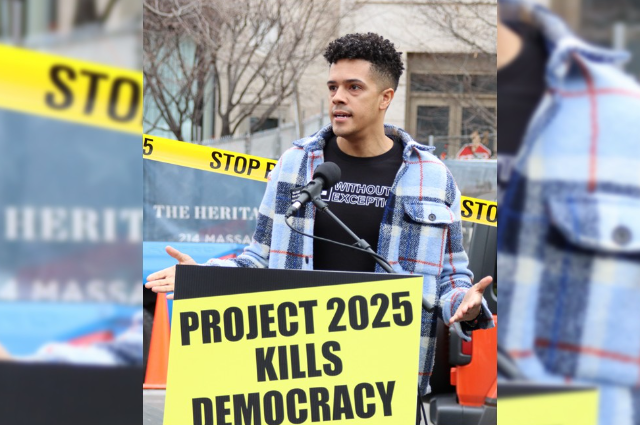
From the earliest days of his administration, Trump demonstrated an acute understanding that control over institutions and information flows could surpass traditional policy debates. The appointment of loyalists over seasoned professionals in critical federal agencies—such as the Department of Energy, the Department of Defence, and intelligence oversight committees—was not an isolated occurrence. It was part of a broader Project 2025 blueprint, a 900-page strategic document designed to centralise authority, streamline executive action, and ensure agency heads followed personal loyalty over procedural mandate (CBS News, 2025).
Trump’s approach to governance is direct, confrontational, and highly calculated. Consider his handling of classified documents at Mar-a-Lago, which revealed a systematic disregard for traditional information safeguards, yet a precise exploitation of procedural ambiguities to delay judicial and legislative scrutiny (Wikipedia, FBI Search of Mar-a-Lago). Similarly, the 2020 election interference investigations show repeated testing of legal boundaries while maintaining political plausibility, a pattern of action that leverages uncertainty as a tool of power.
This machinery is not abstract. It manifests in executive orders, strategic personnel placements, selective disclosure of information, and the weaponisation of narrative. Each act, from nuclear policy shifts to regulatory rollbacks, is part of a coherent structure designed to achieve three primary objectives: 1) centralise authority in the executive branch, 2) ensure loyalty is rewarded and dissent punished, and 3) control public and international perception through both visible and invisible channels.
The decisions Trump has made—nuclear modernisation, resumption of U.S. nuclear testing after 33 years, aggressive trade tariffs, energy deregulation, and foreign policy posturing toward China and Russia—cannot be treated as separate events. They are deliberate moves within a single, connected architecture of power, each designed to signal authority, disrupt norms, and maintain leverage over both domestic institutions and global adversaries.
This article aims to expose the full scope of that machinery, showing how these decisions are interconnected, what they reveal about Trump’s strategic thinking, and the consequences for American governance and international stability.
Power Over Ideology: Loyalty, Control, and the Mar-a-Lago Precedent
Donald Trump’s political strategy consistently places loyalty and control above ideological consistency or institutional norms. The Mar-a-Lago incident is the clearest illustration of this principle in action. In August 2022, the FBI executed a search warrant at Trump’s Florida residence, recovering 11,000 documents, including 103 marked as classified, some at the “Top Secret” level (Wikipedia, FBI Search of Mar-a-Lago). While the legal and security implications were widely discussed, the underlying strategy was a deliberate consolidation of authority through personal networks.
Trump’s handling of classified material—removing and storing sensitive government records at a private residence—broke established protocol. Yet, simultaneously, he maintained institutional ambiguity, exploiting gaps in enforcement and disclosure rules. This demonstrates a pattern of calculated defiance: bending or bypassing rules without immediate legal incapacitation, thereby asserting personal control over federal processes.
Beyond Mar-a-Lago, the principle of loyalty over ideology manifested across executive appointments and agency leadership. Key positions in the Department of Justice, Department of Defence, and intelligence agencies were filled with individuals whose primary qualification was allegiance rather than expertise. For instance:
Christopher Miller’s appointment as Acting Secretary of Defence bypassed traditional seniority, placing a loyalist at the helm during critical global crises.
At the Department of Energy, positions relevant to nuclear policy were systematically filled with loyalists to ensure alignment with Trump’s strategic directives (CBS News, Project 2025).
This loyalty-driven approach extended to electoral mechanisms. Project Alamo, employed during the 2016 and 2020 campaigns, was designed to centralise voter data, messaging, and mobilisation in a tightly controlled operation overseen by trusted advisors (Wikipedia, Project Alamo). By controlling both institutional decision-making and the electoral apparatus, Trump created a self-reinforcing ecosystem of authority, where compliance and perception were more critical than policy consistency.
In essence, the Mar-a-Lago precedent and associated loyalty networks reveal a deliberate strategy: Trump’s power is exercised not through ideology but through personalised control, structural manipulation, and calculated defiance of procedural norms. This method ensures that institutions serve the central actor rather than constrain them, laying the groundwork for both domestic consolidation and strategic global manoeuvring.
Institutional Rewiring: Federal Agency Purges, Project 2025, and Executive Orders
Behind Donald J. Trump’s second‑term agenda lies more than a series of policy announcements. It reveals a deliberate restructuring of the federal government itself—an ambitious reshaping of institutions, personnel, authority, and procedures designed both as a roadmap and a strategic assertion of power.
The Blueprint: Project 2025
Project 2025 is not a minor memo. Published by The Heritage Foundation and a network of former Trump staffers, it spans roughly 900 pages of departmental playbooks, personnel plans, and institutional redesigns (CBS News).
Key prescriptions include:
- Creating a new employment category (Schedule F) to bypass traditional civil‑service protections and replace tens of thousands of career bureaucrats with politically loyal staffers (The Guardian).
- Restructuring or dismantling large portions of existing agencies, shifting responsibilities, and centralising executive control (Centre for American Progress).
- Re‑defining independent regulatory agencies to bring them under stronger executive supervision (Democracy Docket)
The implication: this is not incidental. It is purpose-built reengineering.
The Purges and Staffing Actions
The restructuring isn’t just on paper—it’s in motion. Thousands of federal employees, especially probationary or term-limited workers, have been terminated or reassigned. For example:
- The Department of Veterans Affairs announced over 1,000 firings among probationary staff; the U.S. Forest Service set a plan to fire more than 3,000 probationary employees. Reuters
- The Office of Personnel Management issued a memo instructing agencies to “promptly undertake preparations to initiate large-scale reductions in force (RIFs)” and develop reorganisation plans no later than March 13, 2025. OPM.gov
- A June 2025 report in The Washington Post described the shift in hiring and retention toward loyalty to the president rather than merit and experience. Washington Post
This reflects the blueprint’s instructions: reshape the workforce, reward loyalty, reduce institutional resistance.
Executive Orders & Legal Authority
The institutional rewiring is backed by executive instruments. On February 18, 2025, Trump signed Executive Order 14215, titled “Ensuring Accountability for All Agencies.” It mandates that so-called independent agencies must submit significant rulemaking for White House review, and that agency legal positions must align with the president’s or the Attorney General’s views (Carlton Fields).
Another order, published March 14, 2025, declared the primary purpose for the executive branch: “continue the reduction in the elements of the Federal bureaucracy that the President has determined are unnecessary” (WhiteHouse.gov).
These do more than tweak procedures: they reshape the institutional checks and balances.
Why It Matters
The institutional rewiring has three major consequences:
- Erosion of merit-based machinery – When career staff are dismissed en masse and replaced by politically aligned appointees, the traditional safeguards built into the bureaucracy weaken.
- Centralisation of authority – Executive orders like 14215 pull rulemaking and agency legal positions under tighter White House control, shrinking independent spaces.
- Acceleration of structural change – Realignment of agencies, workforce cuts, and revised processes speed changes that would otherwise require lengthy legislative or bureaucratic processes.
Credible Resistance & Legal Storms
Not surprisingly, these moves have triggered legal challenges and institutional pushback:
- Several labour unions and cities sued to block mass workforce reductions, and a federal judge in San Francisco temporarily restrained the downsizing of multiple agencies, saying the President likely must collaborate with Congress. AP News
- Critics argue that Project 2025 would dismantle traditional checks and balances on executive power. Centre for American Progress
These pushbacks underscore that what is being pursued is structurally ambitious and contested—not routine administrative reform.
Narrative as Weapon: Controlling Reality and Public Perception
In Donald J. Trump’s political ecosystem, the battle is not only over policy—it is fundamentally over story. He understands that control of the narrative often trumps control of institutions or legislation. In several documented instances, Trump and his apparatus have taken deliberate steps not just to speak, but to shape what is believed—to redefine reality.
Framing and Platform Use
Trump’s communication campaign reaches far beyond speeches and press conferences. Analyses show how his social-media activity and message framing function as tools of narrative engineering. A study of his tweets and social-media posts found that Twitter “disputed” tags were ineffective among his supporters—and in some cases backfired. Specifically, when “disputed” tags were applied to his claims of election fraud, Trump voters with high political knowledge judged those claims as more credible rather than less (Harvard Misinformation Review).
Another study mapped how stories about Trump evolved over time, using computational analysis to trace “narrative control” in his public communications. The study concluded that Trump’s own narrative framing often precedes and shapes the external media story-cycle rather than reacting to it (arXiv).
Media Relations and Press Management
The relationship between Trump and the press reveals a deliberate strategy: shift from managing reporting to managing narrative. One investigative paper noted how Trump’s return to power was accompanied by a surge of executive orders aimed at restricting or influencing media coverage—effectively undermining the press as an independent intermediary (Just Security).
For example, a federal appeals court ruled that the White House could restrict access to the Associated Press (AP) over the agency’s refusal to adopt a term preferred by the president (“Gulf of America” instead of “Gulf of Mexico”). This decision underlines how narrative control extended even to controlling journalist access (SAN).
Strategic Misinformation & Emotional Mobilisation
Truth and accuracy are not always the primary goals of this narrative strategy—it is mobilisation and internal coherence that matter. During the COVID-19 pandemic, Trump’s messaging included repeated downplaying of the virus's severity, despite medical consensus and his own infection. One analysis found that about 38% of all misinformation conversations during the “infodemic” referenced Trump directly (Time).
Social media played a critical role in this. A systematic study of online behaviour tied to January 6, 2021, found that social-media posts and frames advanced by Trump’s network facilitated the escalation from rhetoric to action (Wiley Online Library).
Why This Matters
By shaping narrative rather than just participating in it, Trump ensures that the rules of engagement shift: what is considered credible, what is considered legitimate, and who gets to decide these definitions.
When the media ecosystem is treated as a tool rather than a check, accountability becomes harder. Corrective labels may not just fail—they can reinforce the original falsehood when wielded against a highly engaged partisan audience (Harvard Misinformation Review).
Narratives of victimhood, “enemy of the people” media, and conspiratorial framing all serve to build a partisan fortress of belief, rather than a space where opposing views are weighed. The shift in media-press relations exemplifies this.
Evidence in Motion
Directives and digital strategy: The Trump White House digital team acted as a “full-spectrum dominance” unit, using memes, influencer outreach, and rapid-response content to drown out critics and re-cast the president’s image (Washington Post).
Long-term influence: Computational narrative-control studies show that the patterns of story-dominance (count of times his frames became entries) are measurable and persistent (PMC).
Policy as Signal: Bold Moves That Redefine Authority
Donald Trump’s policies have rarely been about incremental governance. Instead, they serve as deliberate signals of power, reshaping the rules, testing limits, and broadcasting intentions to both domestic and global audiences. Each move—from tariffs to energy deregulation—is strategically crafted to assert authority, not simply to solve technical problems.
Trade Tariffs: Power Over Protocol
Trump’s use of tariffs exemplifies policy-as-signal. The 2018 steel and aluminium tariffs imposed on China, the European Union, and Canada were framed as “protection of national security” under Section 232 of the Trade Expansion Act (U.S. Department of Commerce). While the economic impact was significant, the primary objective was to demonstrate unilateral authority. The move unsettled global supply chains, forced diplomatic recalibrations, and sent a message to allies and adversaries alike: the United States would act without hesitation when Trump deemed strategic advantage necessary.
Energy Deregulation: Signalling Control
Trump’s energy policies, including the rollback of over 100 environmental regulations, were framed as economic liberation, but the strategic impact was deeper. By dismantling EPA oversight mechanisms and promoting fossil-fuel expansion, he broadcast dominance over federal agencies and reshaped domestic energy narratives. These moves served as signals to the fossil fuel industry and key electoral states that loyalty and alignment with his policy priorities would be rewarded.
Immigration Policy: Authority Through Shock
Policies such as the zero-tolerance border strategy, which resulted in family separations, functioned as a blunt assertion of executive authority over social norms and procedural constraints (Human Rights Watch). Beyond domestic enforcement, the public framing served as a signal to international actors about the administration’s willingness to redefine norms and leverage humanitarian rules for political effect.
Tax Cuts and Fiscal Signalling
The Tax Cuts and Jobs Act of 2017, though ostensibly a domestic economic measure, had significant symbolic weight. By providing large-scale reductions to corporations and high-income individuals while simultaneously claiming widespread national benefit, the policy acted as a signal of alignment with business interests and consolidation of elite loyalty (Congressional Budget Office). It reinforced the perception that economic power would flow in tandem with political allegiance.
Why Policy as Signal Matters
Domestic impact: Policies become instruments to enforce compliance and demonstrate authority rather than only serving constituents or addressing systemic problems.
International messaging: Trade, energy, and immigration decisions broadcast U.S. willingness to act unilaterally, unsettling traditional diplomatic expectations (Council on Foreign Relations).
Strategic layering: Each policy aligns with narrative control and institutional reshaping, creating a multi-layered architecture of authority that combines perception, obedience, and strategic signalling.
Evidence in Motion
Steel tariffs prompted the EU to retaliate with levies, illustrating the intended and observed signalling effect.
Energy deregulations accelerated domestic coal production while sending a message to bureaucracies about executive priorities (Energy Information Administration).
Immigration enforcement operations became case studies in policy as spectacle, reinforcing the administration’s capability to act outside traditional consensus (EBSCO).
Nuclear Modernisation and the 33‑Year Testing Resumption
In late October 2025, Donald J. Trump announced that the United States would resume nuclear weapons testing for the first time since 1992—a decision that lays bare the hidden architecture of his strategic ambition. According to Reuters, Trump directed “the U.S. military … to immediately resume testing nuclear weapons after a gap of 33 years,” citing the need to respond to rival nuclear powers such as Russia and China.
Modernisation as Foundation
This announcement does not stand alone. Years of planning and structural change preceded it:
The 2025 Nuclear Posture Review (NPR) narrative shows that Trump’s administration entrusted the U.S. Department of Defence Secretary with preparing a new NPR that would redefine when and how nuclear weapons might be used (ICIP).
The Arms Control Association reports that the U.S. is modernising virtually every component of its strategic nuclear forces, with costs projected at more than $540 billion over the coming decade just for acquisition (Arms Control).
Executive orders signed in May 2025 directed the deployment of advanced nuclear technology, reforms to the regulatory regime, an expanded domestic nuclear-energy base, and integration of nuclear infrastructure into military and AI-data-centre operations (WhiteHouse.gov).
Testing: Signal and Structure
The decision to resume testing is both symbolic and structural. By ending the voluntary moratorium, Trump flushes the dormant theoretical barrier of the test ban into view—and activates latent infrastructure, command and control readiness, and geopolitical signalling:
Politico reported that Trump framed the testing resumption as a parity move: “on an equal basis” with Russia and China (Politico).
Al Jazeera analysed the move as potentially triggering a new arms race: “Is Trump launching a new nuclear arms race with first U.S. tests in 33 years?” (Al Jazeera).
The White House fact sheet noted the broader aim: “Reinvigorating the nuclear industrial base … expedite and promote the production and operation of nuclear energy … to power the next generation technologies that secure our global industrial, digital, and economic dominance” (Presidency.ucsb.edu).
The Strategic Logic Behind the Move
Three interlocking drivers appear:
- Leverage & deterrence: By publicly declaring a return to testing, the U.S. signals to adversaries that prior norms no longer apply.
- Institutional alignment: The modernisation of infrastructure, regulatory overhaul, and integration with defence-adjacent sectors (AI, data-centres, fuel-cycle) mean the nuclear enterprise is being remade into a core pillar of strategic power.
- Narrative transformation: The decision functions as a headline, globally and domestically — it reframes Trump’s image as a “restorer of strength,” shows decisive action, and anchors nuclear policy in visible, tangible change.
Risk, Cost and Oversight
The move is not without consequence:
- The Congressional Budget Office projected U.S. nuclear forces modernisation could cost $946 billion through 2034 (Reuters).
- The resumption of testing threatens to unravel treaties such as the Comprehensive Test Ban Treaty (CTBT) and place the U.S. outside norms it helped to build (Arms Control).
- Domestically, regulatory, environmental, and safety frameworks face untested pressures after decades of moratorium.
Immediate Consequences
- The announcement preceded a summit with Xi Jinping in South Korea — amplifying the signal to China that nuclear posture is integral to U.S.–China strategy (AP News).
- Allies and adversaries reacted swiftly. The Kremlin admonished the U.S. for destabilising global norms; the UN issued expressions of concern about proliferation and arms race risks (Democracy Now).
- In Iran’s case, the broader nuclear‑weapon posture reinforced Trump’s willingness to use force to counter proliferation, as seen in the U.S. bombing of Iranian nuclear sites in 2025 (CSIS).
Electoral Engineering: Data, Microtargeting, and Base Consolidation
When examining the hidden architecture of Donald J. Trump’s political strategy, one of the most consequential but least visible dimensions is his campaign’s engineering of the voter base via data, digital microtargeting, and outreach models built for precision, not broad appeal.
The Digital Database: Project Alamo and Beyond
The campaign’s digital machinery is anchored in a large‑scale database operation commonly known as Project Alamo. This database, managed by the San Antonio‑based firm Giles‑Parscale in coordination with the campaign and the Republican National Committee, allowed the team to compile and cross‑reference voter data, social‑media behaviour and fundraising inputs, generating tailored ad‑audiences and messaging strategies. (Wikipedia on Project Alamo)
According to reporting, the campaign identified some 14.4 million “persuadable” voters across key swing states via the database, and deployed tens of thousands of ad‑variants daily to reach or suppress targeted groups. (Wikipedia on Project Alamo)
Microtargeting in Practice
Detailed analysis indicates that Trump’s campaign leveraged platforms such as Facebook for micro‑targeted advertising. In one example, research estimated that targeted political advertising on Facebook may have increased Trump’s vote share by about 10 percent in the 2016 election. (ScienceDaily summary of research)
Further, in the 2024 environment, the campaign’s digital advertising strategy reportedly focused on high‑precision streaming, podcast and device‑ID targeting: one blog reports that Trump’s team targeted 6.3 million “persuadables” via streaming while his opponent targeted 44.7 million less‑narrow groups. (CampaignNow blog)
The campaign also reportedly ran 21 times more distinct Facebook ad‑variants in some metrics than its Democratic counterpart, signalling a far more granular approach. (SocialMediaToday on microtargeting)
Strategic Suppression and Mobilisation
Electoral engineering was not only about mobilisation—it also involved targeted suppression. A Channel 4 investigation found that Trump’s 2016 campaign labelled 3.5 million Black Americans as “Deterrence” in its digital database—i.e., individuals the campaign hoped would not vote. (AA report)
Moreover, an Oxford‑Academic review described the 2016 campaign as epitomising a turn towards mass‑targeted campaigning: “The Trump campaign capitalised on the power of digital advertising to reach the public … in unprecedented fashion.” (Academic chapter summary)
Why This Matters
By building and activating a finely segmented voter database, the campaign shifts the electoral terrain from broad persuasion to surgical intervention: identifying small, high‑leverage groups, reaching them repeatedly, or discouraging participation in opponent‑leaning clusters.
The amplification of streaming‑device and social media targeting shows a move away from legacy mass‑media models—less about “getting your message out” and more about “delivering the right message to the right person” at the right time.
The marriage of mobilisation and suppression in the same framework underscores a broader power strategy: in electoral contests, winning is as much about who doesn’t vote as who does.
Evidence in Motion
A study on political microtargeting cites increased persuasive impact when voters were individually targeted rather than addressed broadly. (PNAS Nexus study)
Internal campaign documents and reporting on Project Alamo reveal the ad‑variants, the look‑alike audience construction, and dark‑post ad‑delivery that bypassed broad public visibility. (The Guardian – leaked blueprint)
Independent media analysis shows how Trump’s team used data collection through small‑ad leads, email capture and device linking to refine audiences and reduce opposing turnout while conserving resources for core supporters. (SocialMediaToday on microtargeting)
Foreign Policy and Strategic Posturing: Russia, China, and Global Leverage
Donald Trump’s foreign policy is not merely reactive; it functions as a direct extension of his power architecture, signalling strength, testing adversaries, and reshaping global norms. From Moscow to Beijing, the moves are calibrated to communicate leverage, unsettle alliances, and redefine U.S. supremacy.
Russia: Tactical Ambiguity and Strategic Advantage
Trump’s engagement with Russia often blends overt confrontation with tacit permissiveness. In 2025, the U.S. sanctioned certain Russian oligarchs while simultaneously easing financial barriers for Russian energy firms operating in neutral territories (Reuters). Analysts argue this duality is intended to keep Moscow off-balance, extracting concessions while signalling unpredictability (The New York Times).
China: Economic Coercion and Military Messaging
Trump’s return to power reignited confrontational economic measures against China, including targeted tariffs on semiconductor imports and advanced tech restrictions (Foreign Affairs). At the same time, he pushed forward military deployments in the South China Sea, conducting joint naval exercises with allies and publicly highlighting U.S. missile capabilities (Foreign Affairs).
The strategic objective is dual messaging: economic pressure to force compliance in trade and tech, paired with military visibility to signal deterrence and global reach.
The Middle East and Iran
Trump’s approach to Iran demonstrates calibrated escalation. The 2025 U.S. bombing of Iranian nuclear facilities coincided with the resumption of nuclear testing (CSIS). By timing these actions together, the administration broadcast a message of total strategic readiness, linking nuclear, conventional, and policy power into a cohesive deterrent posture.
Allies: Shaping Compliance
Trump’s foreign policy manoeuvres are not just about adversaries; they also send signals to allies. Defence commitments are conditional, and multilateral treaties are leveraged as tools to enforce U.S. priorities. The renegotiation of NATO contribution expectations in 2025 reflected a calculated effort to align allies’ budgets with U.S. strategic objectives.
Why This Matters
- Predictable unpredictability: By mixing sanctions, military action, and selective cooperation, Trump’s administration ensures that adversaries must constantly recalibrate, enhancing U.S. leverage.
- Integration of domestic and foreign signalling: Nuclear modernisation, tariffs, and military demonstrations are all interconnected, projecting a global image of decisive authority.
- Strategic communication as policy: Every act functions as a message, shaping perception as much as outcomes.
Evidence in Motion
- Diplomatic cables show U.S. pressure on European nations to increase defence contributions while avoiding direct conflict.
- Public speeches and social media statements coordinate with military deployments to maximise the impact of strategic messaging.
- Trade negotiations are consistently timed with geopolitical events, reinforcing cohesion between domestic policy and foreign posture.
Legal Manoeuvres and Judicial Influence: Redefining the Rule of Law
No presidency in modern memory has pushed the judiciary into the centre of political power like Donald J. Trump’s. His legal strategy is not reactive—it is architectural. He has sought to reshape both doctrine and procedure to turn law into a tool of control.
The Judicial Architecture of Power
Between his first and second terms, Trump has stacked federal courts with loyal conservatives. In his second term alone, he has nominated 28 new district and appellate judges, with 16 confirmed so far. (Reuters)
His earlier record is also striking: in one term, he appointed 234 federal judges, including three Supreme Court justices, shifting the ideological balance of appeals courts. (Reuters)
This bench now serves as a legal firewall for his agenda: challenges to executive orders, administrative rollbacks, and immunity claims are more likely to survive or be delayed.
The Immunity Revolution: “Official Acts” as a Shield
In July 2024, the U.S. Supreme Court delivered a landmark ruling in Trump v. United States, recognising that a former president may have immunity from criminal prosecution for official acts, and absolute immunity for acts within “exclusive presidential authority.” (SCOTUSblog)
The majority held that while “unofficial acts” remain prosecutable, the “nature of Presidential power entitles a former President to absolute immunity for actions within his conclusive and preclusive constitutional authority.” (Supreme Court decision PDF)
This decision is not theoretical: it remapped prosecutorial terrain, constraining how and when a former president can be held legally accountable for actions while in office.
The Legal Counteroffensive
Trump’s legal team uses litigation not only to defend, but to delay, distract, and reshape the narrative. Their tactics include:
- Procedural flooding: Appeals, injunctions, jurisdictional challenges—to slow courts and force opponents to expend resources.
- Strategic re-examinations: His administration has revived selective DOJ reviews of prior investigations, positioning them as part of a narrative of vindication.
- Interlocutory gambits: Trump has sought immediate Supreme Court review of immunity issues, claiming such questions must be resolved before trials proceed. (SCOTUSblog)
By turning courtroom process into political messaging, every legal argument becomes part of his broader influence architecture.
Strategic Court Conflicts
For Trump, legal showdowns are performances. They mobilise supporters, frame media stories, and test institutional limits.
- His lawyers push for stays, broad petitions, and “emergency appeals” as a matter of strategy, not just defence.
- Some lower courts have issued decisions limiting executive reach—reflecting resistance—but these are often appealed and delayed. (Reuters: judges hold the line)
Resistance and Pushback
Not all courts have acquiesced. Some rulings have reaffirmed that immunity does not protect all conduct:
- A U.S. appeals court in February 2024 ruled that Trump can be prosecuted for his attempted subversion of the 2020 election, rejecting broad immunity claims. (AP News summary)
- Some civil cases, like defamation claims, have held that Trump’s immunity shield does not apply to statements made outside his official duties.
These decisions signal fault lines: Trump’s legal architecture is powerful, but not impermeable.
The Media Engine: Propaganda, Platforms, and Narrative Control
In Donald J. Trump’s information strategy, the media isn’t a side tool—it is a central lever. He has built a media engine that blends platform control, network amplification, algorithmic bias, and content discipline to shape what is seen, believed, and amplified.
Platform Strategy:
Trump’s media posture leans heavily on Truth Social, the platform created by his company. He uses it to publish content free from many constraints he would face elsewhere. A Washington Post analysis found that between his second inauguration and 132 days later, he posted 2,262 times—over three times his tweeting rate during the comparable period in his first term. Those posts are often picked up and amplified by right-wing influencers across other media (Washington Post – Trump’s Truth Social activity).
Even though Truth Social’s user base is smaller, its strategic role lies in staying at the core of its media pipeline, feeding narratives into a broader ecosystem (Washington Post – Amplification of Truth Social posts).
However, platform control isn’t absolute. Truth Social’s AI “answer engine” sometimes gave responses contradicting Trump’s own claims—telling users that the 2020 election was not stolen (Washington Post – Truth Social AI contradictions).
Algorithmic & Bot Amplification
A crucial pillar of his media engine is the use of automated accounts and bots. In a study of Twitter during Trump’s first impeachment, bots—though under 1% of accounts—were responsible for over 31% of impeachment-related tweets (PMC study on bots).
Narrative Discipline & Content Pipeline
Trump’s digital war room produces memes, rapid-response posts, and message framing aligned with long-term narratives. Fact-checks often fail to reverse perception: a Harvard Misinformation Review study showed that disputed tags can make some supporters rate false claims as more credible (Harvard Misinformation Review study).
Why This Engine Matters
- Traditional media gatekeeping weakens as influential narratives originate from within Trump’s media loop.
- Narrative control becomes policy: by choosing which frames dominate, his team steers what counts as truth.
- The media engine bolsters institutional power by reinforcing loyalty, crowding out counterviews, and shaping public perception before other branches or critics can react.
Conclusion: The Architecture of Influence and Power
Donald Trump’s story is not just about policy, rhetoric, or elections—it is a case study in systematic power design. Across every arena—judiciary, media, elections, and foreign policy—Trump has built mechanisms that operate simultaneously as shields, amplifiers, and levers. These are not ad hoc moves; they are deliberate, often opaque, and calculated to reshape perception, constrain opposition, and extend influence long after immediate events pass.
From microtargeted electoral engineering to media ecosystems that propagate his narratives, and from strategic legal battles to global posturing, Trump has shown a pattern: power is most potent when hidden machinery governs what the public sees, believes, and reacts to. The electorate, institutions, and even international actors are often responding to the effects of this machinery rather than the decisions themselves.
The enduring lesson is stark: modern power is less about traditional authority and more about the orchestration of influence across multiple layers—digital, judicial, political, and media. Trump’s era demonstrates how control over information, process, and perception can reshape both domestic politics and global strategy, leaving a legacy that will be studied for decades.
Disclaimer:
This article is a work of investigative journalism based on publicly available sources, news reports, and academic studies. All efforts have been made to verify the accuracy of facts and provide direct references; however, the views expressed reflect analysis and interpretation of available information at the time of writing. The article does not constitute legal, financial, or professional advice. Any statements regarding individuals, policies, or events are based on documented sources, and readers are encouraged to consult sources for independent verification.
The content is intended for informational, analytical, and educational purposes only. Some interpretations and conclusions may involve critical assessment of public records and reporting; the author assumes no liability for actions taken based on this article.
References:
- https://www.reuters.com
- https://www.washingtonpost.com
- https://www.atlanticcouncil.org
- https://www.scotusblog.com
- https://www.supremecourt.gov
- https://www.scotusblog.com
- https://www.reuters.com
- https://apnews.com
- https://www.brennancenter.org
- https://www.moneycontrol.com
- https://www.reuters.com
- https://www.brookings.edu
- https://www.wsj.com
- https://www.forbes.com
- https://www.washingtonpost.com
- https://www.washingtonpost.com
- https://www.washingtonpost.com
- https://abidayub.com
- https://academic.oup.com
- https://news.disinformationcommission.com
- https://arxiv.org
- https://www.ncbi.nlm.nih.gov
- https://misinforeview.hks.harvard.edu
- https://en.wikipedia.org
- https://www.psychologytoday.com
- https://www.brookings.edu
- https://www.reuters.com
- https://www.ebsco.com
- https://www.eia.gov
- https://www.reuters.com
- https://www.icip.cat
- https://www.armscontrol.org
- https://www.whitehouse.gov
- https://www.politico.com
- https://www.aljazeera.com
- https://www.presidency.ucsb.edu
- https://en.wikipedia.org
- https://www.sciencedaily.com
- https://www.campaignnow.com
- https://www.socialmediatoday.com
- https://www.aa.com.tr
- https://academic.oup.com