
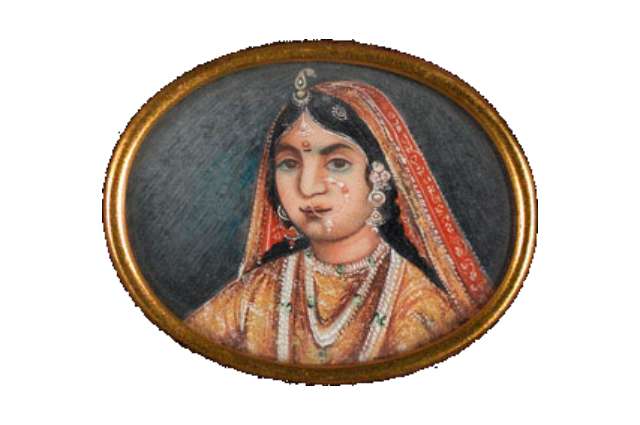
Chapter 1: Freedom - A Birthright, Not A Privilege
Tribute - Jhansi bled in June – Dedicated this write-up to the queen of Jhansi, as we remain indebted to her.
INDIA is not a mere nation, but an emotion. Indeed, freedom is a birthright, not a privilege. Freedom to roam, to choose our career, to choose our favourite attire, our life-partner, our travel destinations, to embrace our culture, and to breathe freely. Freedom and Peace are the backbones of a nation and its success. Therefore, spread peace, not hate. Unity in diversity – INDIA.
I couldn’t find any story to write in June other than that of the Queen of Jhansi. We are breathing in a free nation because of her initiative towards freedom. We can taste freedom because of her sacrifices and her fight for our country - India.
The One Who Fought For Freedom – The Queen Of Jhansi
This write-up is a reminder to pay tribute to the Queen of Jhansi, as she died in the month of June in Gwalior, British India. The Rani of Jhansi was born as Manikarnika Tambe into a Marathi family (born November 19, 1828, Kashi, India – died June 18th June, 1858, Kotah-ki-Serai, near Gwalior). She fought several battles against the British. She was married to the king of Jhansi, Gangadhar Rao. The couple had one son, but he died young. When King Gangadhar Rao was on his deathbed in 1853, he adopted Damodar Rao, a young relative, to be his successor. The British East India Company, which by then had enslaved much of India, including Jhansi, refused to recognise this succession and acquired Jhansi under the Doctrine of Lapse, overlooking the Rani’s fierce protests to the Governor-General Lord Dalhousie.
The Doctrine of Lapse was a policy established by Lord Dalhousie in 1848 during British rule in India. Under this doctrine, if the ruler of a princely state died without a biological male heir, the British East India Company could acquire that state. Although adoption was a widely accepted ritual among many Indian Royal families, the British refused to recognise the succession rights of an adopted son, Damodar Rao.
The queen of Jhansi, Laxmibai, took over the rulership of Jhansi and assigned an army to send back attackers from neighbouring states. Although her bond with the British was impartial in the beginning. However, they started treating her as an opponent later.
Major General Hugh Rose targeted and overpowered Jhansi in March and April 1858. The Queen eluded the siege on horseback and associated with other rebel leaders at Kalpi, where Hugh Rose vanquished them on 22nd May. The rebels fled to Gwalior Fort, where they made their final stand; the Queen died there in battle.
Chapter 2: The Jhansi Fort And The Queen Lives In Every Nation Lover’s Heart
The Queen was considered a great warrior by the Indian Independence movement. The Queen’s sacrifices for the country have been celebrated, especially on every Independence Day. She has been featured in artwork, cinema, and literature, most notably in the 1930 poem “Jhansi Ki Rani” and Vrindavan Lal Verma’s 1946 novel Jhansi Ki Rani Lakshmibai, and actress Kangna Ranaut’s film Manikarnika: The Queen of Jhansi.
The History Of The Jhansi Fort Highlighted
The Jhansi fort transformed into a historical place and is best for an educational tour. Jhansi Fort was built by King Bir Singh Deo of Orchha in 1613; it stretches over 15 acres on Bangra Hill. Inside the Fort, we can witness the vibe of emotions, sacrifices, serene beauty, bravery and courage of the queen. In the fort, we can spot these:
The Kadak Bijli cannon – A historic forge-welded iron cannon, it played a key role during 1857, and is popular for its booming noise and lion-like roar when operated and fired. A master soldier, Ghulam Gaus Khan,n operated this powerful weapon against the British forces during the 1857 siege of Jhansi. The weapon is kept surrounded by the ancient architecture of the fort, plants, unique stones, and the memorial to the queen’s brave soldiers.
Lord Ganesha Temple – The temple is built near the entrance gate. The queen used to visit the temple regularly for worship.
The Bhawani Shankar Cannon – The front face of the cannon has the shape of a crocodile, and the back portion has an elephant inscribed on it. It is believed to be blessed with the power of Goddess Bhawani; therefore, it is named Bhawani.
Grave of Gulam Gaus Khan, Moti Bai and Khuda Buksh – These are the graves of the soldier (gunner) Ghulam Gaus Khan and Moti Bai, and horse rider Khuda Buksh. They all were martyred in the war against the British East India Company on 4th June 1858.
Panch Mahal – It was built as a five–storey building, but recently only three storeys remain. The queen used its ground floor as a conference room, and she used to stay in a corner room on the first floor.
Prison Room (Kal Kothari) – It lies next to Panch Mahal. It was built bythe Marathas. The British reconstructed the building with one more floor and used it for the same purpose as a prison.
Flag Hoisting Point – Near the Panch Mahal lies the Flag Hoisting Point, where the Indian tricolour flag is hoisted.
The popular Jumping Point – This is a popular part of Jhansi Fort. It is the place where Rani Laxmi Bai, with her adopted son on her back, rode on the horse and jumped to escape the British after they had besieged the fort.
Rani’s Amod Garden – This was the queen’s garden. It was later used by the British as an armoury.
Hanging Tower – The hanging tower lies opposite Rani’s Amod Garden. It was used during the reign of Raja Gangadhar Rao to execute culprits by hanging.
Shiva Temple – Its architecture reflects the Bundela and Maratha style of construction. Many devotees visit the temple on the occasion of Shivratri.
Light and sound show – A one-hour light and sound show narrating the history of Jhansi Fort is conducted every evening in English and Hindi. The tickets are available on BookMyShow.
Through this smart city sound and light 3D show, one can feel the vibe and experience history, as if that magnificent era at Jhansi Fort comes alive. The 3D show represents the bravery and the inspiring story of the queen of Jhansi. And the historic events of the Indian Rebellion of 1857.
References:
- Google search, Book My Show
- https://en.wikipedia.org/wiki/Rani_of_Jhansi
- https://dreamstakingwings.com/jhansi-fort/
- https://in.bookmyshow.com/activities/jhansi-fort-light-and-sound-show/ET00489523.